VISITING THE SEVEN WONDERS OF THE ANCIENT WORLD
Do they still even exist? Kinda, yes
The Seven Wonders of the Ancient World
- Great Pyramid of Giza – Giza, Egypt
- Hanging Gardens of Babylon – Babylon, Iraq
- Temple of Artemis at Ephesus – Selçuk, Turkey
- Statue of Zeus at Olympia – Olympia, Greece
- Mausoleum at Halicarnassus – Bodrum, Turkey
- Colossus of Rhodes – Rhodes, Greece
- Lighthouse of Alexandria – Alexandria, Egypt
TL;DR
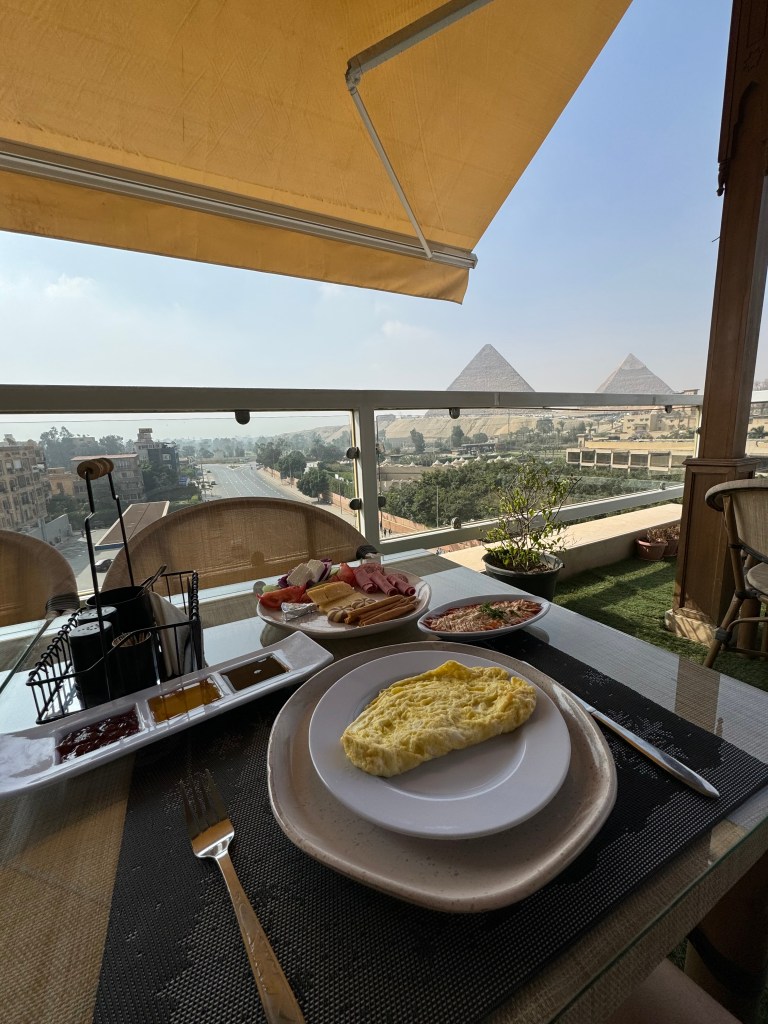
- Great Pyramid of Giza – The only ancient wonder still fully standing – I suggest getting a nice Giza guesthouse with a view of it, they have light shows at night. In the Giza necropolis get a ticket for inside the Great Pyramid (Khufu), it is actually a well worth while experience!
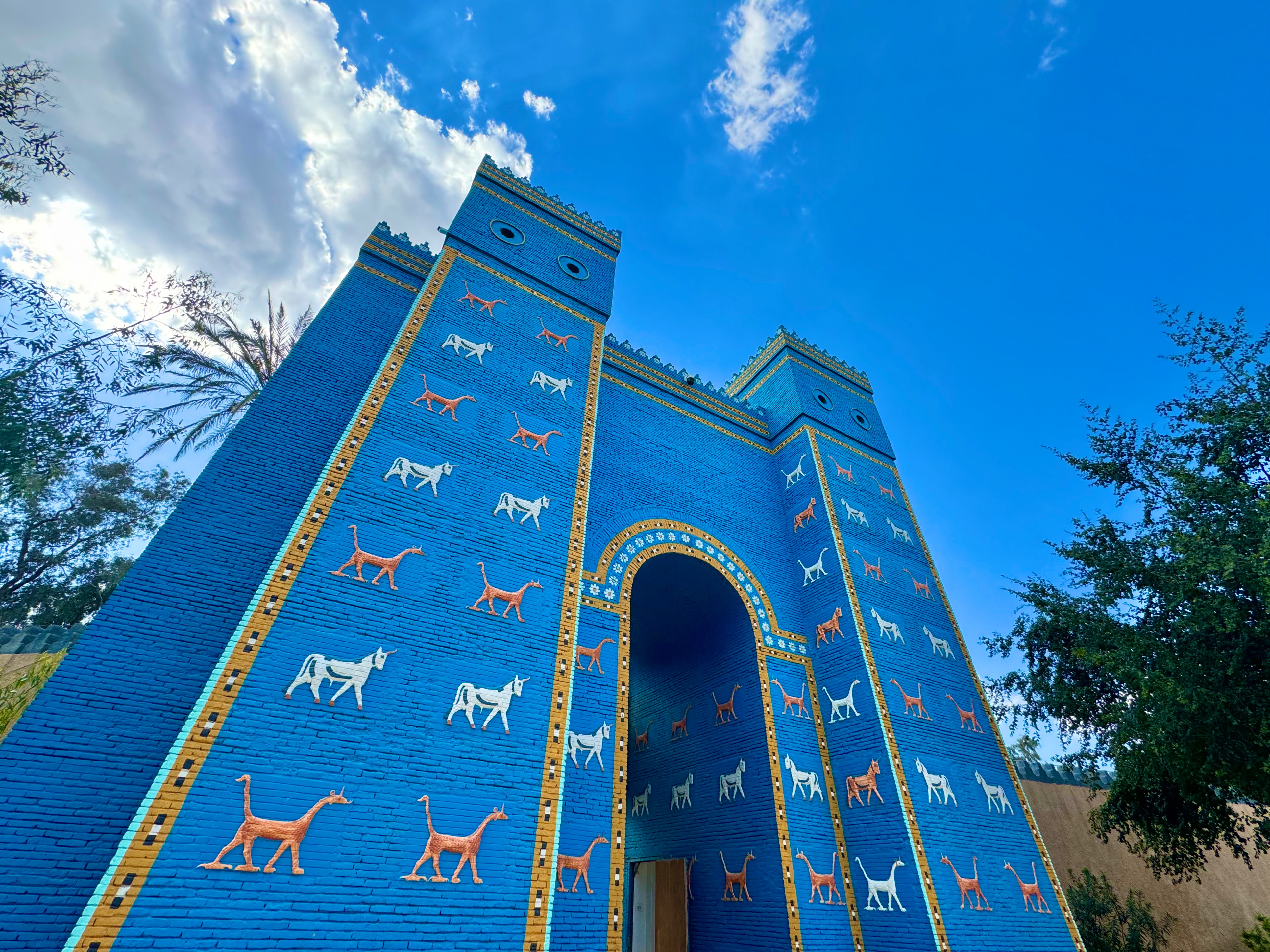
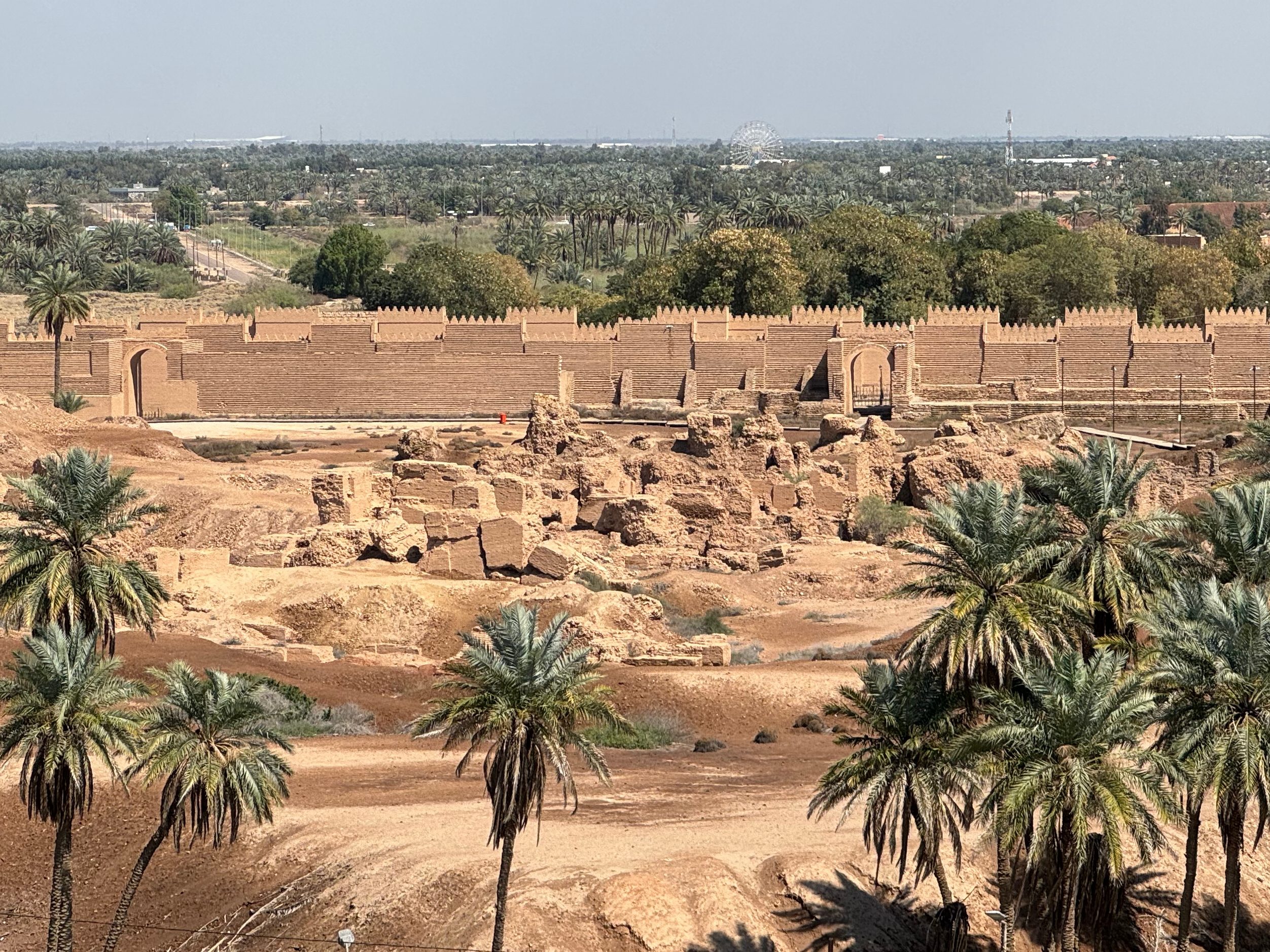
- Hanging Gardens of Babylon – Definitely recommend getting a tour to Babylon from Baghdad for this. Alas, there are no remnants of the hanging gardens there anymore, but the city ruins and murals of the ancient city are more than worth while, plus Iraq is incredible – see my blog post on solo travelling the country.
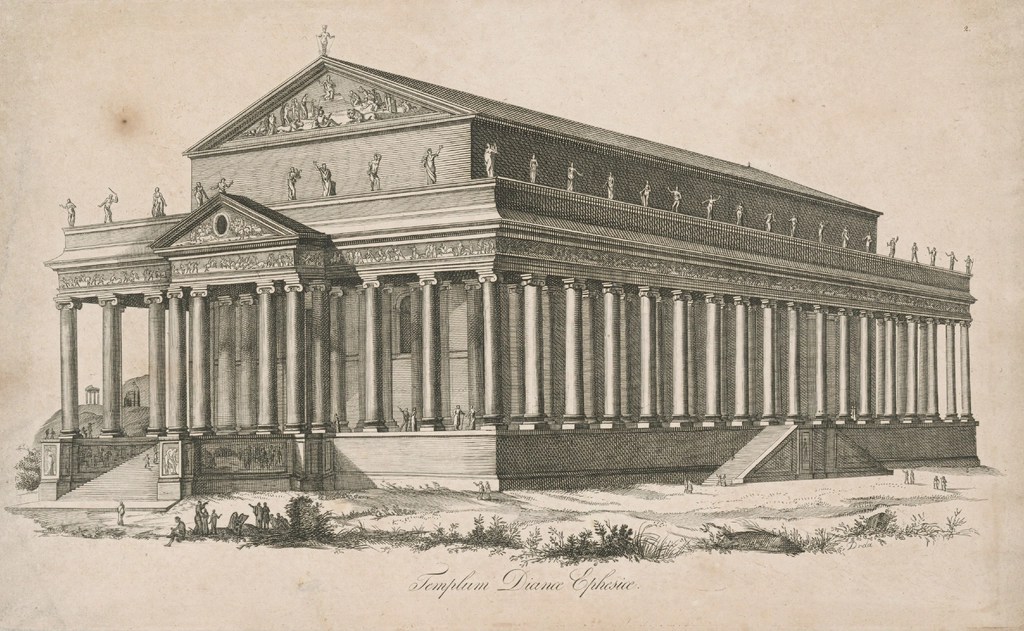
- Temple of Artemis at Ephesus – This is a surprisingly easy wonder to visit, as it’s right near the ancient city of Ephesus in Turkey (next to Kuşadası). Many tours in the area will make a quick stop here, or you can drive there very easily. There is a tall column standing with lots of ruins around, in a tranquil and empty grassy area.
- Statue of Zeus at Olympia – The only one of the ancient wonders I haven’t seen, so unfortunately I will have to add this part when I can! There are some good ruins at the Greek site of Olympia though so check them out.
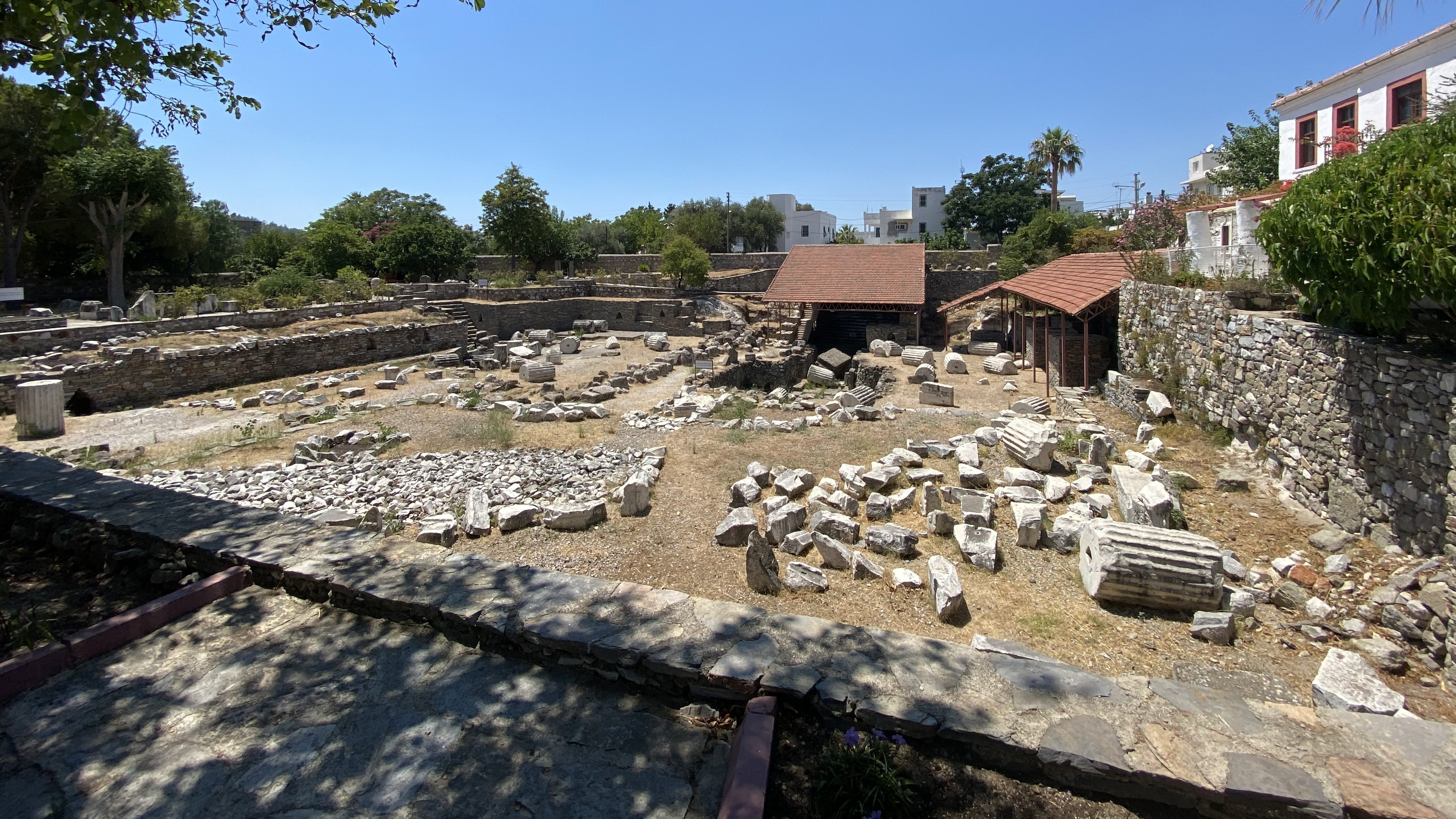
- Mausoleum at Halicarnassus – Another surprisingly easy and overlooked wonder, located right in the city of Bodrum, Turkey. You can literally walk here from the beach in 5 minutes, and there are some nice ruins and a little museum with some models of the original – definitely worth a visit!
- Colossus of Rhodes – There’s no ruins left of the Colossus which collapsed into the sea from an earthquake, but there are two nice markers either side of the harbour entrance of Rhodes where the statue’s feet supposedly straddled.
- Lighthouse of Alexandria – Another victim of earthquakes, although the rubble has been used to build the 15th Century Citadel of Qaitbay right next to where the Lighthouse was in Alexandria, Egypt. Alexandria is also a really nice city and well worth a visit on a trip to Egypt, with its huge coastline with incredible sunset, famous Library and ancient Roman ruins of Kom El Dikka.
The Seven Wonders of the Ancient World were always the true wonders to me. They were the ones which we learnt about in school, and sounded so incredible and impossible, like something from a film. The Colossus of Rhodes for example, the Ancient Greek sun god Helios supposedly straddling the harbour of the city so that you enter by boat through his gigantic bronze legs, absolutely epic – I imagine it was like Braavos in Game of Thrones. My favourite and most captivating, though, was always the Hanging Gardens of Babylon – a lush botanic eden in the greatest city of the time – like a luxurious oasis in the desert, or at least how I imagined it when drawing it for a school project. I eventually decided to try and join in on the ancient bucket list by visiting what’s left of these ancient wonders and find out what happened to them.
Great Pyramid of Giza
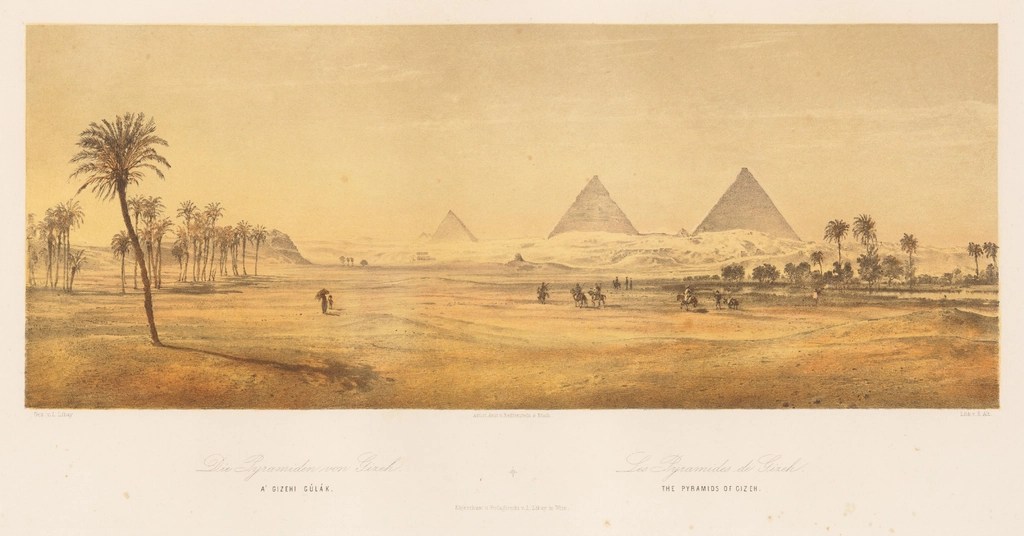
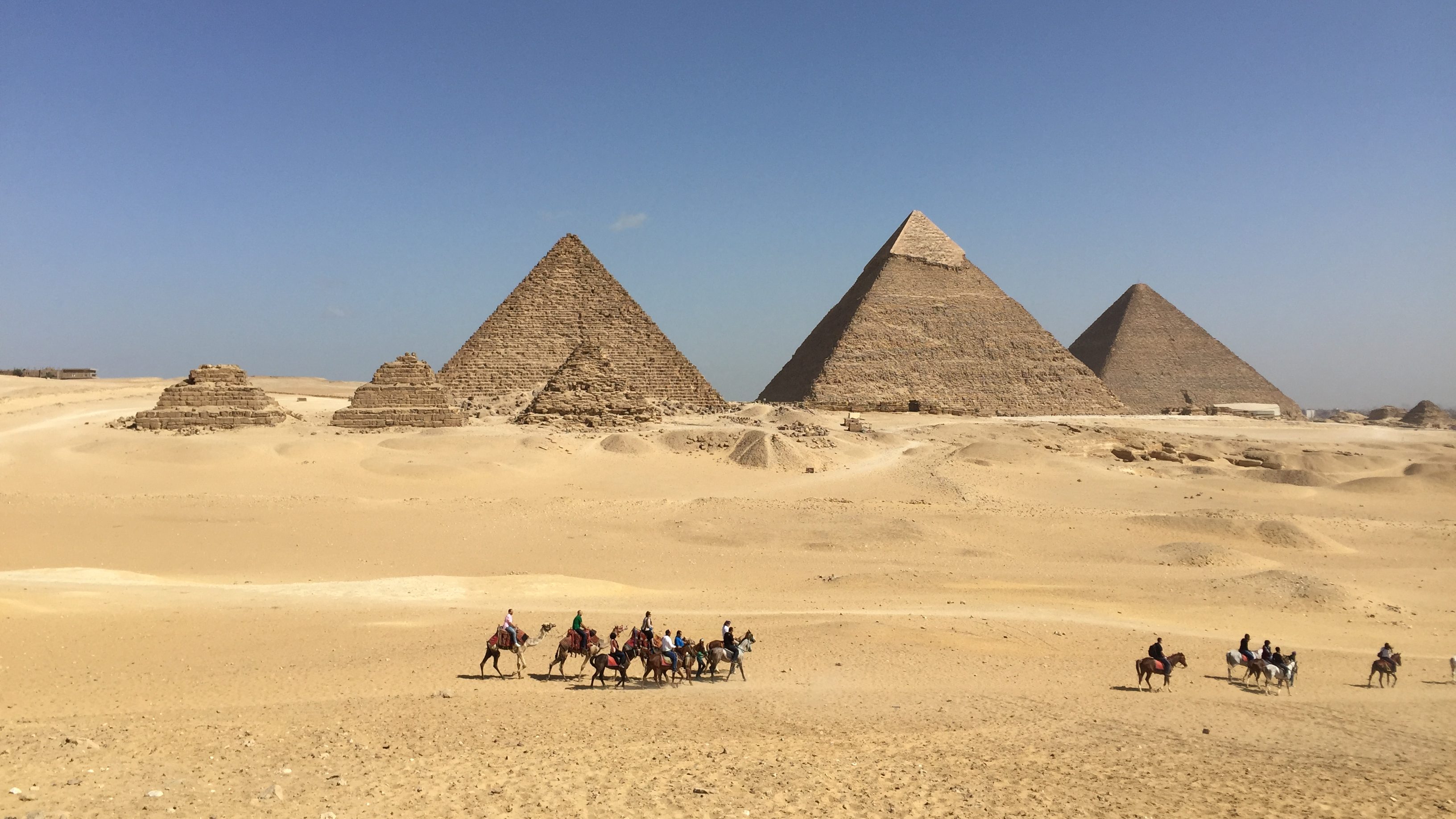
The only one of the ancient wonders still standing, and incredibly also the oldest, the Great Pyramid of Giza has watched the other 6 wonders rise and fall. The Great Pyramid is an astonishing 4500 years old from the Old Kingdom of Egypt, the first pyramid of the Giza Necropolis and tallest ever built. It was constructed as a tomb for Pharaoh Khufu / Cheops, mostly by Egyptian labourers and farmers, not slaves or aliens.
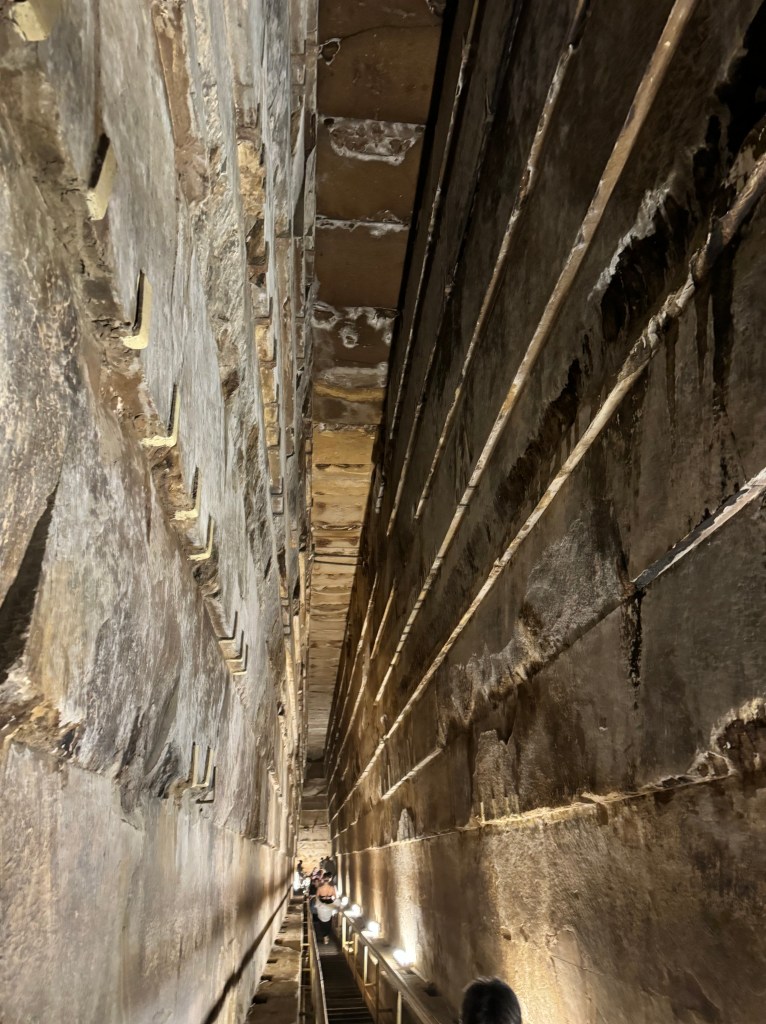
A trip to Egypt is criminally incomplete without visiting the Pyramids of Giza, and many other sights along the Nile to be honest. It’s an easy sight to get to and visit, especially if you’re staying in Giza itself, but even from downtown Cairo it’s only a short, albeit chaotic taxi ride away. Just rock up at the sight, grab a ticket and walk around, easy. Definitely get the ticket for inside the Great Pyramid (Khufu) too, which is actually a far better experience than I thought it was going to be. It is basically climbing up a huge claustrophobic staircase which is located in a sauna, while getting to admire the insane internal construction of what was the biggest building in the world for 3500 years.
Hanging Gardens of Babylon
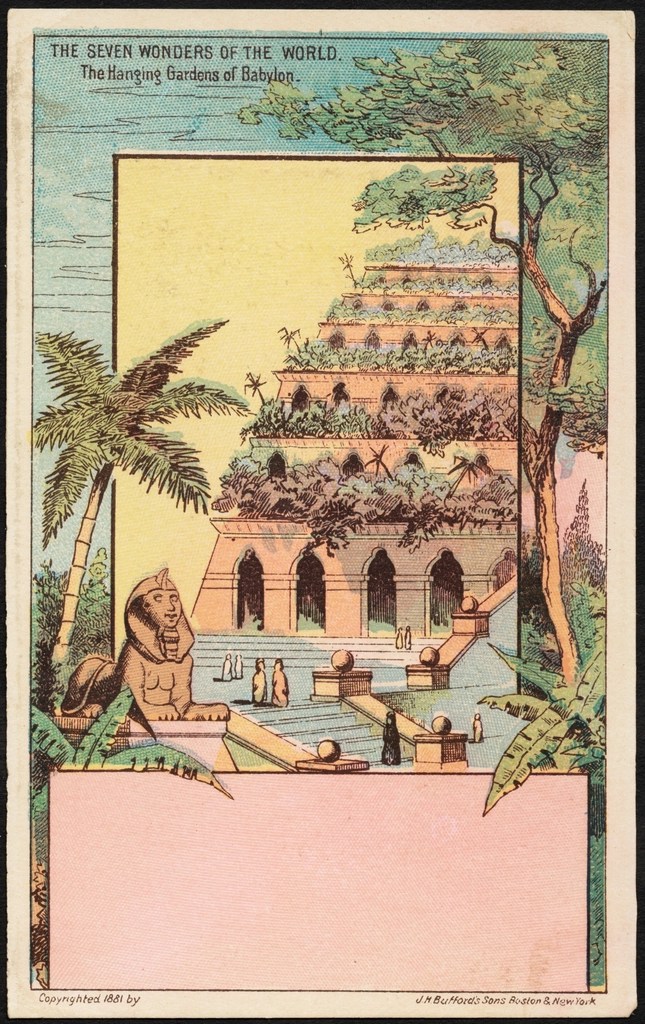
My favourite of the ancient wonders of the world, probably because I like plants and stuff. Rather frustratingly, it is the least understood and closer to a legend than a collapsed archeological site like most of the others. No official ruins have been found of the gardens anywhere, no mention of the gardens are found in official Babylonian texts and many archaeologists think they may not have even existed at all. They were, however, mentioned in multiple Greek and Roman texts which even associated the gardens to the Babylonian King Nebuchadnezzar II, so I am sure they were real.
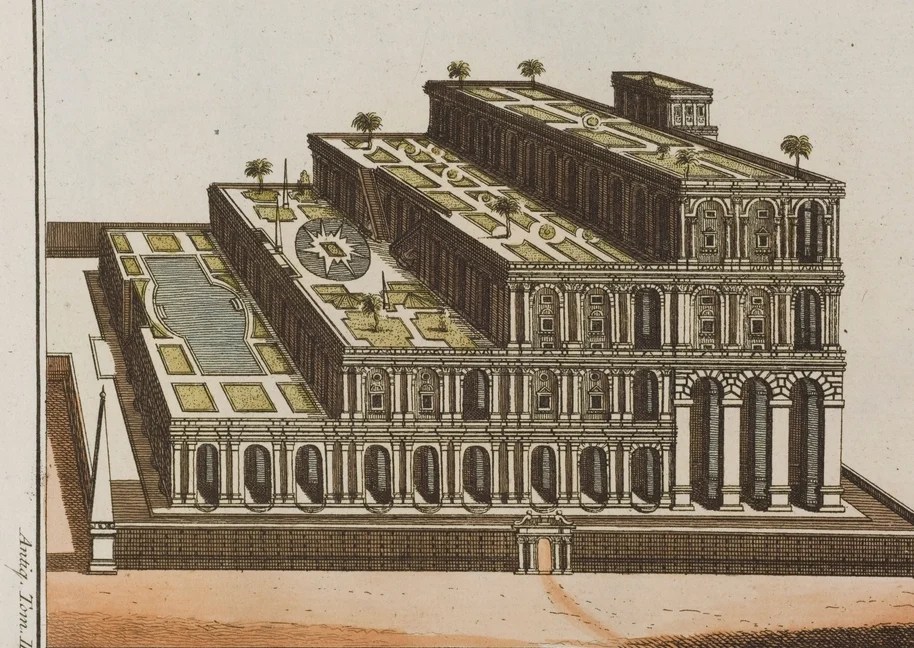
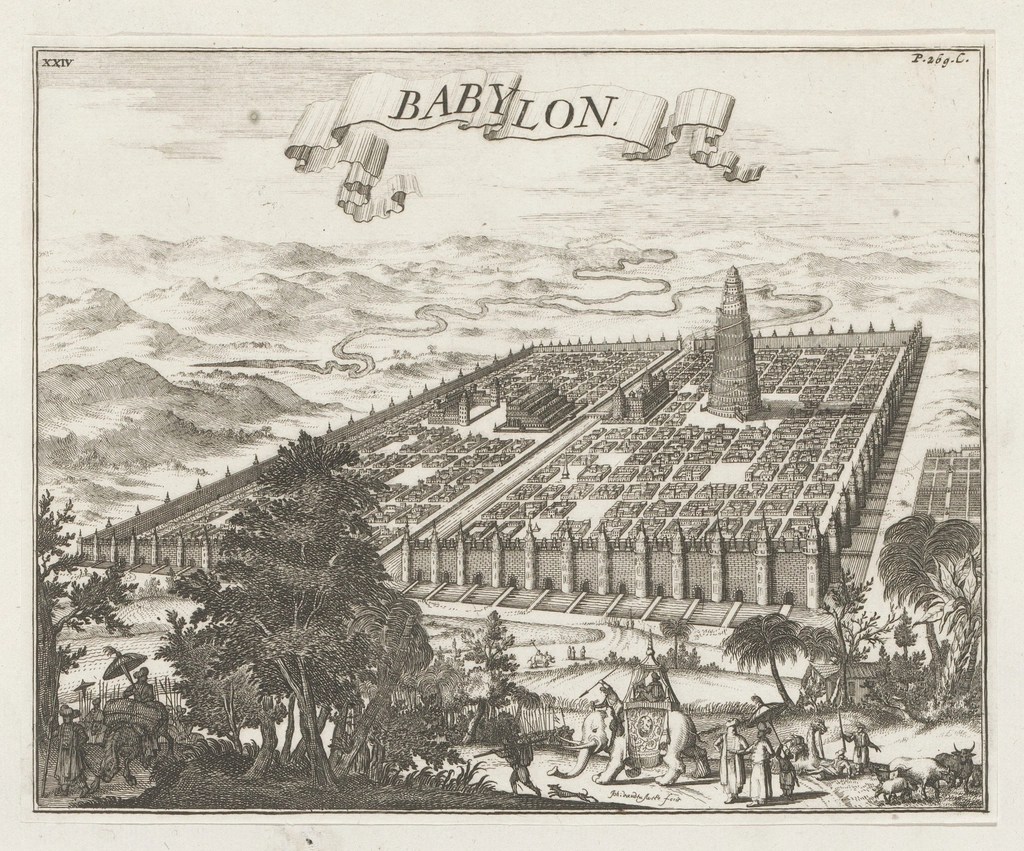
The gardens may very well have been located in the ancient Assyrian city of Nineveh, modern day Mosul in northern Iraq. This theory exists due to terraced gardens and cool advanced ancient irrigation matching the description of the hanging gardens being mentioned in ancient Assyrian texts, instead attributed to the Assyrian King Sennacherib. The landscapes around Nineveh were, and still are, more on the luscious and fertile side than the deserted south where Babylon was located. I’ll be eagerly awaiting the day when they will make a miraculous discovery in Babylon just like they finally did with ancient Troy. Either way, whichever ancient king commissioned these legendary gardens, you should go and see Babylon and use some imagination.
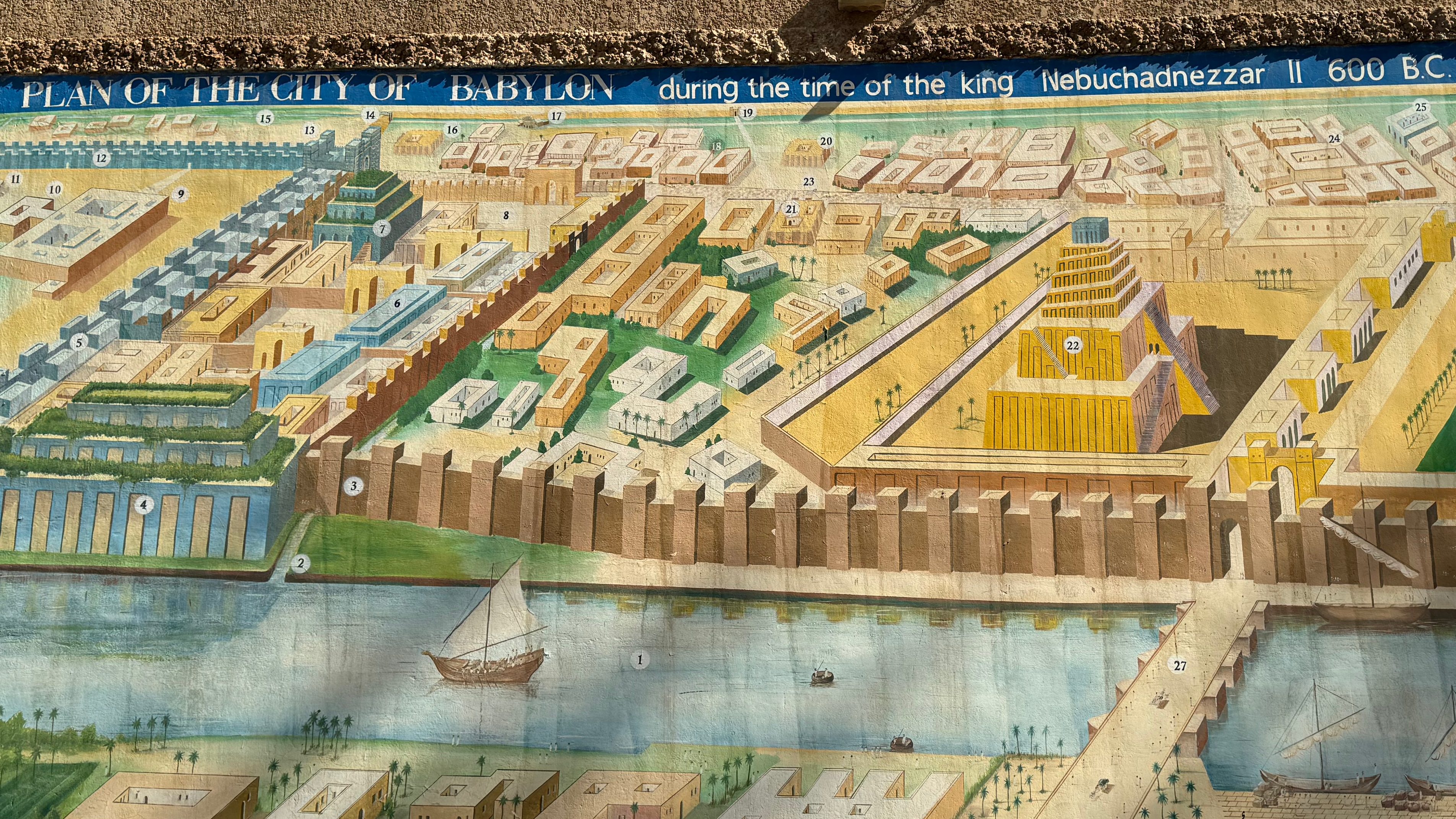
Getting to Iraq was surprisingly easy as a UK national at the time I went (March 2024), I literally turned up and got an 80USD visa on arrival at the Kuwaiti-Iraqi border. After some time in Basra, I got the night train to Baghdad and arranged a tour from there to visit Babylon and a few other amazing sights around. Using a local tour guide is definitely the way to explore Babylon, and I wrote all about this in my solo travel through Iraq blog post so check that out for all the info. I even hit up Mosul, ancient Nineveh, so you can cover all of your Ancient Garden location bases! The site of Babylon is really incredible, you have the unrestored sections, the restored sections of Saddam Hussein, and even Saddam’s palace overlooking the site and the Euphrates river which you can have a mooch around.
Temple of Artemis at Ephesus
Once I moved to Turkey, suddenly my potential travel list exploded. Turkey is very easy and safe to explore, and it’s a huge country with so much to offer any kind of traveller, and i’ll write as many blog posts on my hidden gem experiences here as possible. Coming to the ancient wonders of the world, as with Egypt and Greece, Turkey is home to two of them! They are both also relatively easy to visit, and by that I mean they are not in the middle of nowhere, but of course if you are on holiday in Antalya for 1 week then you’d have to be quite dedicated to see them both.
A huge amount of tourists to Turkey visit the ancient site of Ephesus, though, with most not even knowing about the Temple of Artemis right around the corner. My first bus tour of Ephesus was from Marmaris and it luckily included a stop in the local town of Selçuk, which is home to the Temple of Artemis and the Ayasuluk Citadel / Selçuk Kalesi. Both of these are located in the north west of the town, with the main Ephasus complex located a 5 minute drive away to the south west. The Temple of Artemis can be seen on the map in Turkish as “Artemis Tapınağı”.
The Temple of Artemis was built around 550 BCE, and sadly was burned via arson in 356 BCE, destroyed by Goths in 262 BCE, and then dismantled for building other things over the following years. Due to all of these reasons, even the archaeological site is quite frustratingly bare.
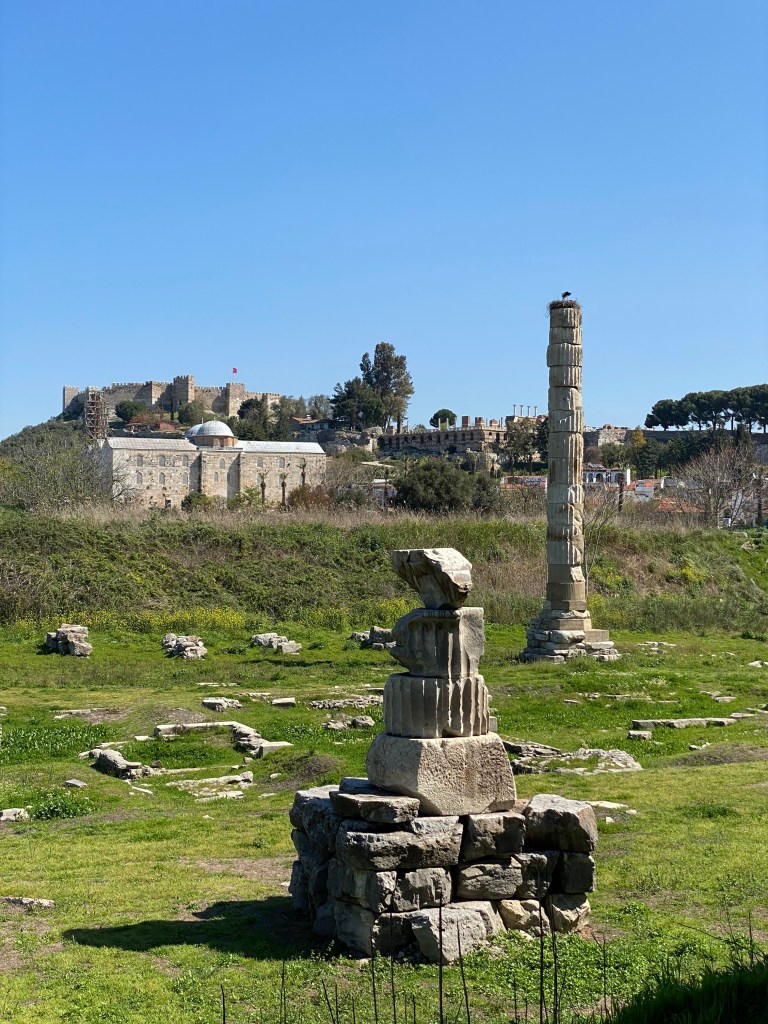
Even though it is basically one column with a birds nest on the top, it is a really nice tranquil site with a good backdrop, and nice to know you are standing where the enormous temple once stood. The temple itself was supposedly absolutely massive, over 100m long and over 50m wide, which is over triple the size of the Greek Parthenon, which is already pretty big. It’s hard to imagine something of such scale in the ancient world, hence its captivation by ancient scholars.
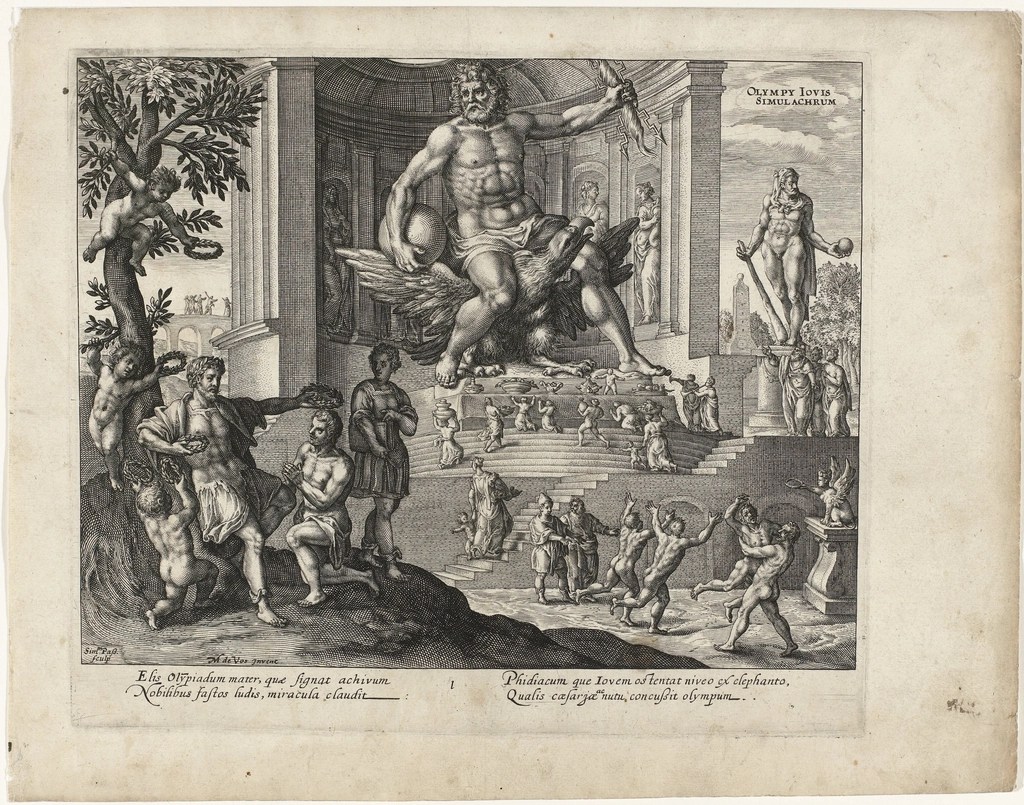
The ancient colossal ivory and gold seated statue of Zeus, built around 435 BCE, sat at around 12m tall. The statue was built in the Ancient Greek city of Olympia, indeed home to the Olympic Games, a city dedicated to the king of gods, Zeus. Fitting for this legendary wonder which lasted around 1000 years, its demise is a mystery. There are theories that it was relocated to Constantinople (modern Istanbul), and burned down in a fire. Others theorise that it was destroyed in an earthquake or simply dismantled. Whatever happened to this ancient wonder, you can still visit the archaeological site of Olympia today, on the Peloponnese peninsula in Greece.
Alas, this is the only one of the ancient wonders that I have not been to yet, so I will have to update this section when I get a chance to go. As much as the famous site itself must be amazing to visit, it doesn’t seem like there is much to miss out on in terms of the Statue of Zeus – perhaps they have some nice artist impressions and models though!
Mausoleum at Halicarnassus
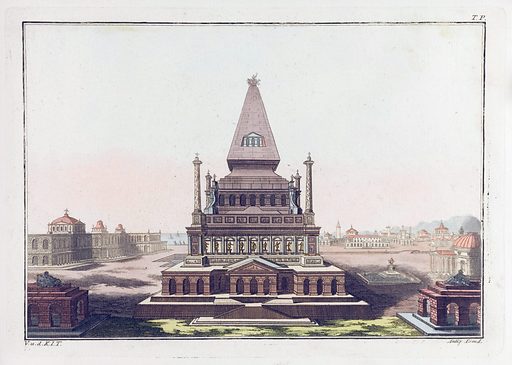
The Mausoleum at Halicarnassus, also known as the Tomb of Mausolus, was built around 350 BCE for Mausolus, an Anatolian king and ruler of Caria and his wife Artemisia. It is King Mausolus whose name is where we get the word mausoleum from, as it was such a grand structure that the Romans even named any fancy tomb after him. So Halicarnassus was the name of the Ancient Greek city in Caria which is now modern day Bodrum in Turkey, and the Mausoleum ruins are literally right in the centre of it.
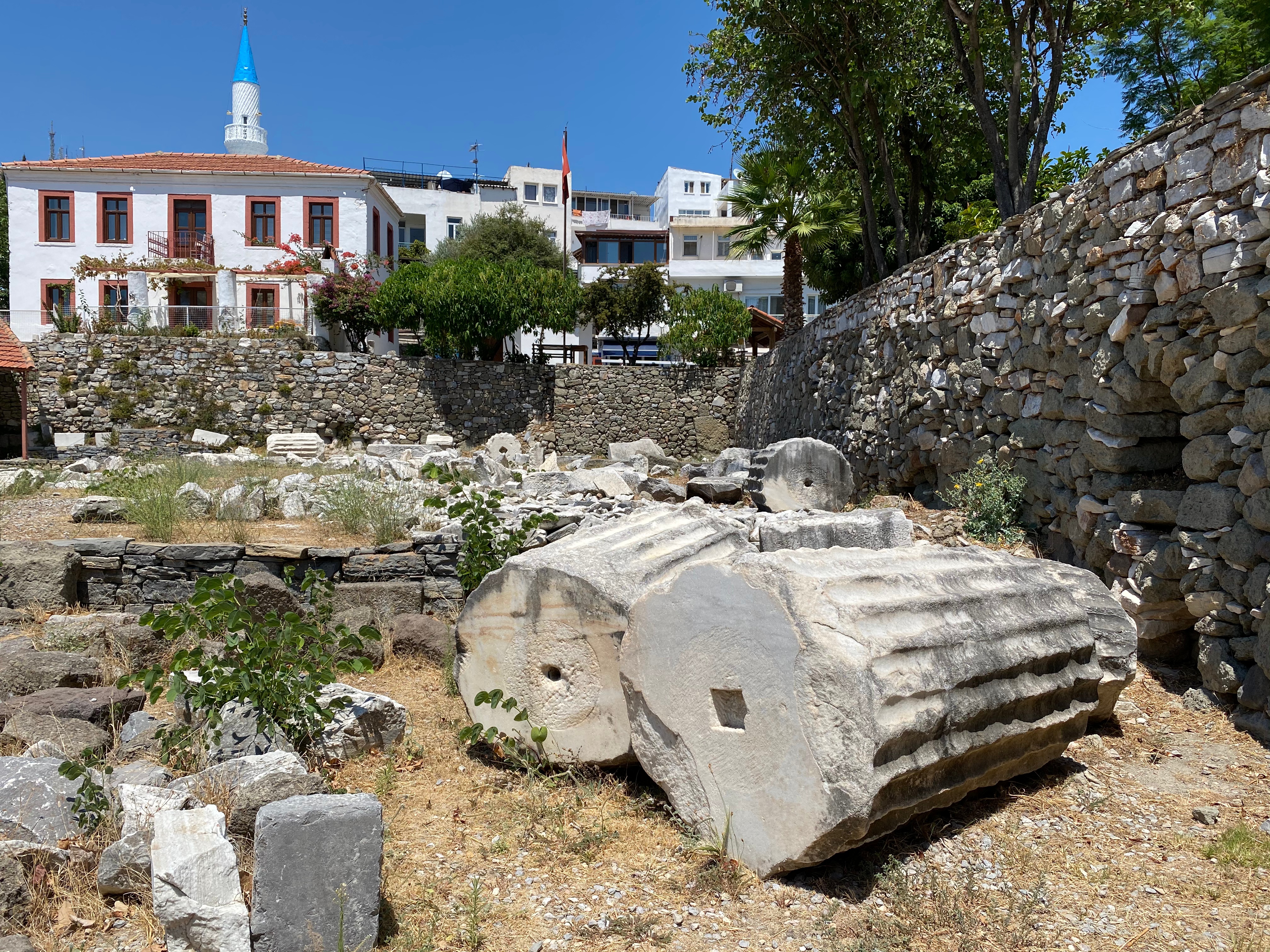
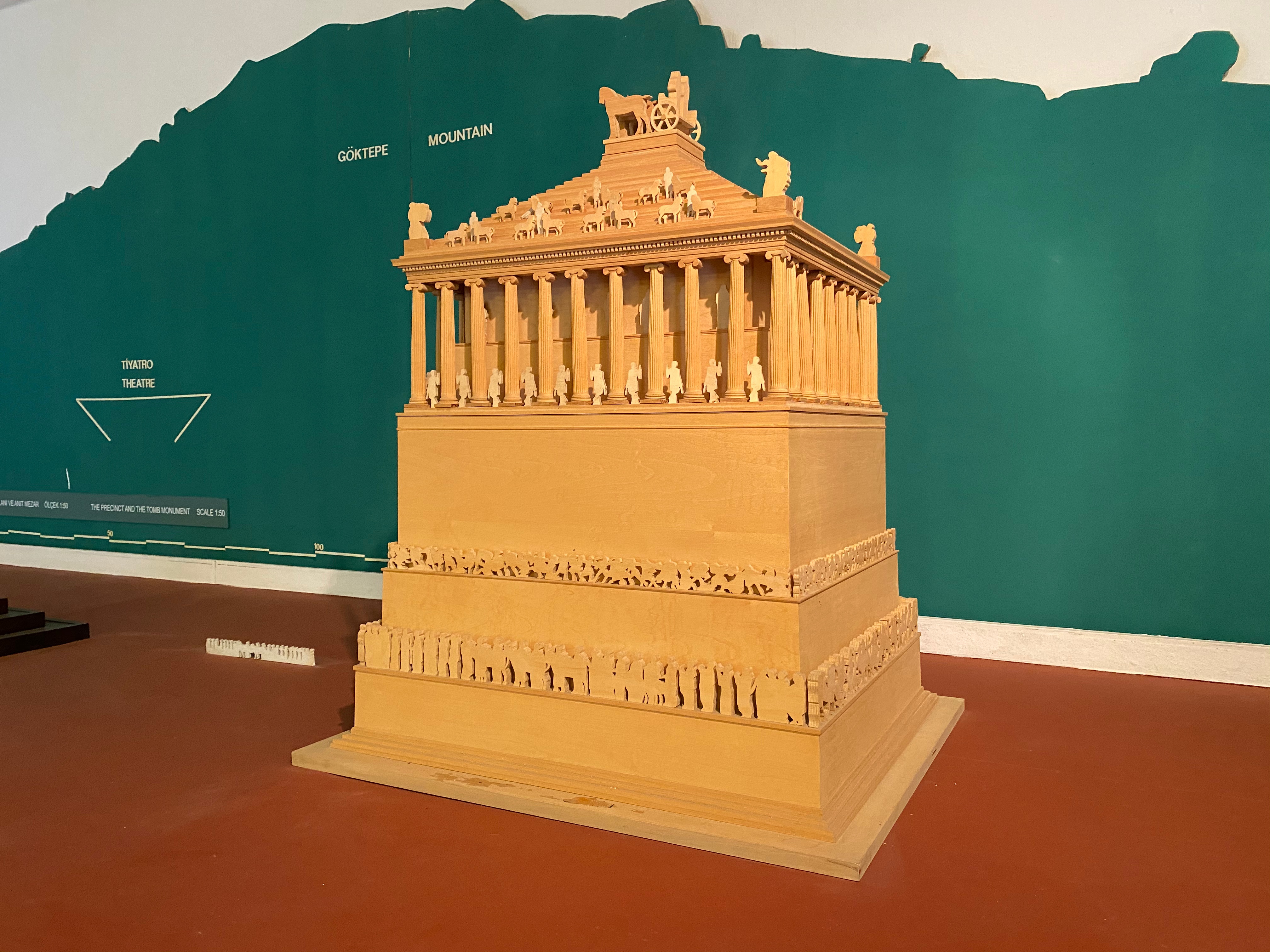
The archaeological site is small but nice, with plenty of the original columns and blocks in the rectangular plan. Inside there is plenty of information about the wonder, as well as models of what it should have looked like. A fabulous 45m high stepped structure, featuring dramatic columns and sculptures, topped with a chariot. The mausoleum stood around 1500 years, while getting hit by earthquakes in the 13th and 15th centuries. This makes the mausoleum the last of the six fallen wonders to fall.
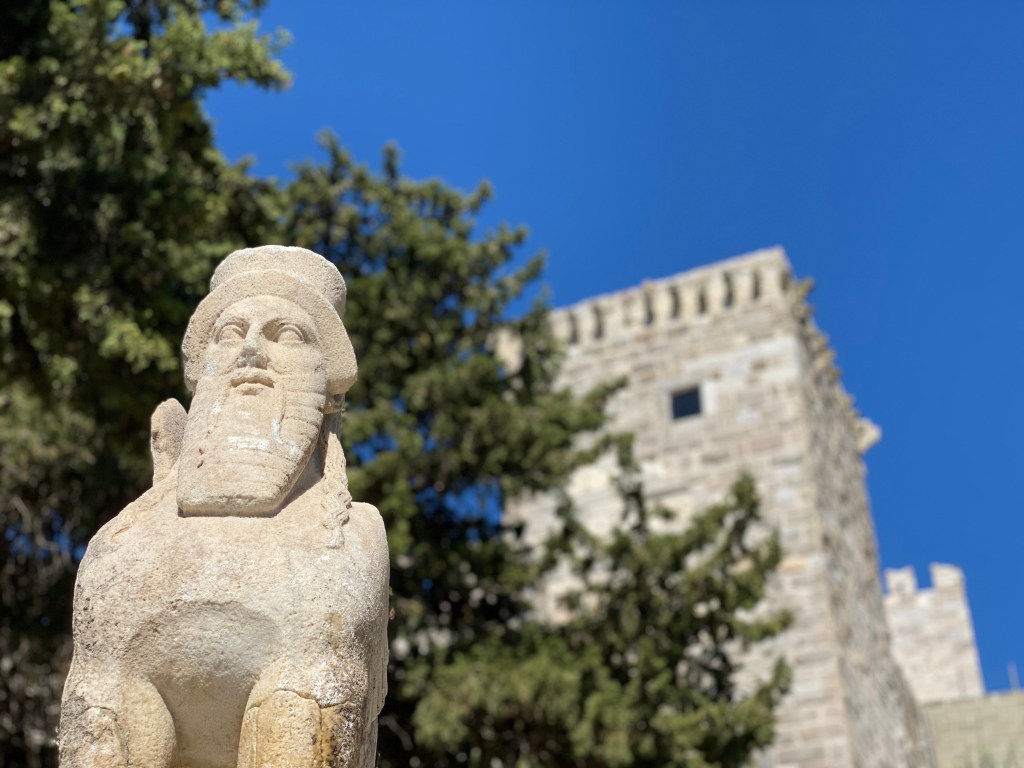
Most of the remaining structure was then dismantled and reused by the Knights of St. John to build the nearby Bodrum Castle from 1402 to defend against the Ottomans. Bodrum Castle is well worth a visit on its own, but especially as it’s mostly built from a wonder of the ancient world.
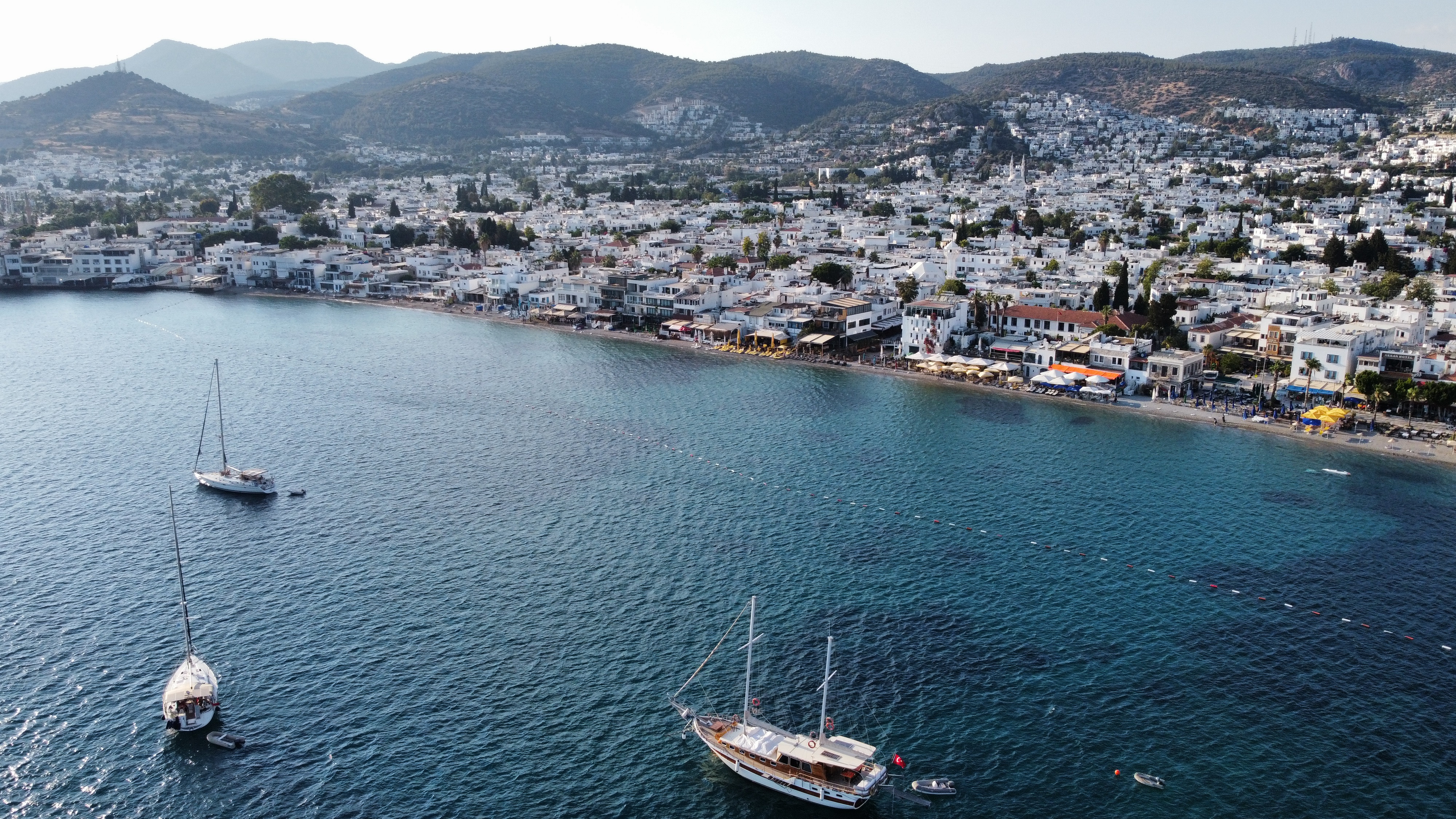
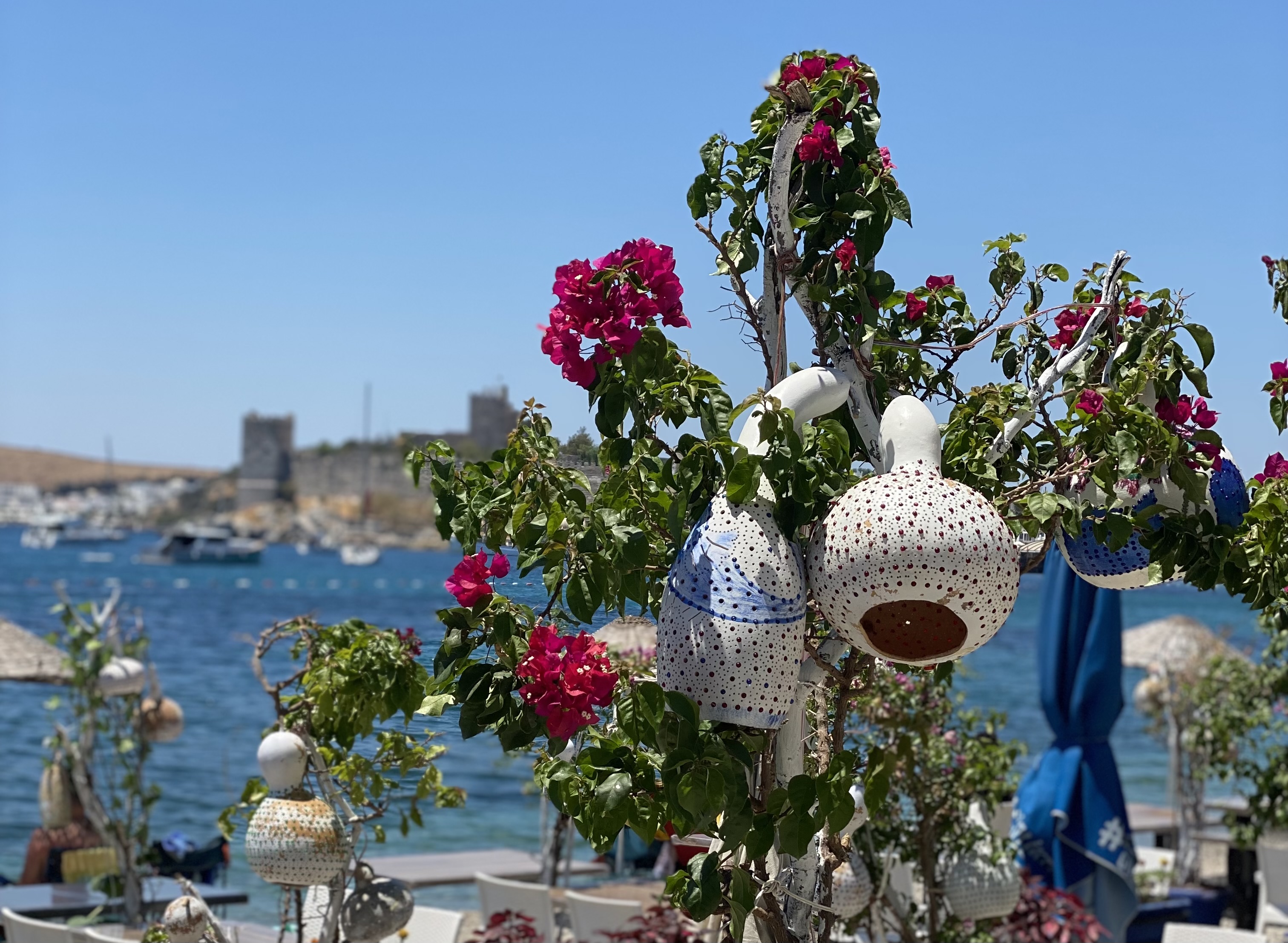
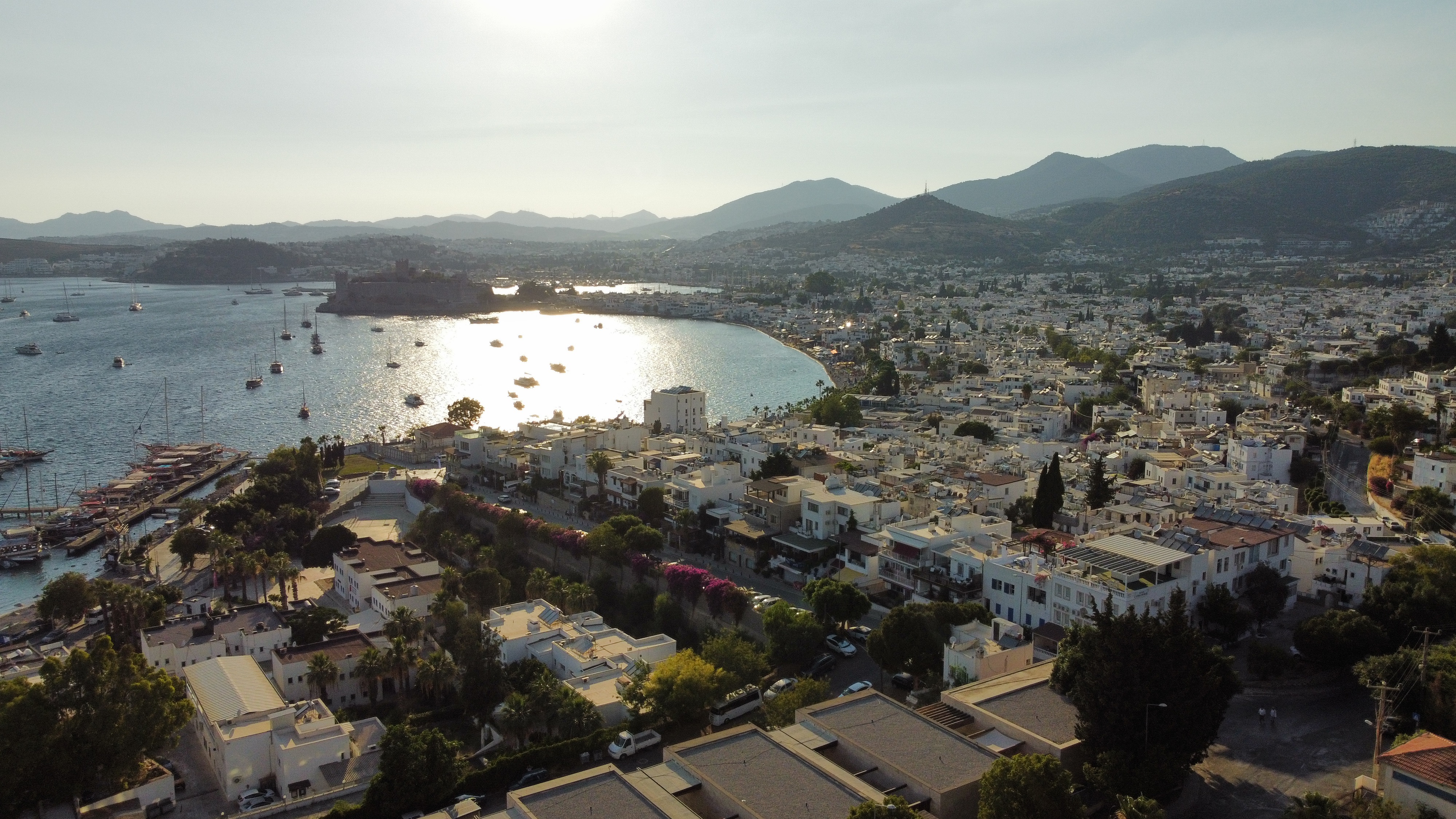
The archaeological site is only a 5 minute walk away from the beach, so if you’re in Bodrum it is absolutely worth a look. Bodrum and its surroundings are one of my favourite parts of Turkey, with white washed houses running down the rocky hills to the long beaches, contrasted by the bright pink bougainvilleas everywhere, overlooking the Mediterranean.
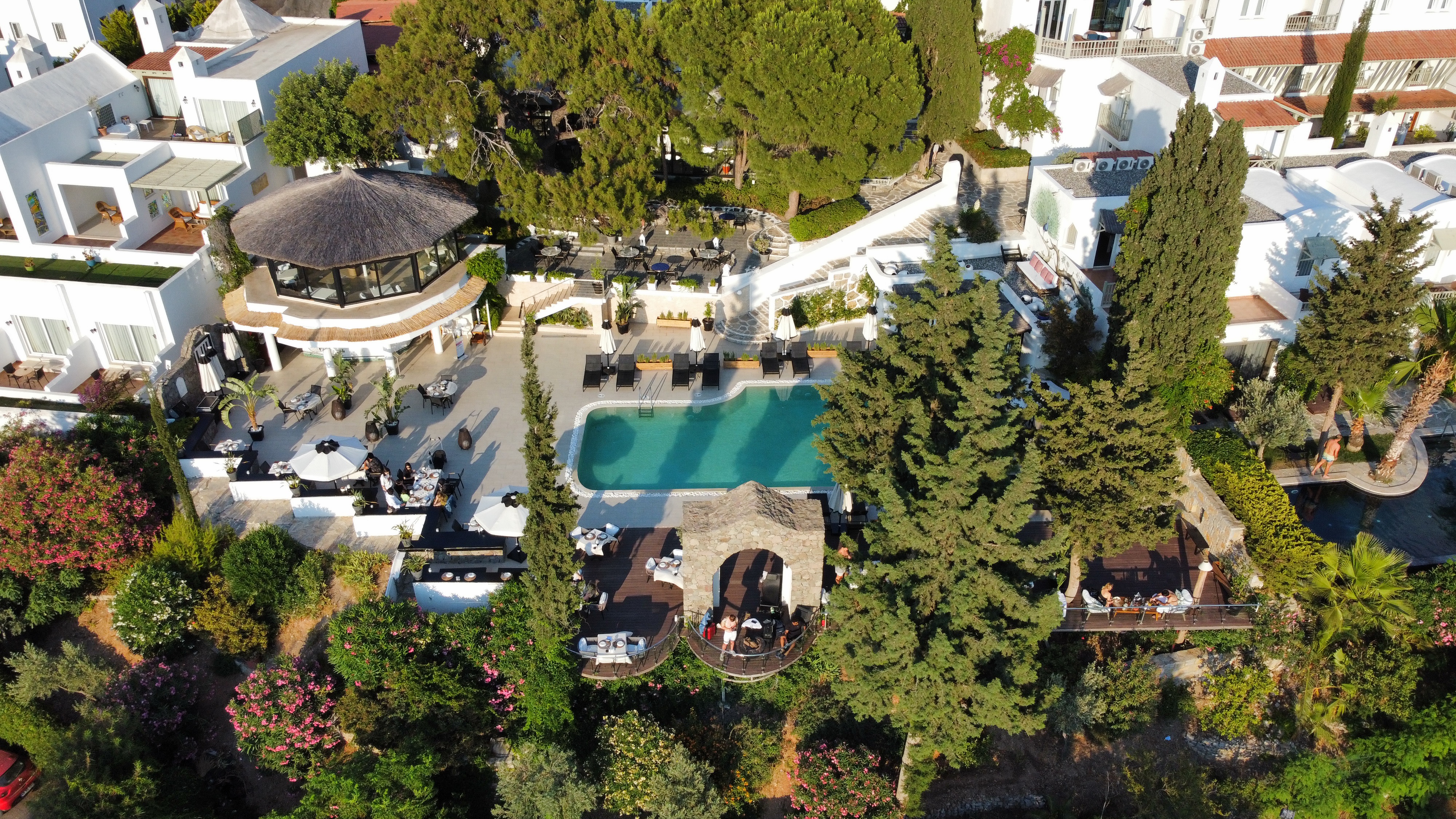
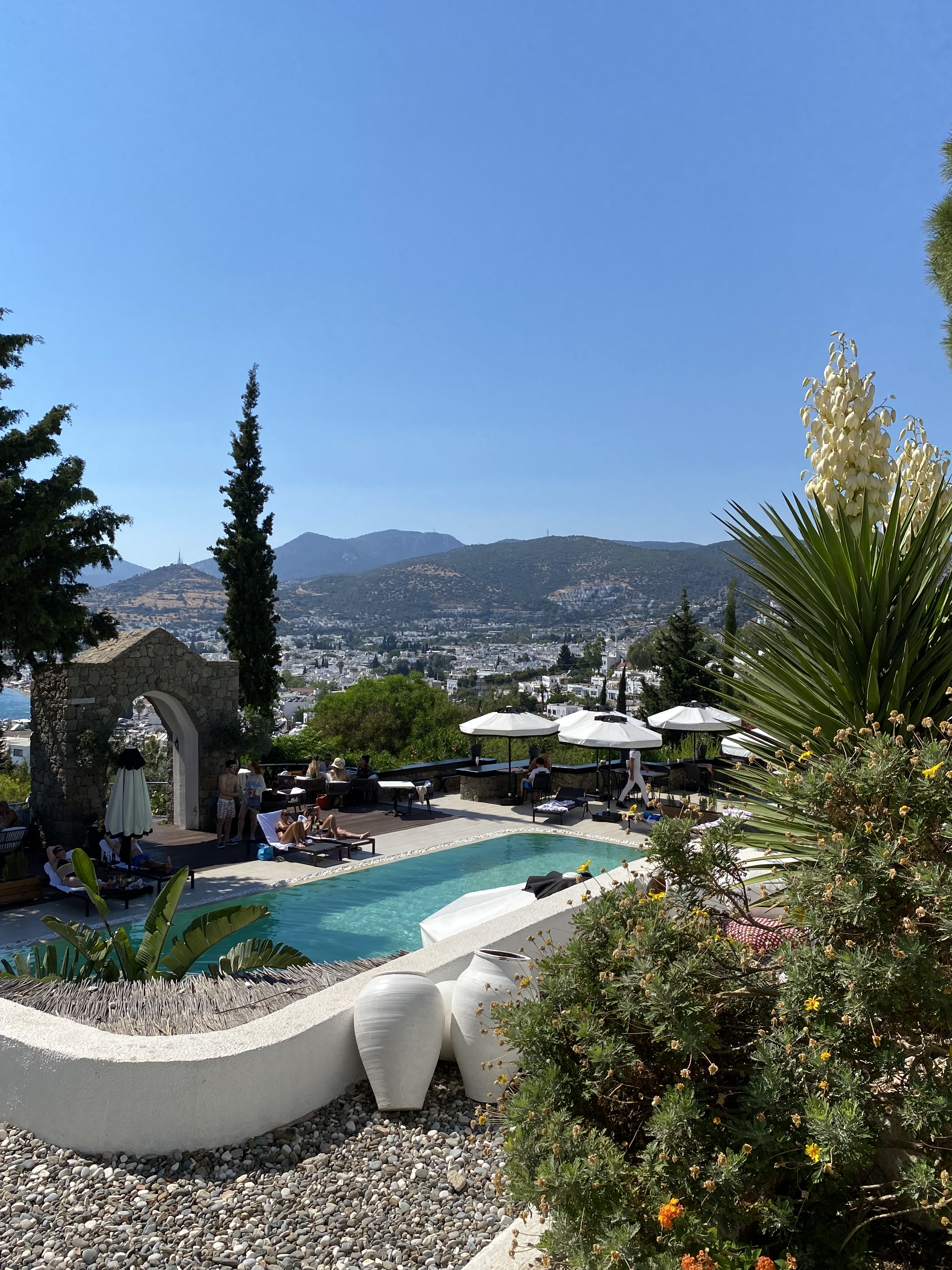
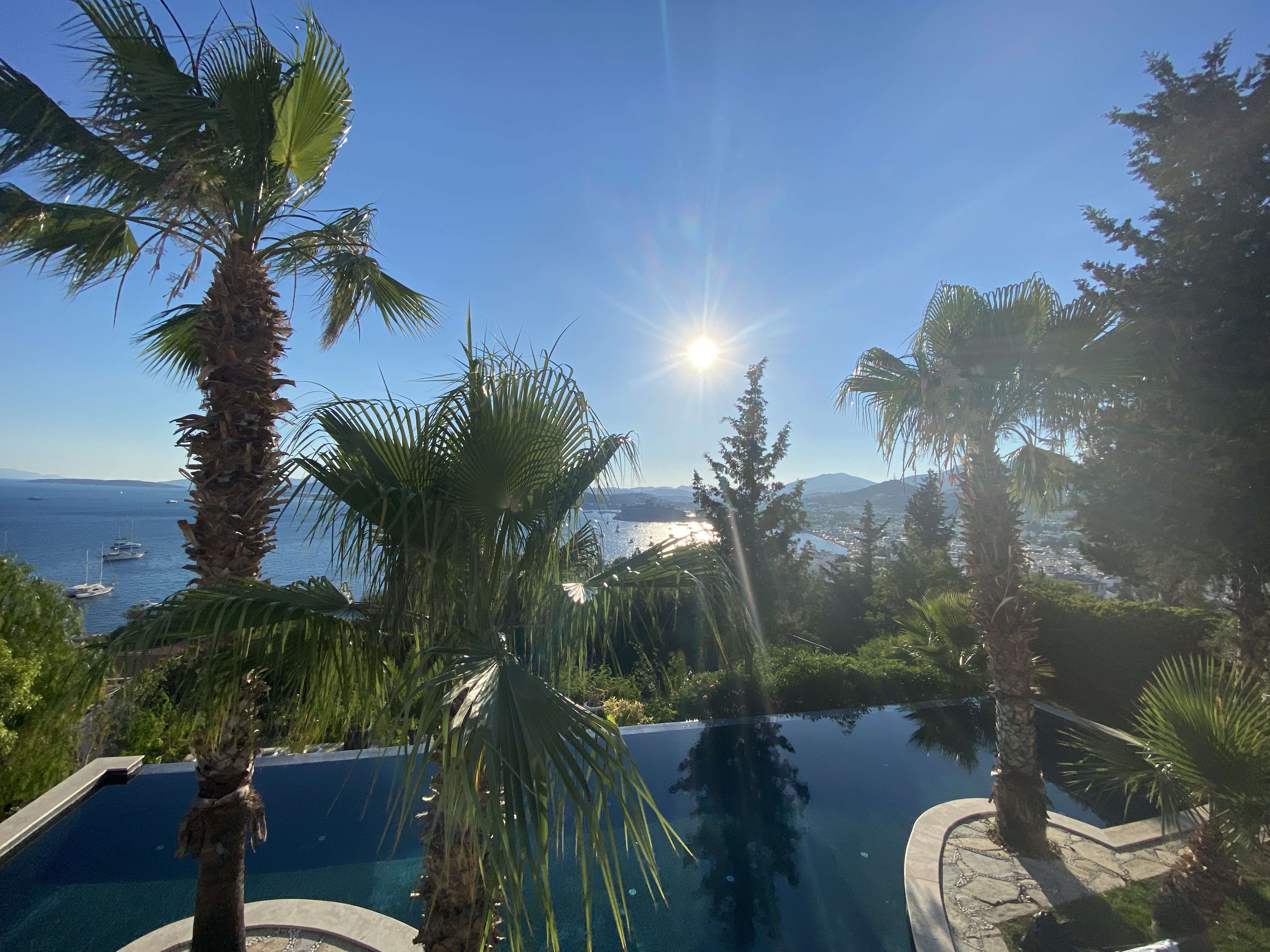
Below are some of my favourite pictures from Bodrum, and the hotel which I stay in each time I return – Manastir Hotel and Suites Bodrum. I stayed here by chance when I first visited Bodrum during my first summer in Turkey, and just fell in love with it and the incredible views it provides, as it sits atop a hill just 5 minutes from the beach. In the background of the final picture you can see Bodrum Castle jutting out into the Mediterranean, where most of the mausoleum at Halicarnassus now lays.
This demise of the tomb leads to a great question, where is King Mausolus and his wife buried if the tomb was removed? Well, nobody knows, but supposedly while the Knights of St. John were dismantling the structure, the coffins went missing. Alas, King Mausolus and his wife were probably grave robbed.
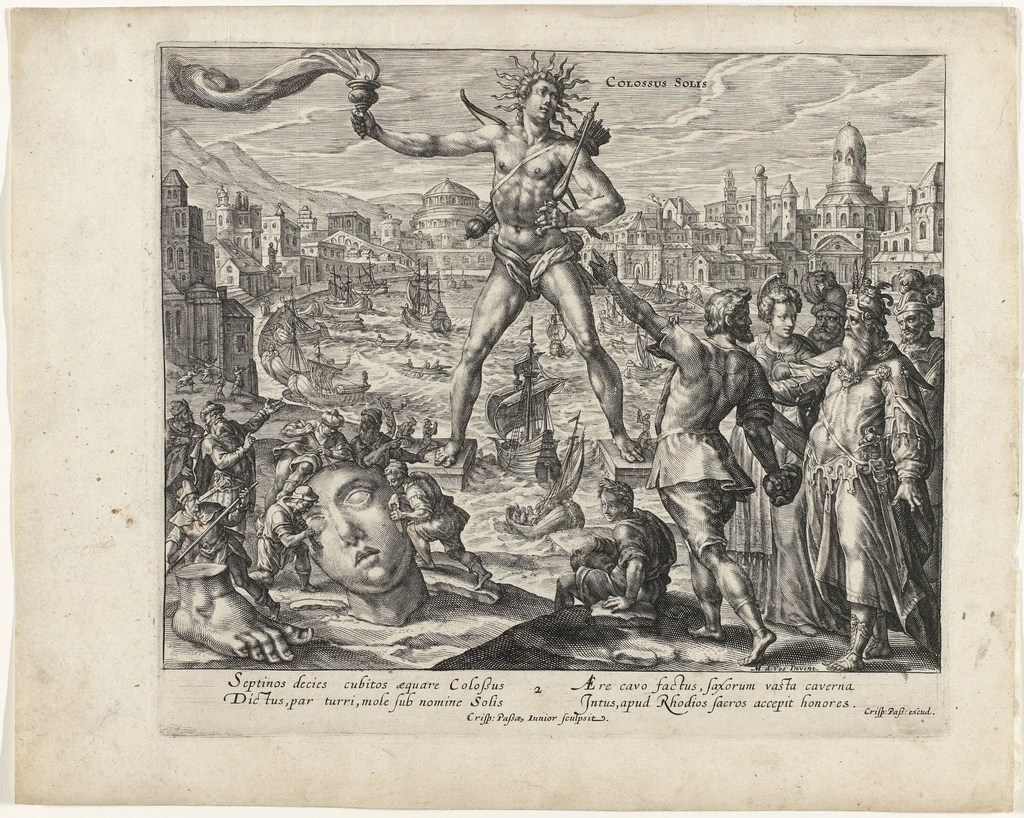
Constructed in around 280 BCE and standing at about 33m tall, the Colossus of Rhodes towered over the entrance to the harbour of the ancient Greek City of Rhodes, on the island of the same name. The statue was of the Ancient Greek sun god Helios, and was built by legendary sculptor Chares of Lindos (Lindos being another Ancient Greek city on the island) to celebrate victory from invading Macedonians under Alexander the Great – and what better way to celebrate this than a huge straddling bronze god statue. The colossus was made of bronze, with iron and stone for reinforcement and weighting respectively. Rather “unlegendarily”, with the ancient descriptions that we have, it would apparently have been impossible that the statue could have straddled the harbour, so it was probably just standing on one side. However, even as an engineer I will forever refuse to believe this technicality and assume that the ancients figured out a way and continue to live my Braavos harbour entrance dreams.
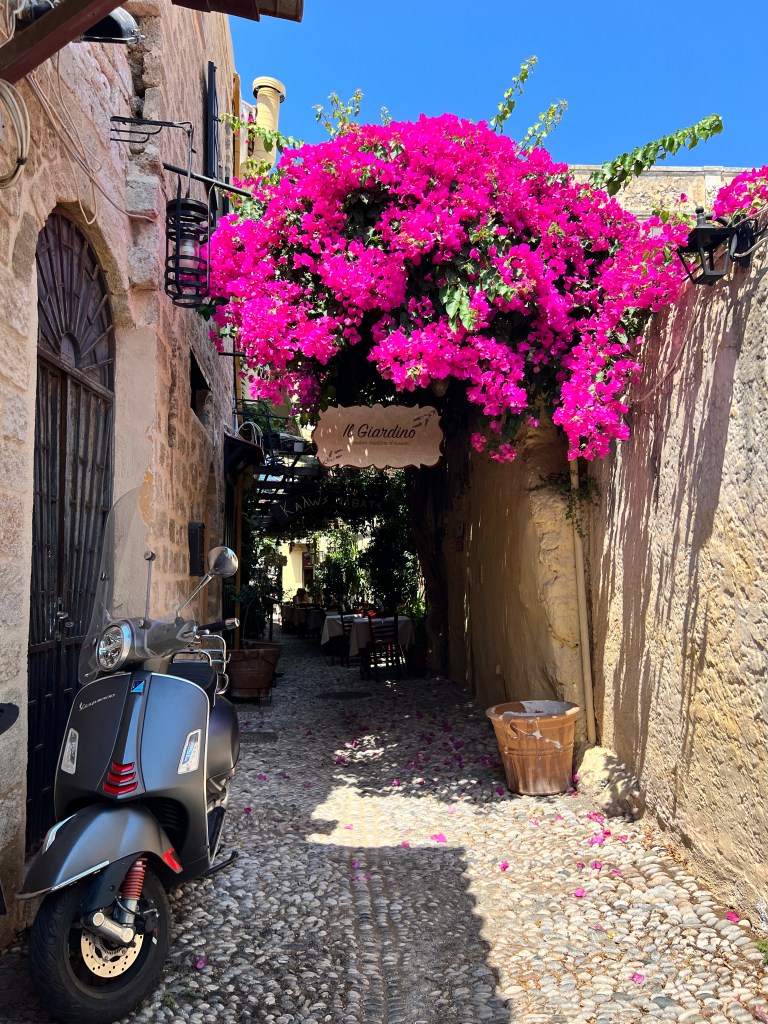
As with many other ancient sites, it was an earthquake that took out the colossus. In only around 225 BCE the statue fell, standing for a mere 55 years, the shortest lived of the ancient wonders. Yet, the rubble of the wonder was left in place until 654 CE – a staggering 879 years, 16 times the lifespan of the colossus itself. It was at this time when Rhodes was invaded by Arabian forces and the bronze was broken up and sold on, apparently 900 camels worth of ancient wonder goodness!
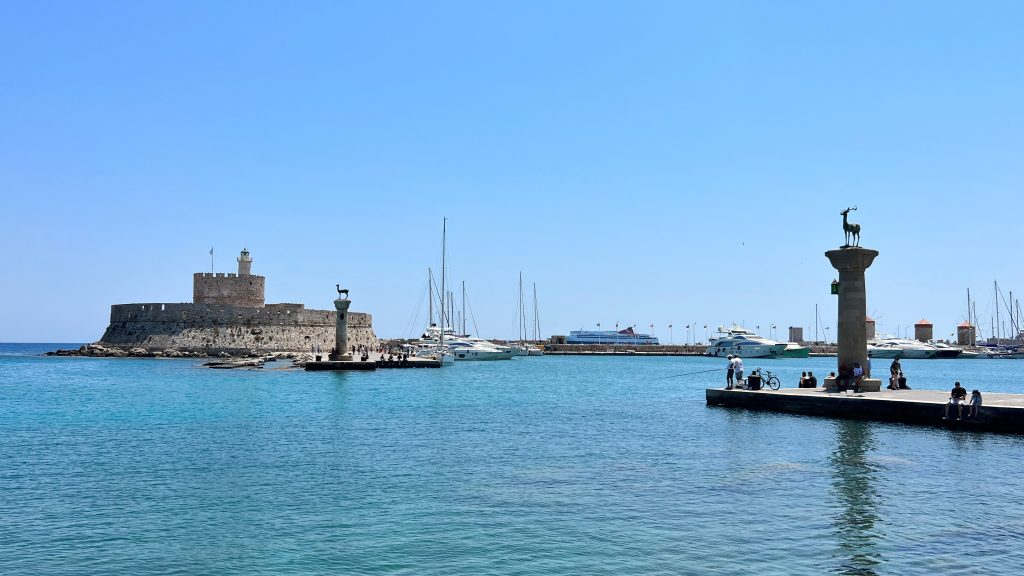
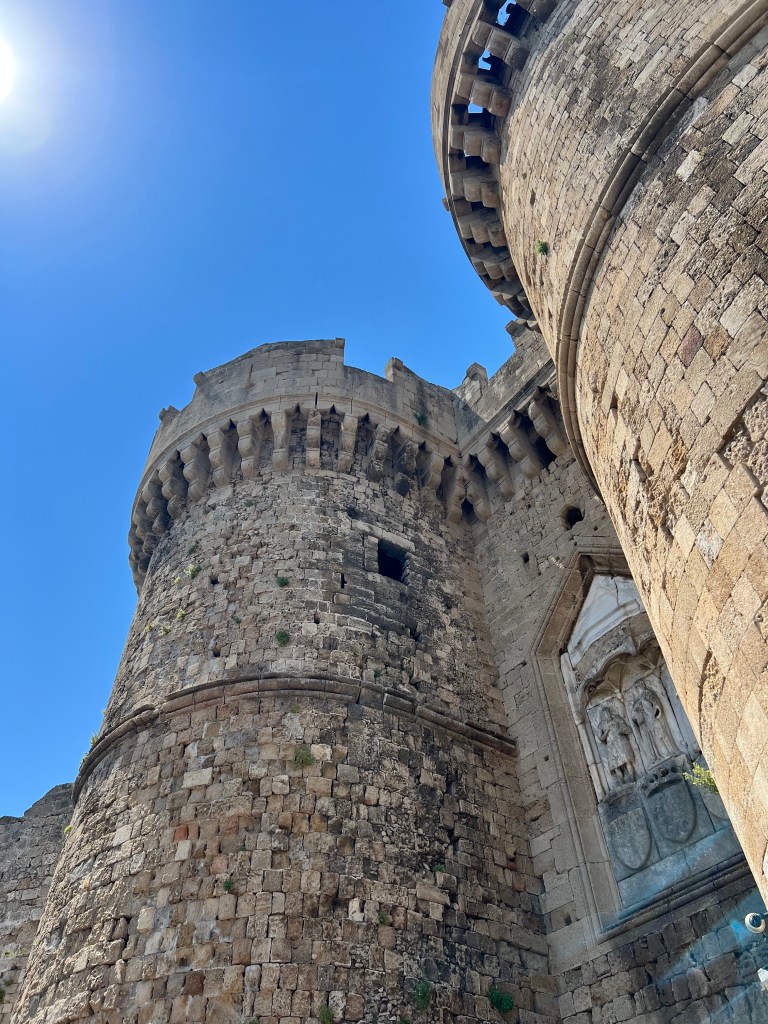
The city of Rhodes is a stunning place to visit today, with its Medieval old town built by the Knights of St. John, who established the Hospitaller Rhodes on the island for over 200 years from the 1300s to the 1500s, before eventually relocating to Malta. The harbour of Rhodes today has two commemorative columns on each side built in 1947, one with a Stag statue and the other with a Doe, showing where the Colossus of Rhodes may have straddled. The deer statues are from the legend that the Knights of St. John brought deer to the island to help get rid of the snakes apparently. Behind the columns is the Saint Nicholas Fortress, a medieval bastion built by the Knights of St. John to protect the harbour, and is currently a lighthouse.

Lighthouse of Alexandria
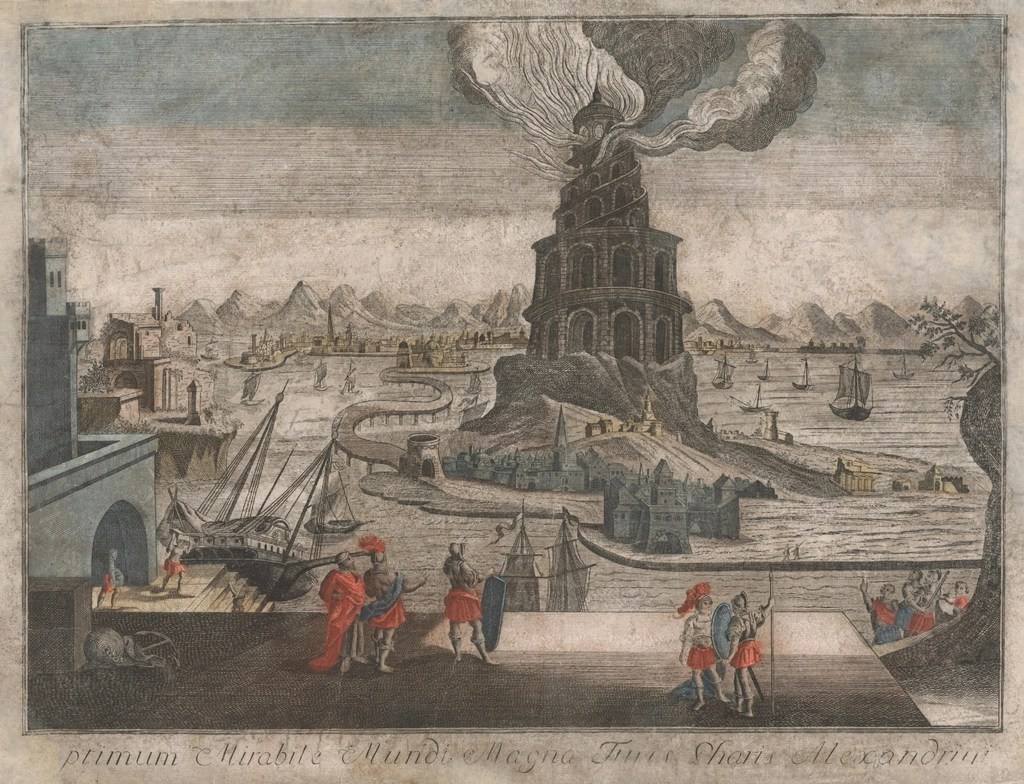
The final and most recently constructed of the ancient wonders was the Lighthouse of Alexandria, completed in the very recent year of 246 BCE. The lighthouse is also known as the Pharos of Alexandria, as it was built on the island of Pharos in the Nile Delta, which was eventually connected to the mainland via a causeway. After Alexander the Great’s conquests, many cities called Alexandria popped up from the Mediterranean to Central Asia, however this was the Alexandria in Egypt which he founded opposite the small island of Pharos. The lighthouse was constructed by the Ptolemaic Kingdom after Alexander the Great died and Ptolemy the First declared himself king, of course.
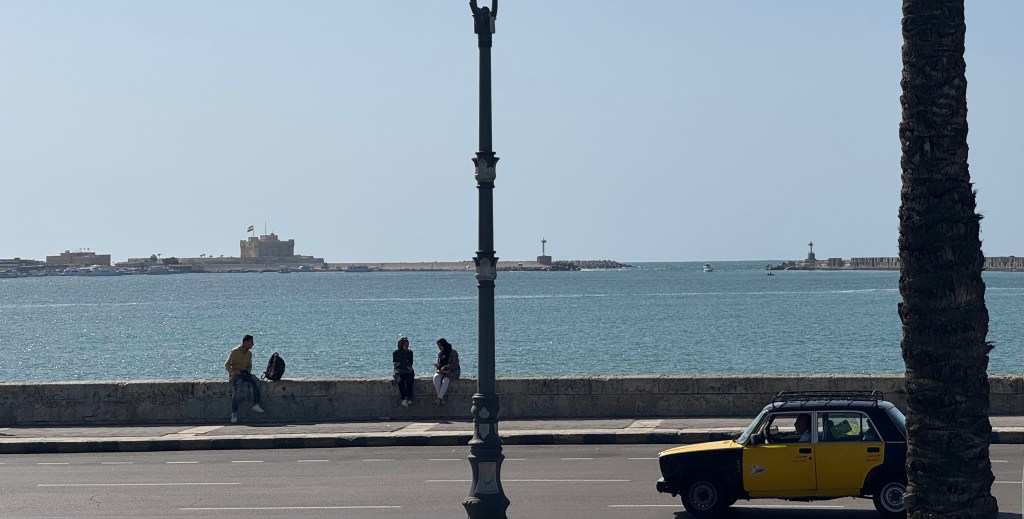
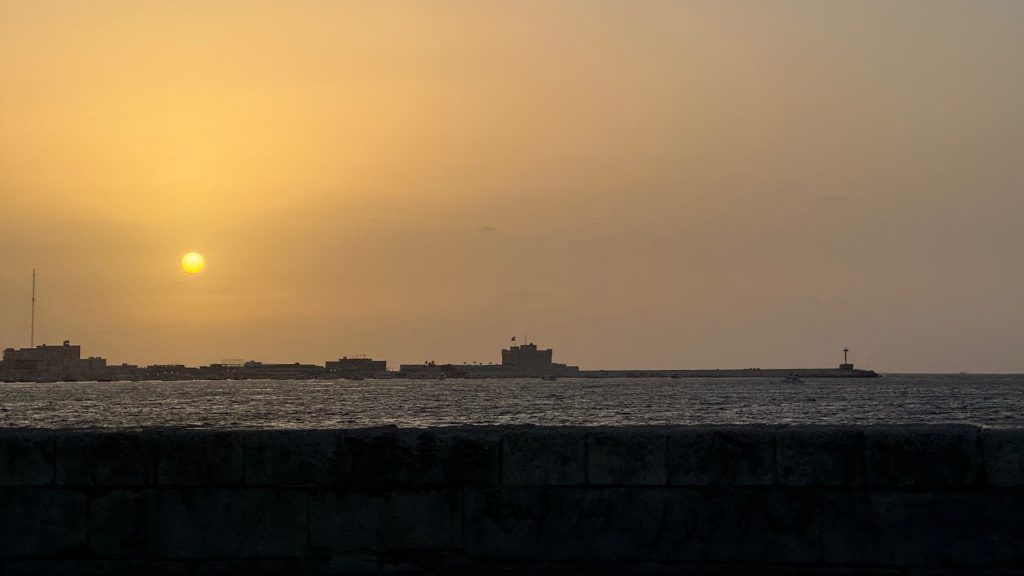
The Lighthouse of Alexandria stood over 100m tall, eventually falling due to, you guessed it, earthquakes. It heroically withstood two major earthquakes and stood strong, however finally in 956 CE it collapsed. Some repairs and additions were made after this, but an even bigger earthquake completely destroyed the lighthouse in 1303. The remains were sat in the bay of Alexandria until 1480 when they were used to build the nearby Citadel of Qaitbat by the then sultan of Egypt under the Ayyubids. Providing light for ships via a furnace in the top for over 1200 years, this remarkable structure was also one of the most recently surviving of the Ancient Wonders of the World, only outlived by Mausolus’s Mausoleum, and of course the Great Pyramid.
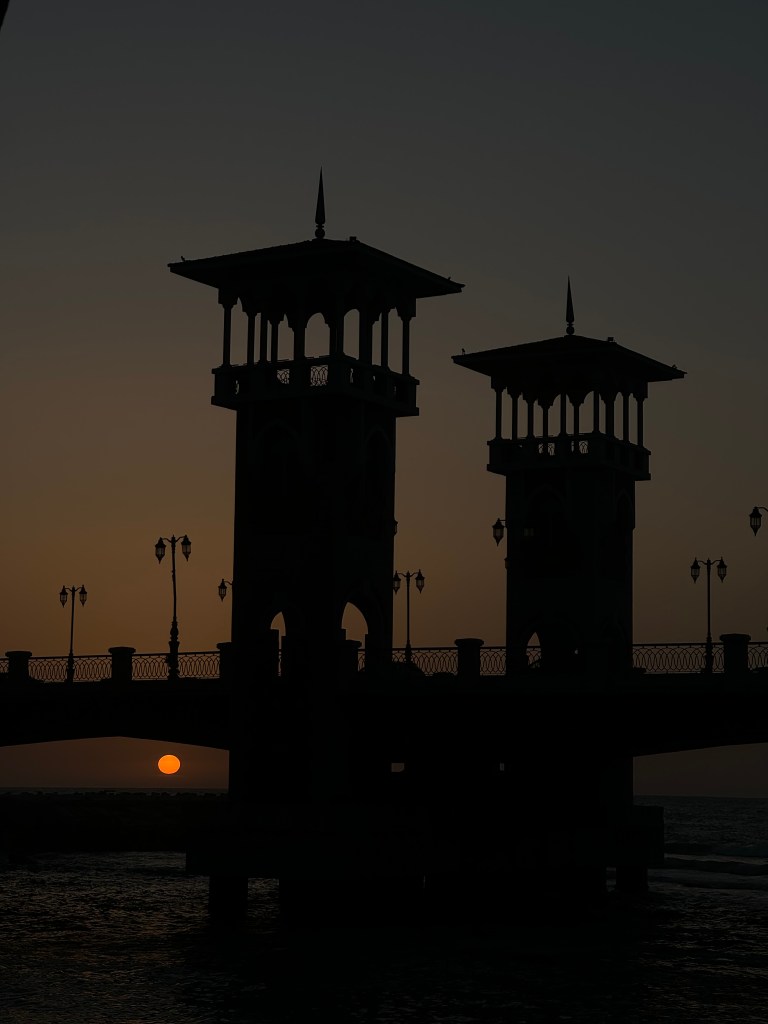
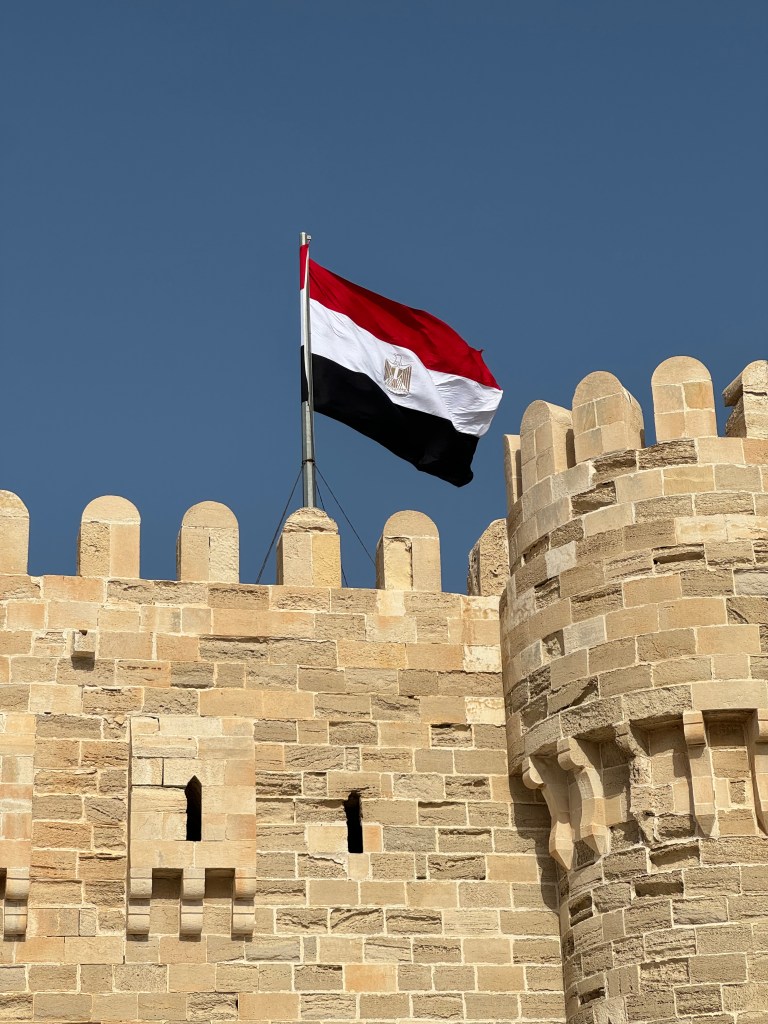
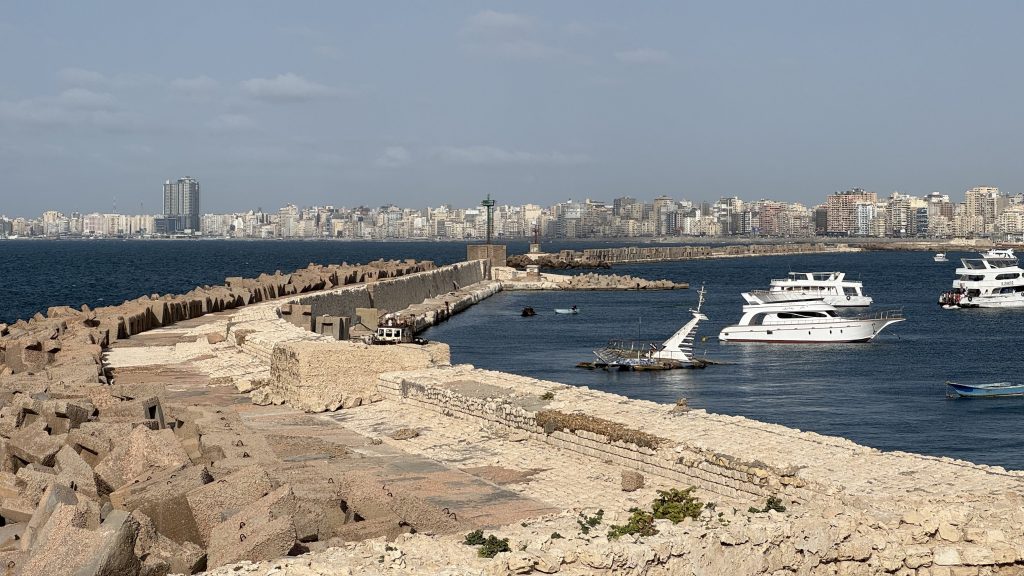
Despite the multiple collapses, you can still see where the island of Pharos and the Lighthouse once stood, now marked by a column at the end of the bay entrance causeway. This causeway juts out from the Citadel of Qaitbay, which is a beautiful citadel. It is extremely well preserved, and you get a brilliant view of not only the lighthouse location, but the Mediterranean views from the lighthouse, Alexandre the Great and the Ptolemy’s themselves.
Alexander as a city completely exceeded my expectations. As Egypt’s second largest city, you can get there from Cairo easily on the train which is definitely the way to travel there. From Cairo train station you have to go upstairs to the tourist ticket office and you’ll get a 1st class tourist ticket to Alexandria, at least that seemed to be the only option for me when I asked around at the outside ticket offices. The train is in good condition, spacious and the views of the nile and countryside on the way send you right back to Ancient Egypt.
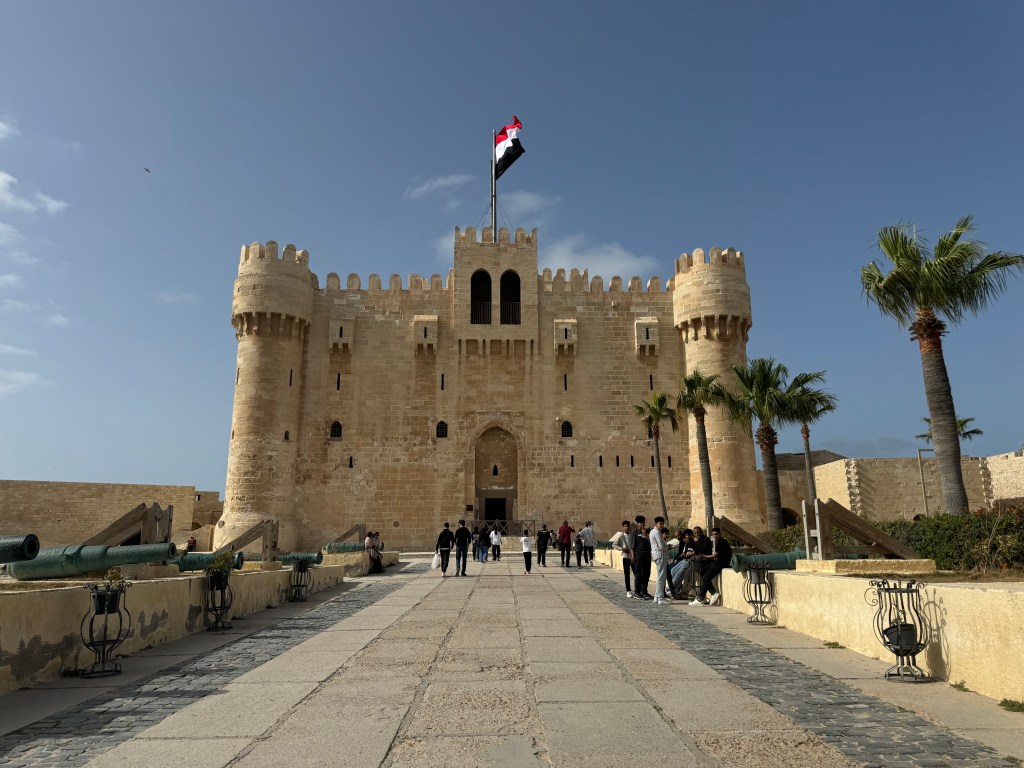
The coastline in Alexandria is really staggering, the city just sprawls along the sea for seemingly miles and miles and never ends. The sunsets are also incredible, especially around Stanley Bridge and the citadel. Worth visiting is the ancient Roman archaeological site and of course the Library of Alexandria – opened in 2002 it’s a homage and testament to the famous ancient Library of Alexandria. It is a truly incredible building and complex; architecturally, historically and educationally.
The Ancient Bucket List
So in answer to the question that I always wondered as a kid, do the Seven Wonders of the Ancient World still exist? They very much do exist, and have equally fascinating histories associated with them, even in their current states. Just ignore the fact that earthquakes pretty much took them all out. I urge you to tick off the ancient bucket list, not only are the sites themselves really interesting, but they are located in some of the best places in the world. Greece, Egypt and Turkey are the heart of the eastern Mediterranean, with the ancient sites riddled in history – after all, there were ancient wonders there.
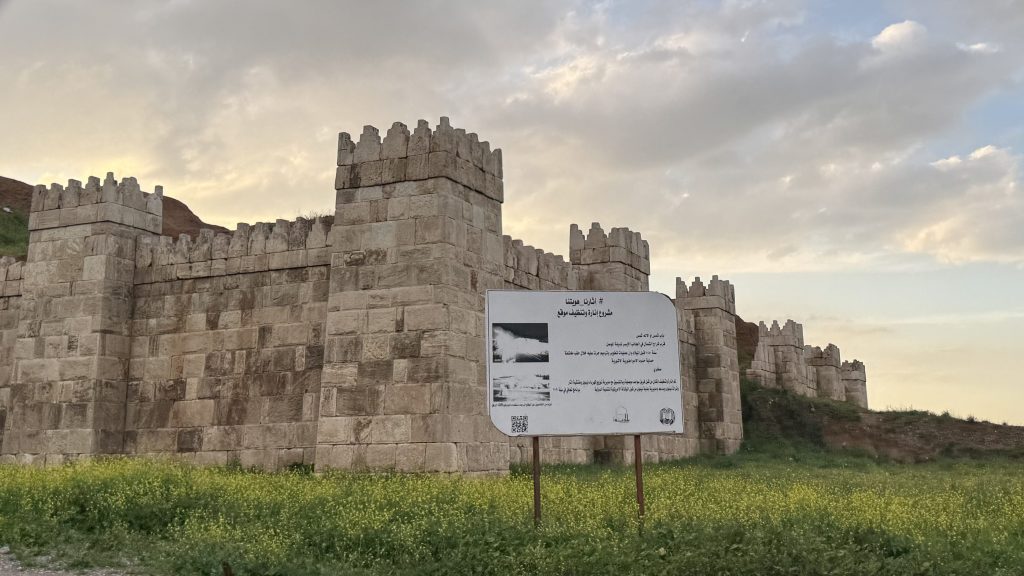
The Hanging Gardens of Babylon though, still remains as mystic as it did to me as a child. Not only has it never been found, the location still disputed, but to visit Babylon and Nineveh means going to Iraq; a country on the more challenging side for most people. If you can overcome this though and are interested in history, culture and incredibly friendly people, Iraq is your place.
I hope this was useful, and safe travels!


 Matt Vincelli
Leave a comment