VISITING THE SEVEN WONDERS OF THE WORLD
How to enjoy them – despite the crowds
The New7Wonders
TL;DR
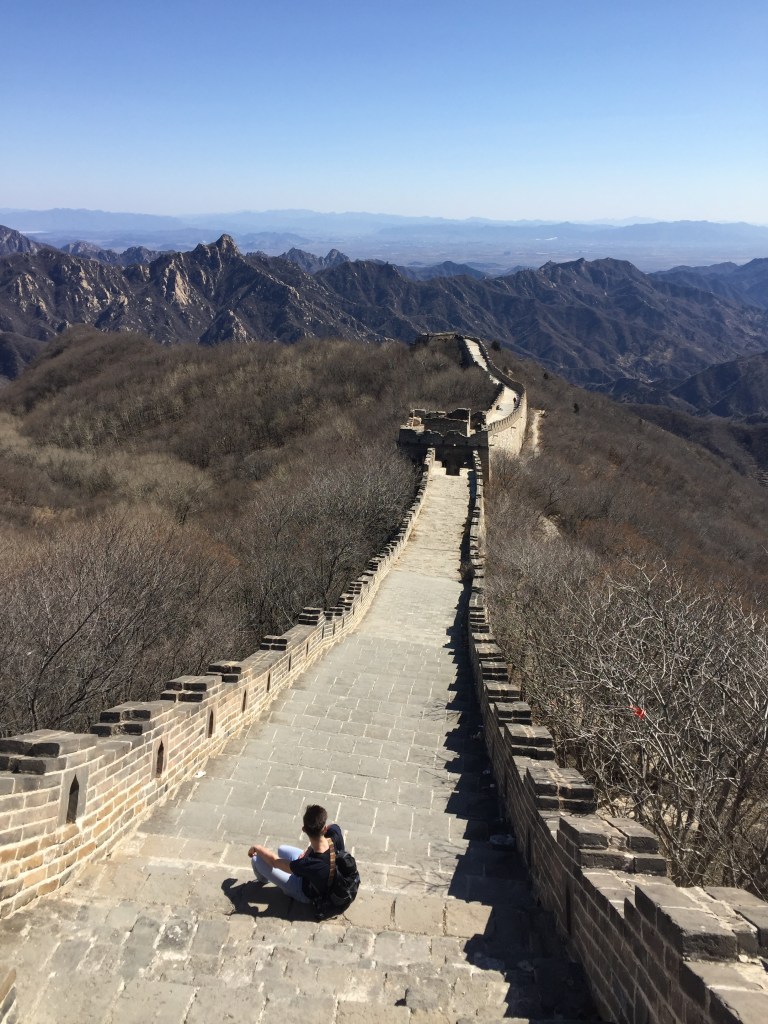
- Great Wall – My experience was of the Mutianyu section of the Great Wall – follow it North West to the end of the newly refurbished section and onto the unrestored section – there’s not many people and its original wall! I don’t think you can go wrong with which wall sections, just avoid Badaling.
- Petra – See “Petra by Night” the night before visiting the city, then the next morning arrive an hour before it opens to see the Treasury with no crowds – this will last about 15 minutes!
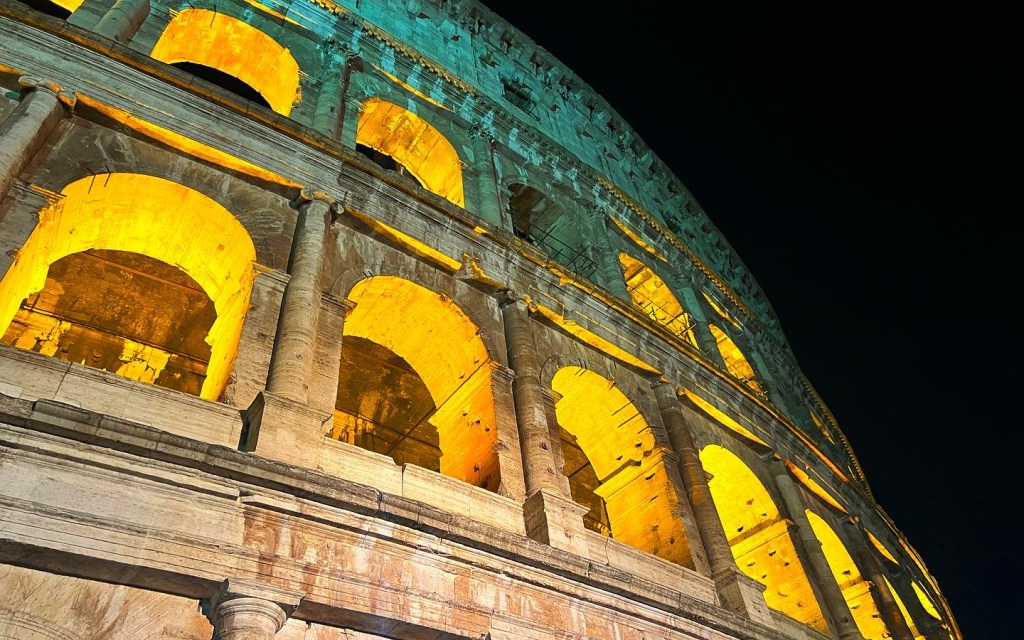
- Colosseum – On top of a standard tour, get an e-scooter around it at night for quiet and beautifully lit up views. There’s also a great picture spot at the back of the Roman Forum which not many people know about.
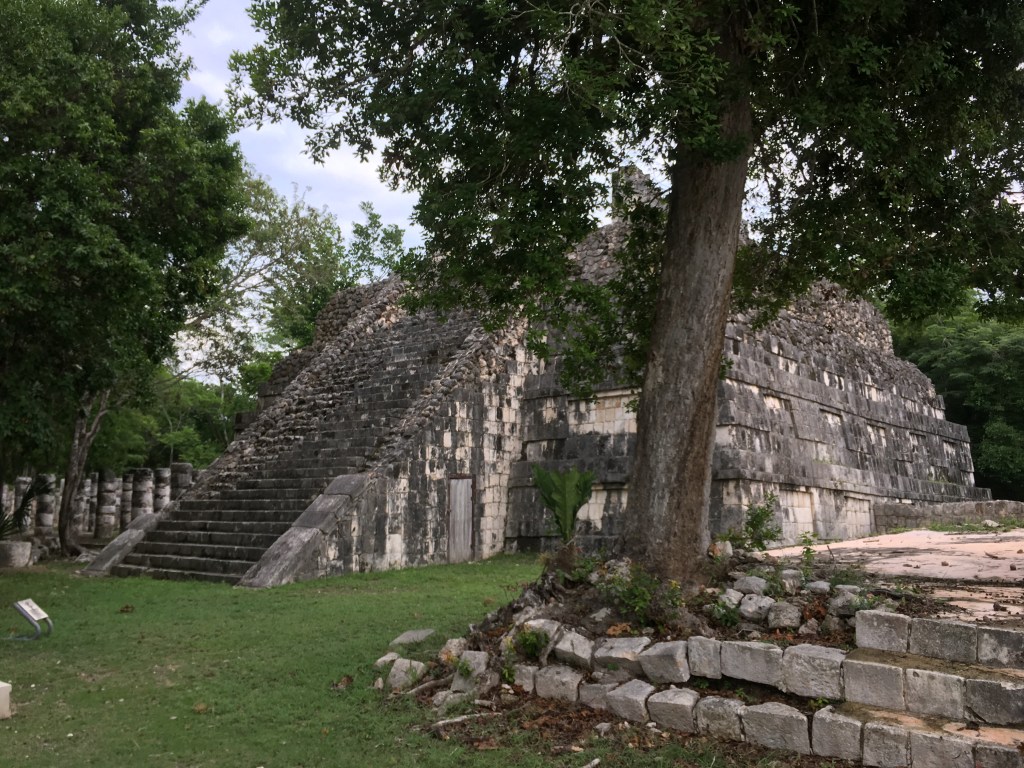
- Chichén Itzá – This is a big city, don’t miss the ancient Mesoamerican ballgame (ōllamalīztli/pitz) pitch as featured in “The Road To El Dorado”! Also if there’s any rain, that’s the time to get an empty picture of the Temple of Kukulcan (the main pyramid)!
- Machu Picchu – You don’t need to get there as early as possible, just make sure you stay at the top until the sun has risen above the mountains – link to blog post.
- Taj Mahal – Get here as early as possible and head straight for the Taj Mahal if you want minimal people, it is a decent walk from the complex entrance, then you can enjoy all the other wonderful buildings on the way back.
- Christ the Redeemer – Not much advice for this except take the nice walk down the mountain!
Once I really got into travelling and discovered the Seven Wonders of the World, they became an extraordinary checklist that I wanted to complete, just like the ancient Greeks with their own Seven Wonders of the Ancient World. I honestly thought they would take much longer to visit than they did with a full time job, but thanks to a friend wanting to retrace Lawrence of Arabia’s footsteps, another friend’s Indian wedding, and a Russian hostel nightmare, the wonders just aligned.
The Great Wall
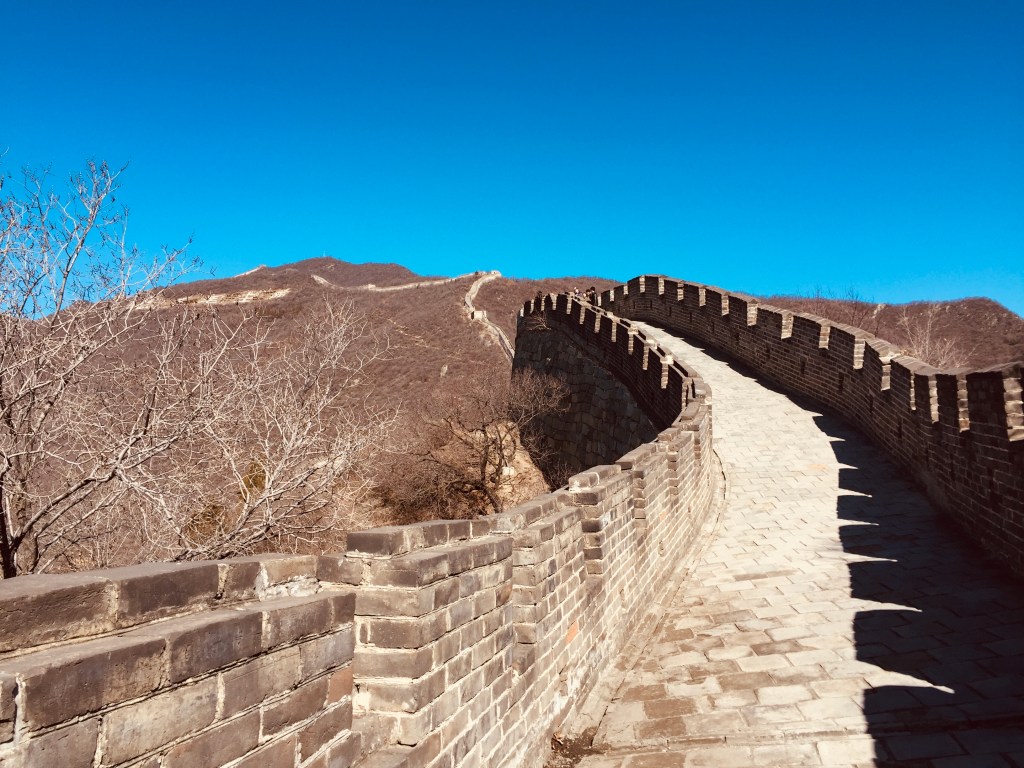
China in itself is an incredible travel destination and deserves nothing less than a book to try and cover even a few destinations, but I will write what I can about the 3 weeks that I spent there in another post. For this, I will just briefly cover my experience with visiting the Mutianyu section of the Great Wall.
The Great Wall of China is a series of separate wall sections which spans 2000 years of construction, with most of the main stone structures that you can visit today built under the Ming Dynasty. Starting off with simple stone walls in the 7th Century BCE, it makes this the oldest of the New7Wonders.
There are several popular sections of the wall that most tourists visit from Beijing, the main two being Badaling and Mutianyu. Badaling is by far the most touristy and crowded as it’s the closest, best restored and generally easiest to get to. Of course, I would always suggest to avoid this option, and is exactly what I did – many parts of this wall you literally can’t move due to tourists, yet alone get any captivating feelings that should come with visiting this wonder. Mutianyu is kind of a middle ground option – it is still on the touristy side, easy enough to get to and well restored, but if you are fit enough to walk along the wall far enough, you get to the unrestored sections of the wall, which are not only authentic and awe-inspiringly historical, but also mostly empty.
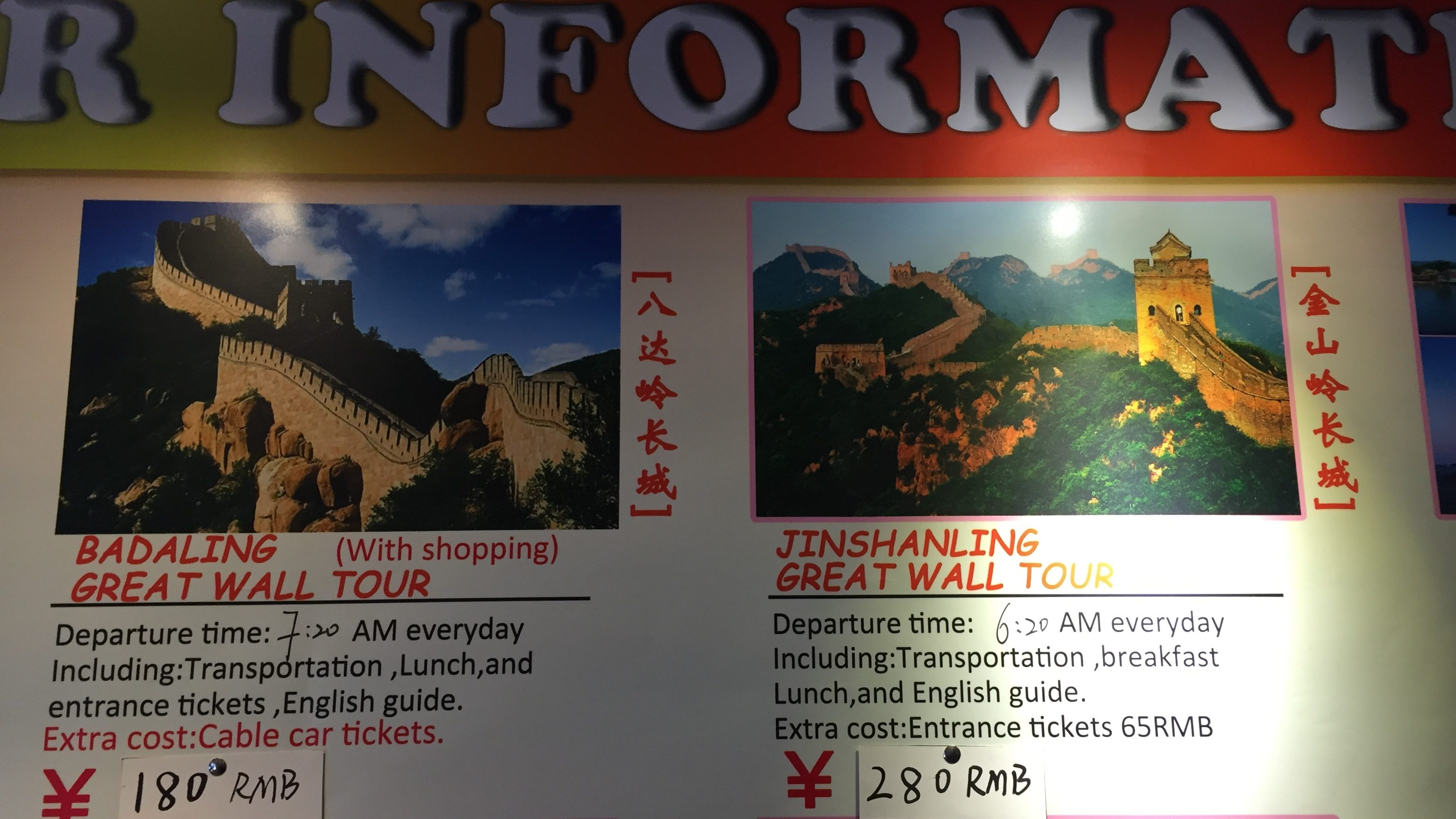
There are a few other wall sections which are either a bit further away, require guides and/or generally more rugged, but even less crowded and authentic and stunning. Sections like Jinshanling (incredibly grand original wall towers and scenery), Jiakou (even more rugged but requires a guide), Simatai (where you can hike the wall at night) and Huanghuacheng (runs along a picturesque lake).
I don’t think you can go wrong with any section of the Great Wall, depending on what level of adventure you’re after, your time and fitness level – but Mutianyu offers a good balance of these factors. The season may also affect your choice as the mountains in China do very rather chilly in the winter, although we went in March and it was surprisingly pleasant especially after you start hiking the Great Wall!
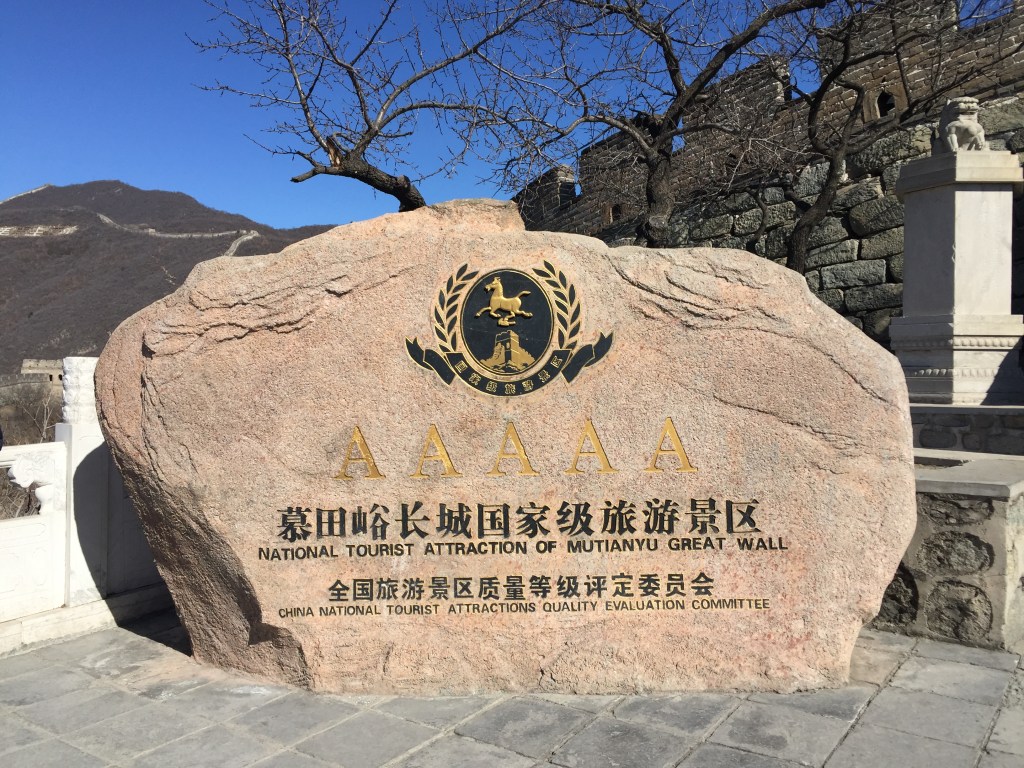
We took a tour from our hostel in Beijing, and once we arrived by bus, the guide gave us the time we had to be back at the bus, and sent us on our way up the cable car to the wall entrance. He suggested that we walk Westward along the wall (each tower also has a number), until we get to the unrestored section of the wall – wishing us luck that we are fit enough to make it that far knowing that we would have to walk back too, so you gotta time it right.
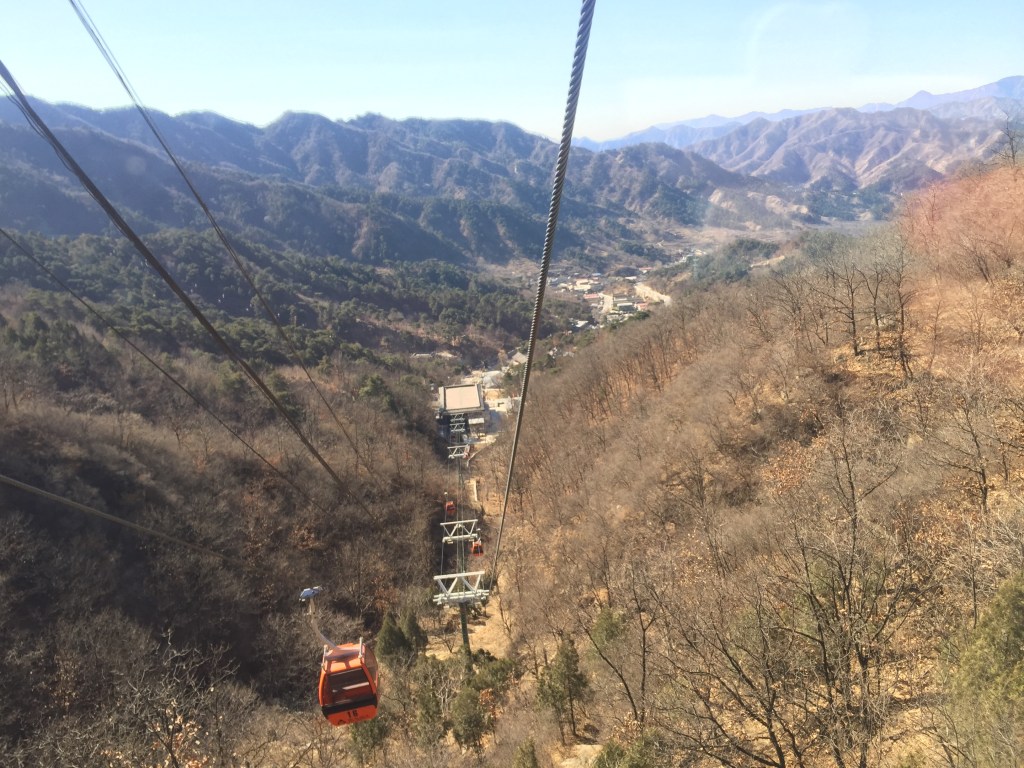
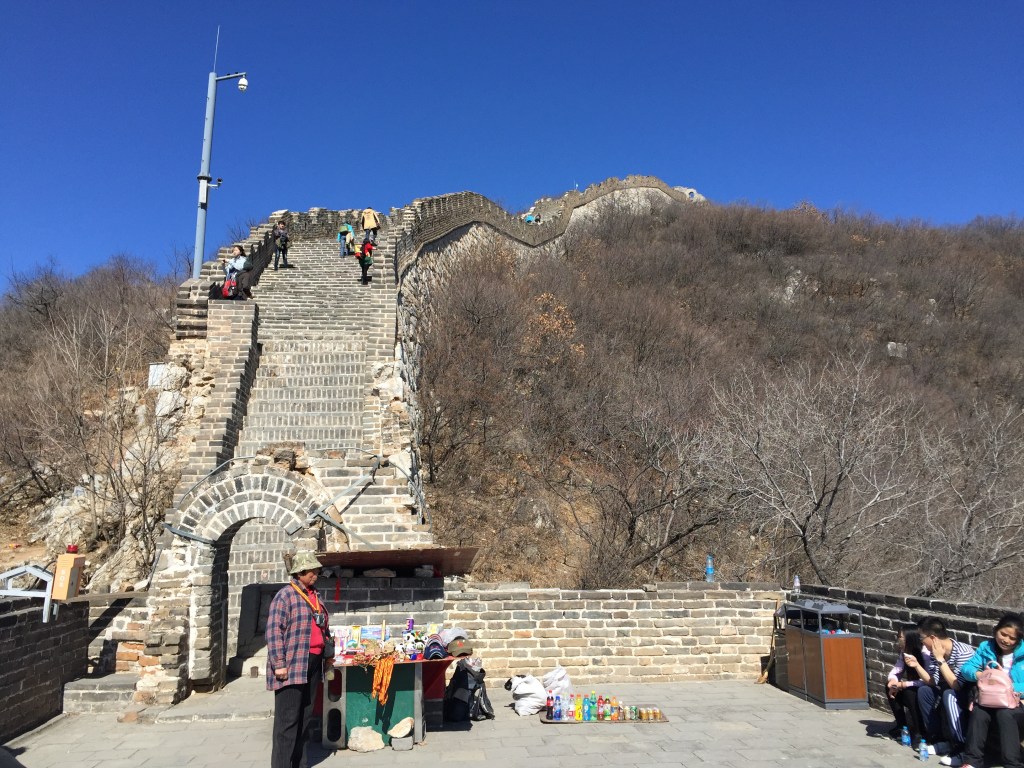
Even after a few towers from the entrance to Mutianyu, the crowds exponentially decreased, and you see people slumped on the stairs out of breath – there’s nothing like hiking the Great Wall of China to get your heart pumping. Some of the ascents are honestly insane, I mean it is basically a 20,000km staircase, but I urge you to go as far as you can as the rewards get better and better.
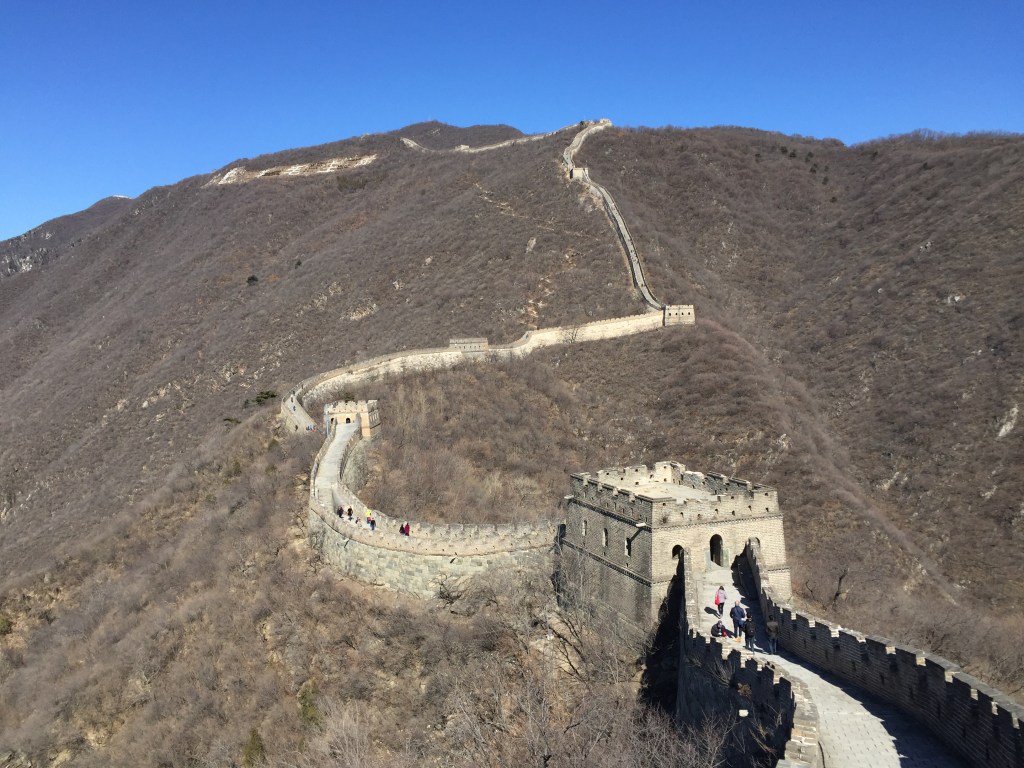
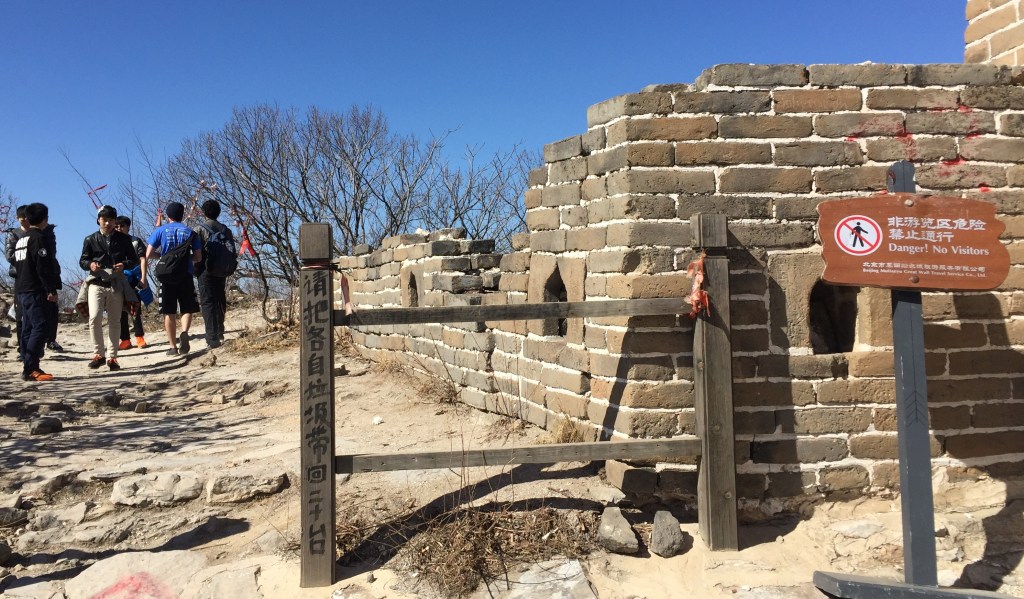
Several of our group were luckily fit enough to make it to the beautifully original unrestored sections, and in good enough time that we even went through a few of the crumbling towers until eventually turning back. There is a warning sign not to continue to the original sections, but it appeared that no-one was following this, and the guide even said its fine. The original section is in much better condition than I even thought, albeit with trees growing through it, but the walls were built sturdy that’s for sure.
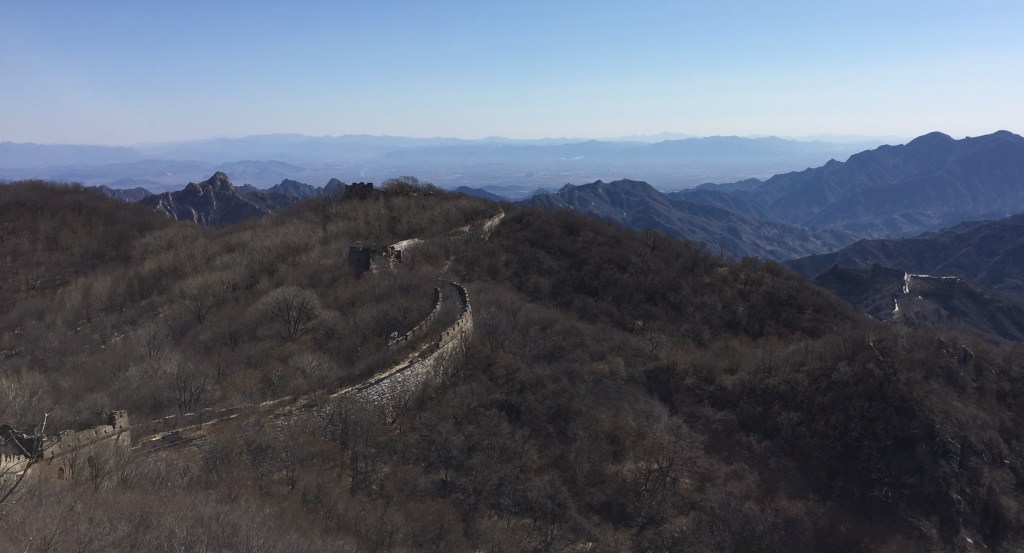
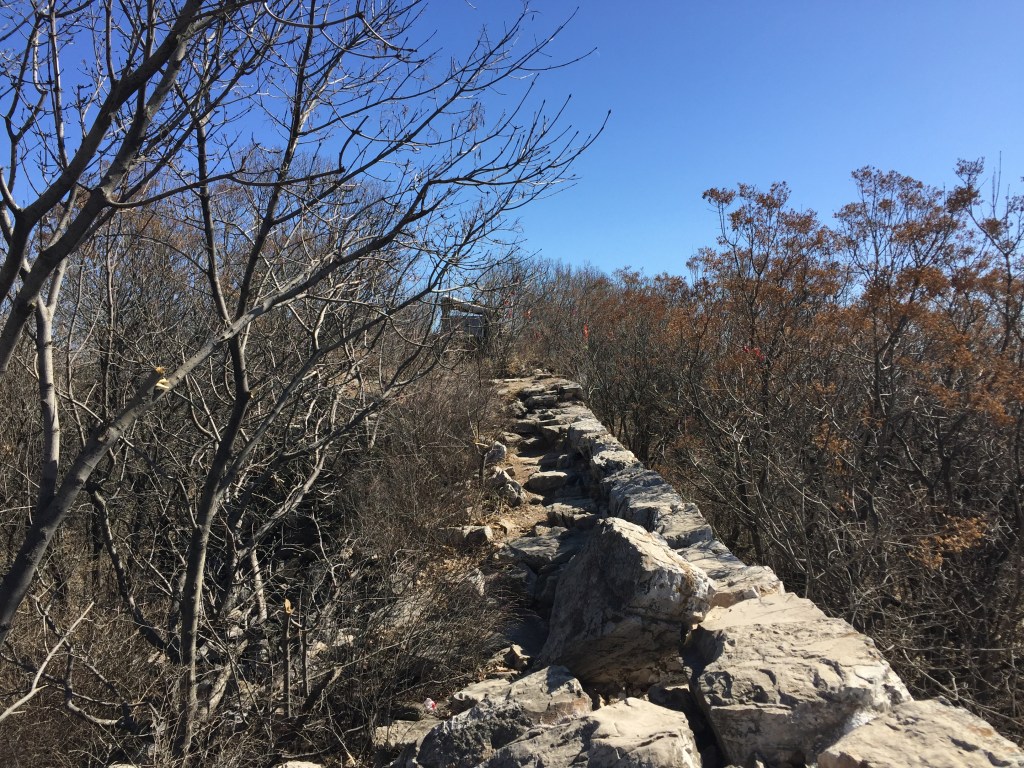
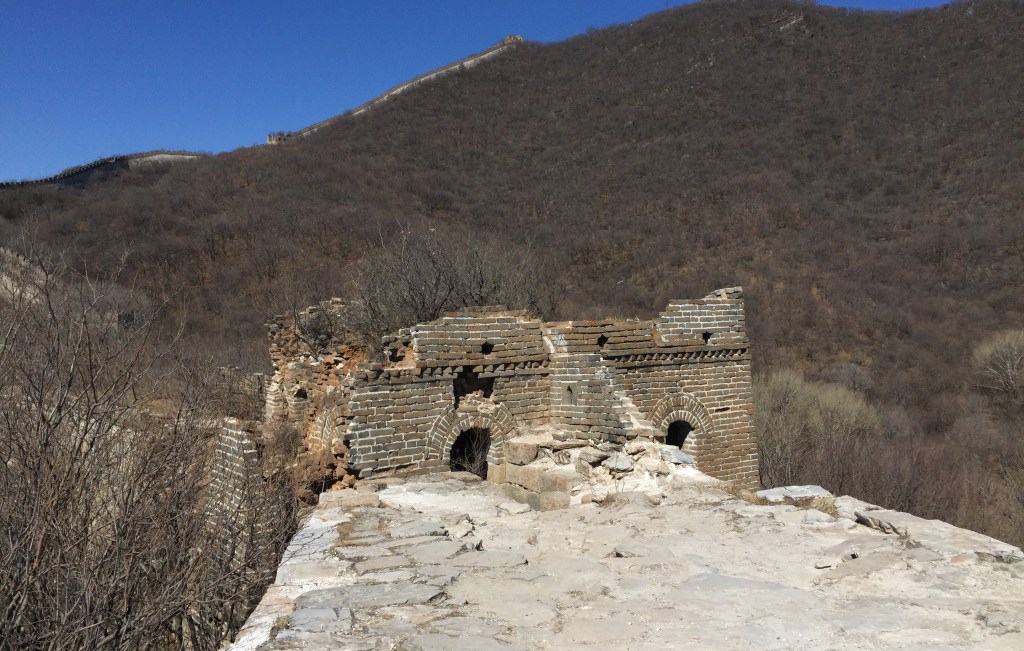
After we got back to the entrance area, there’s the option to take the toboggan down from the wall to the car park area, which incredibly we missed out on. One of my friends did the wall several days later though, and said it was definitely worth doing!
Petra
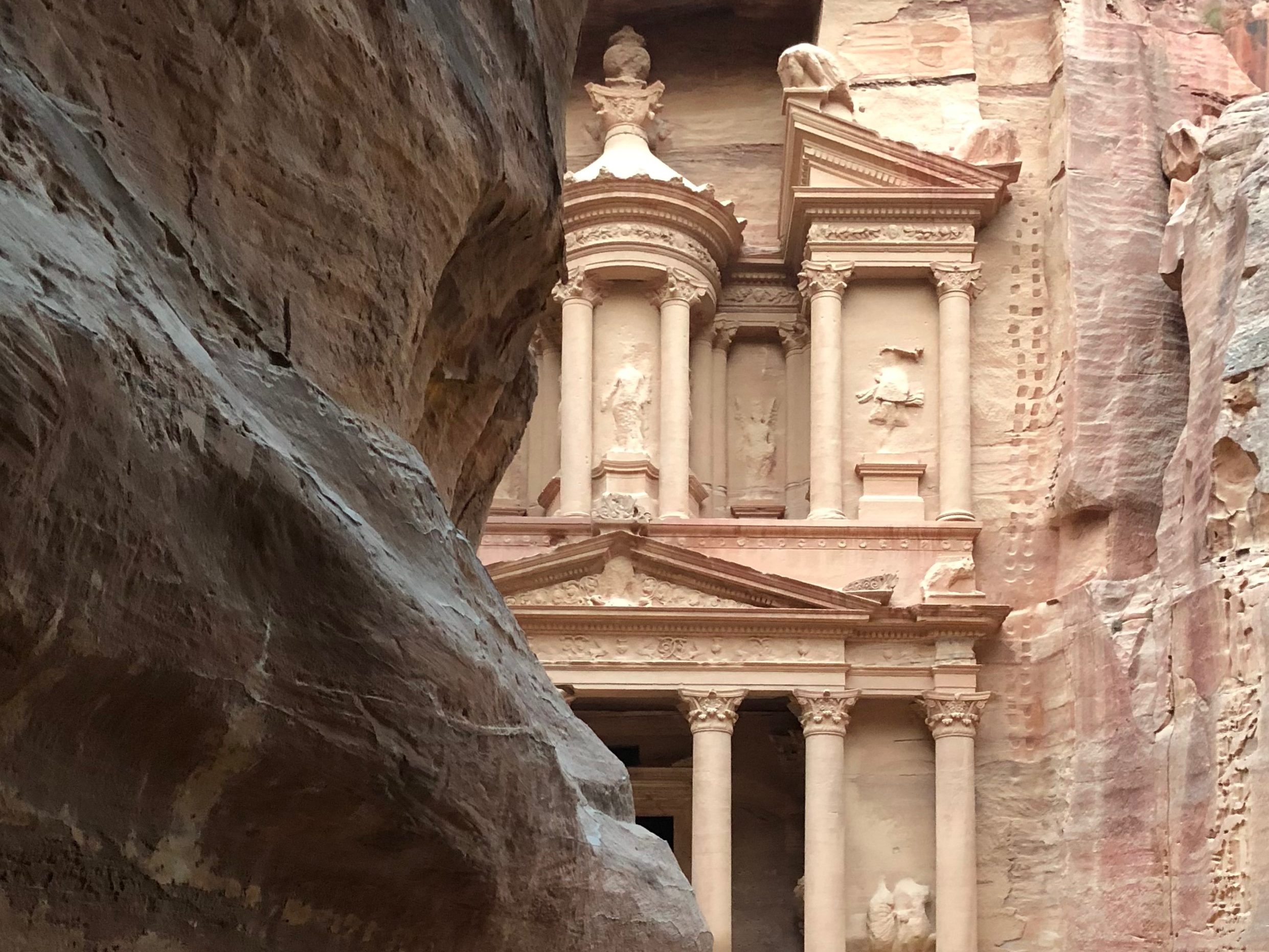
The second oldest of the New7Wonders is Petra, the ancient capital of the Nabateans, built around the 4th Century BCE and located in modern day Jordan. The city is huge and far from just the Treasury building, which is the building associated with Petra and the first building of Petra that you see when entering the ancient city. Although Petra vanished into the sands of time for hundreds of years, many locals live in the caves of Petra today offering tours, serving food and tea but also pestering and following tourists around, so some caution is advised if you’re a solo traveller going off the beaten paths.
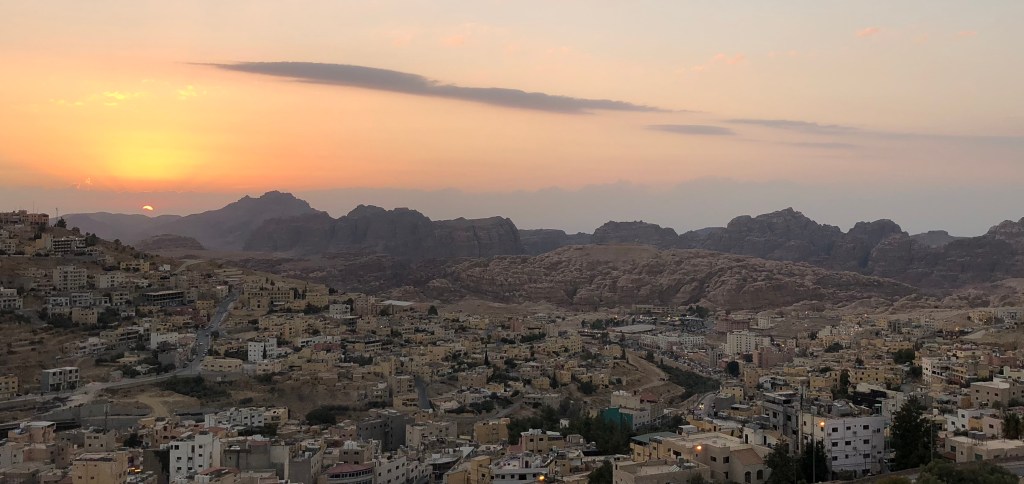
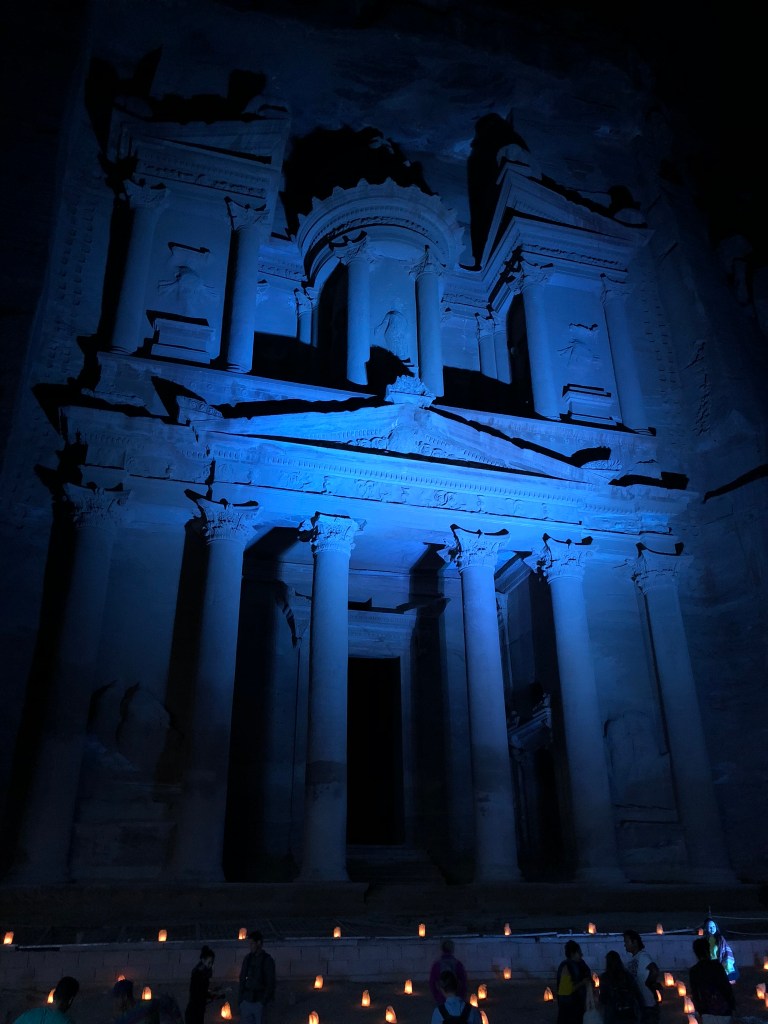
To visit Petra you need to get yourself to Wadi Musa, the local town. We arrived here in the evening from Amman via a direct bus, in time to do the Petra by Night tour arranged by our guesthouse, which started around 9pm. I didn’t get those amazing pictures of it that you see online as you kind of get ushered into a place right under the Treasury, but its an amazing experience seeing this towering carved building lit up in the dark, making it seem like a giant of history emerging from the night.
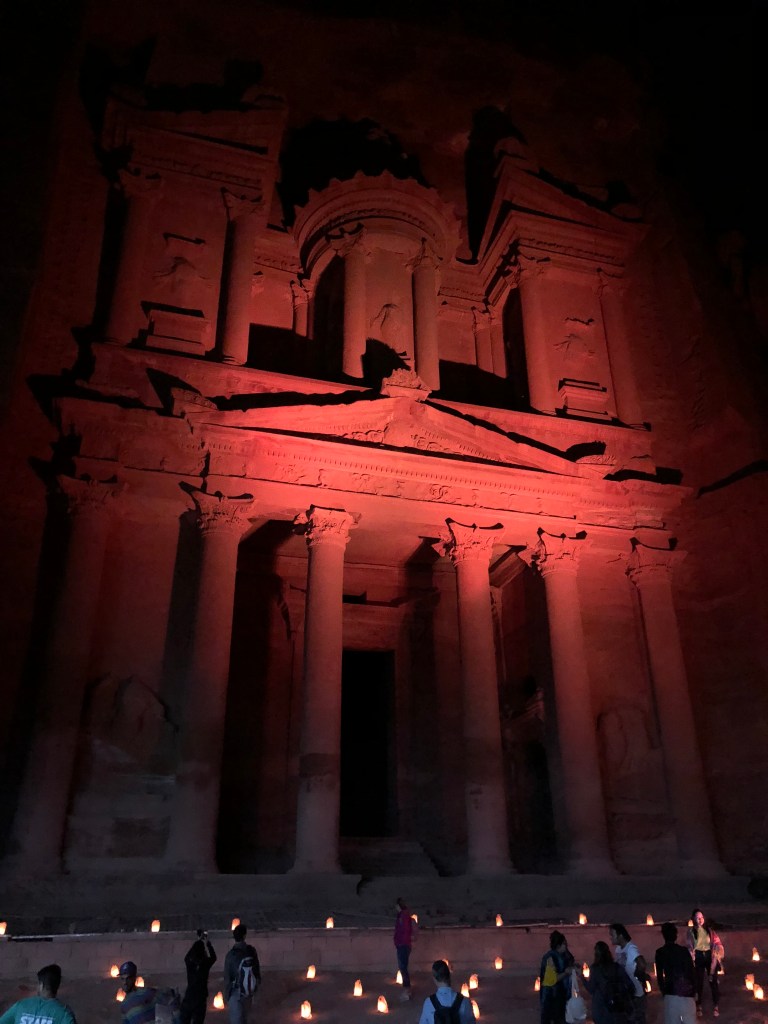
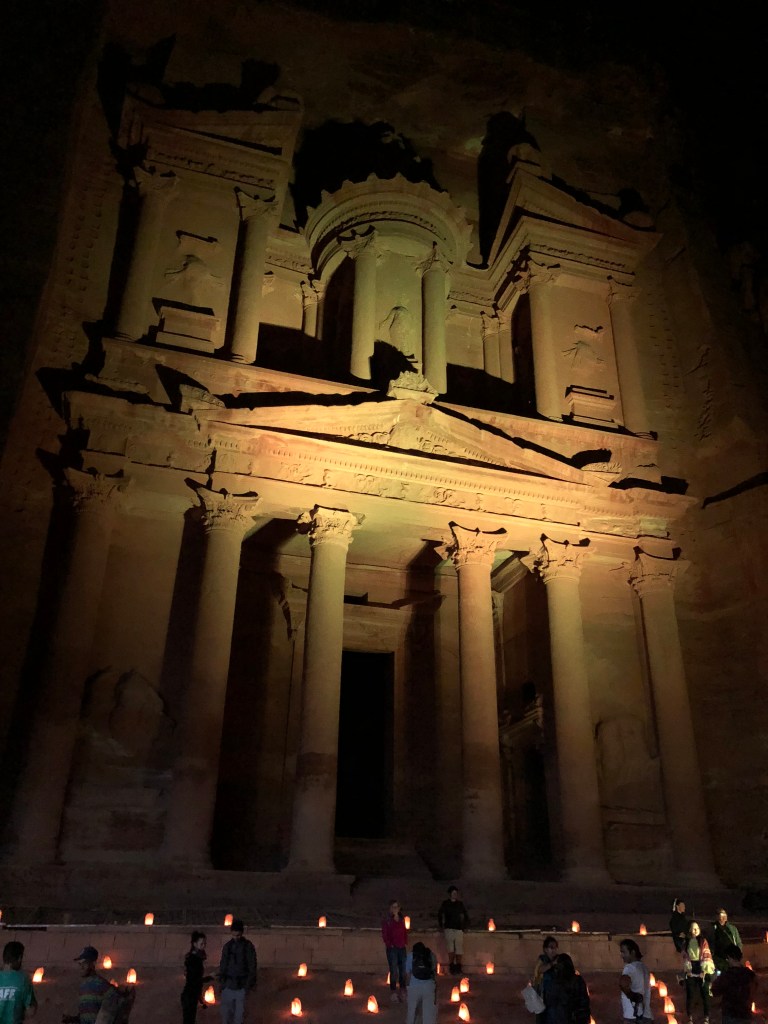
For visiting Petra itself, we already had the tickets as part of the Jordan Pass visa, but we still had to queue up to collect them to get into the site. We knew the city opened at 6am, so we aimed to get there for 5:30 to pick up the tickets and be one of the first in line, and it worked like a charm. Upon arriving there was already around 10 people in front of us to get the tickets, we then queued up and entered at 6am. It’s about a 15 minute walk through the amazing rock formations before you see the Treasury appear, and it’s a wonderful sight! As there were so few of us at this time we managed to get some incredible pictures, but after only 15 minutes the crowds started to appear.
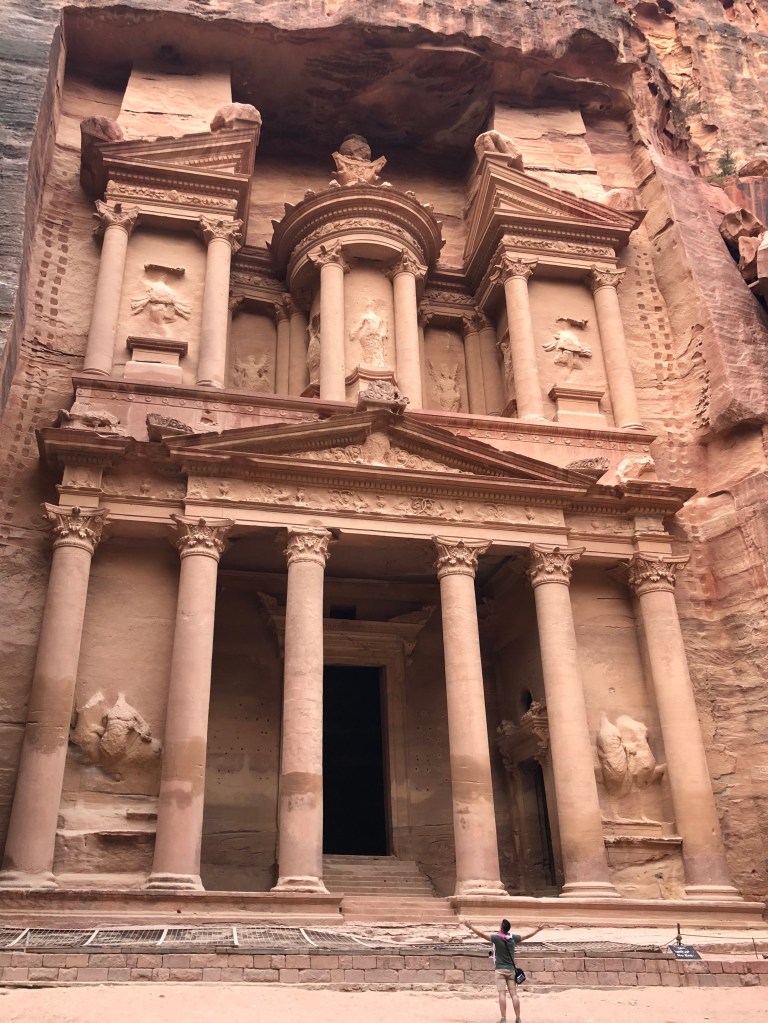
As I mentioned before, Petra is a huge city and we totally underestimated this when trying to walk around and see everything. We were in the site for almost 12 hours, with only a short stop for food towards the end and fuelled by tea stops and raging Lawrence of Arabian ambition to explore the whole site in the blazing sun. One of the unmissable sights, and for me my favourite thing to see in Petra is the Monastery. It is quite the trek away from the Treasury but it’s easily done in the day and really unmissable.
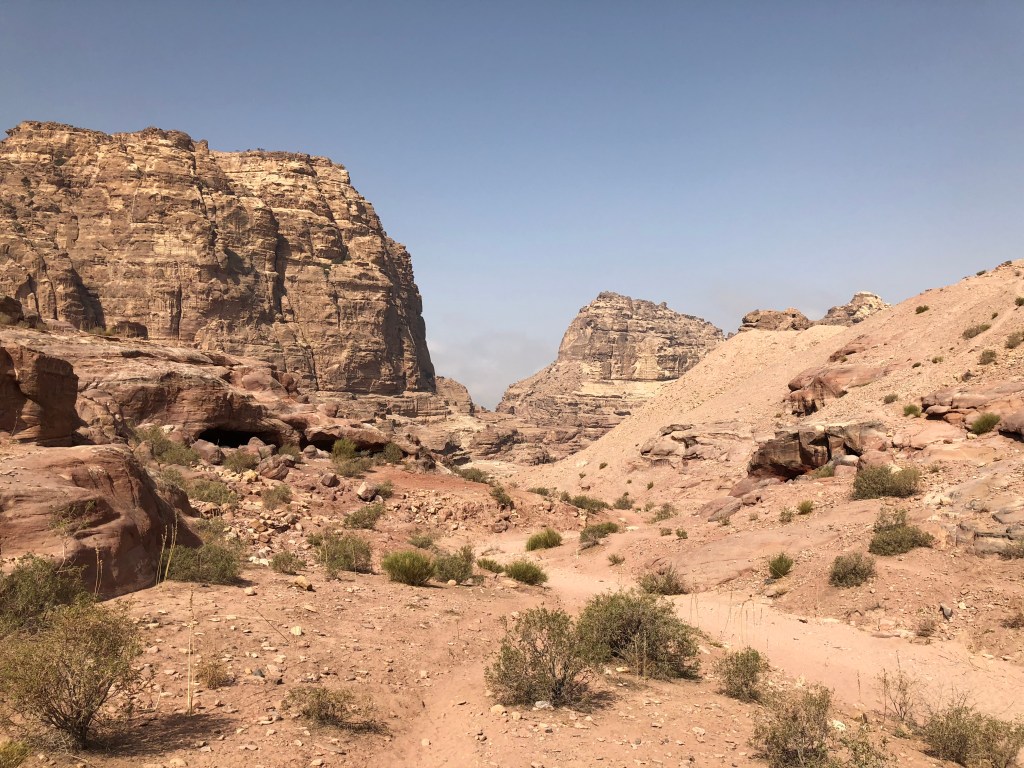
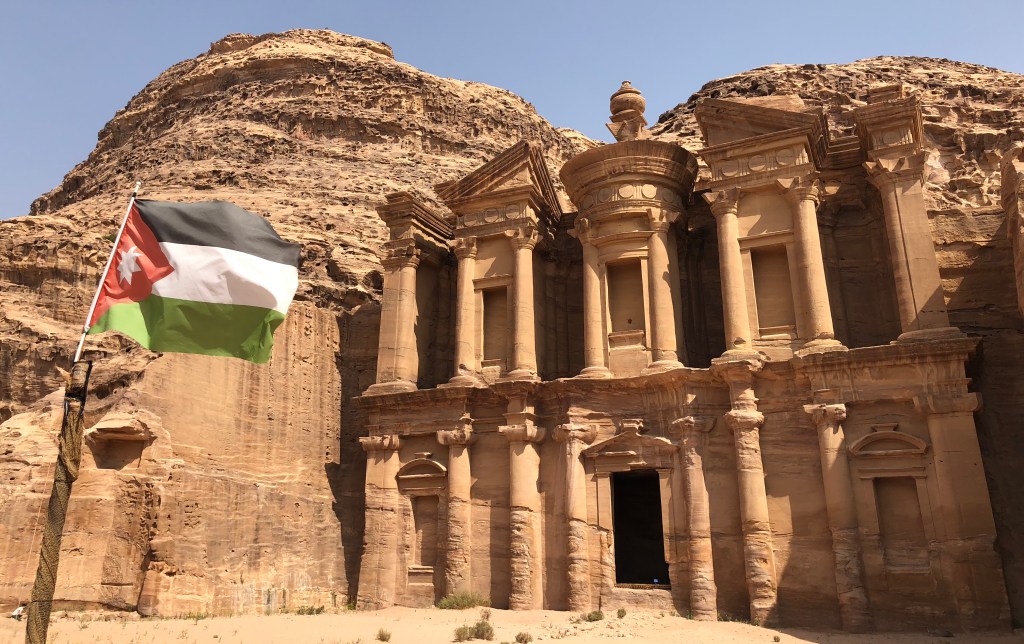
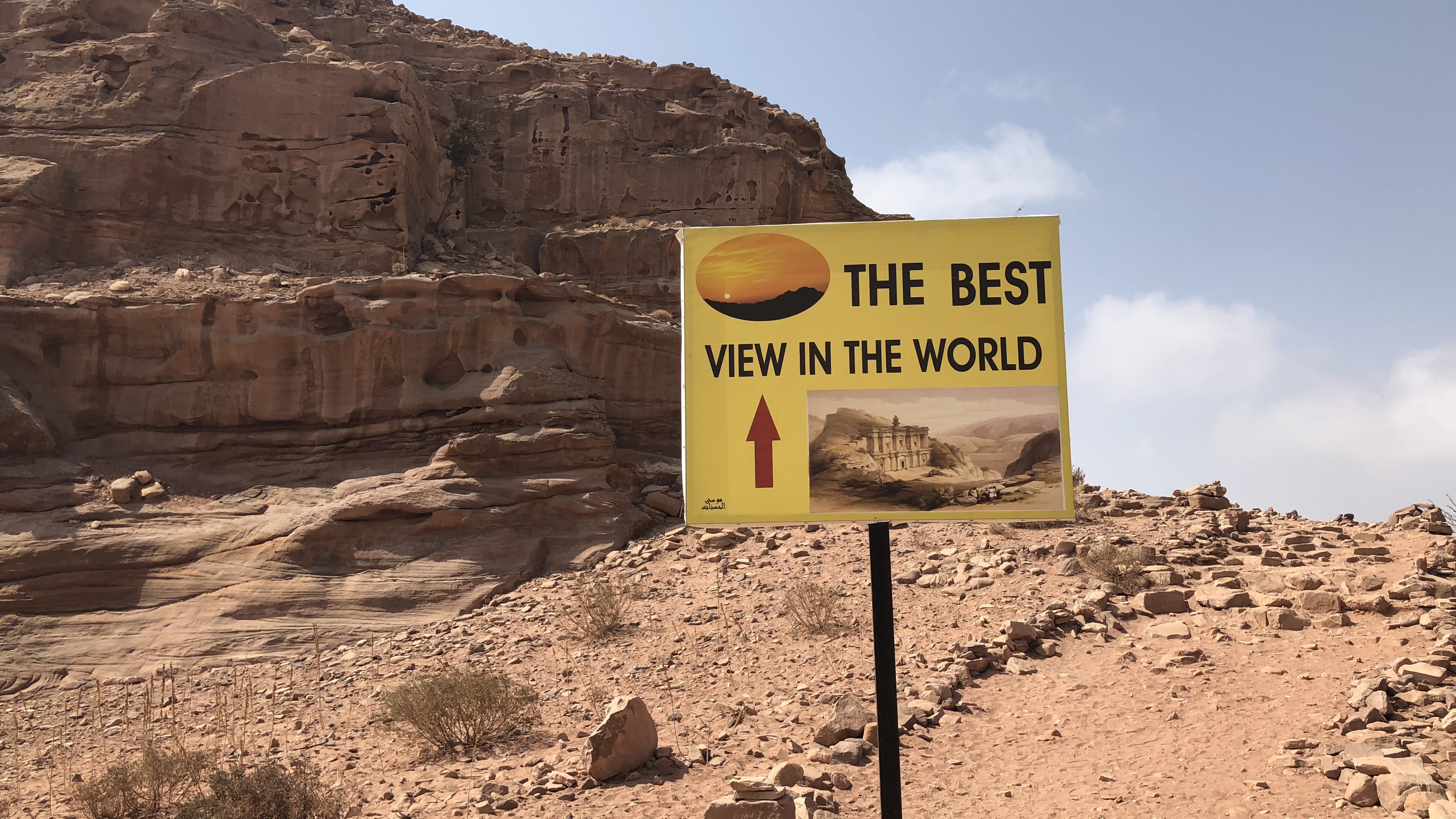
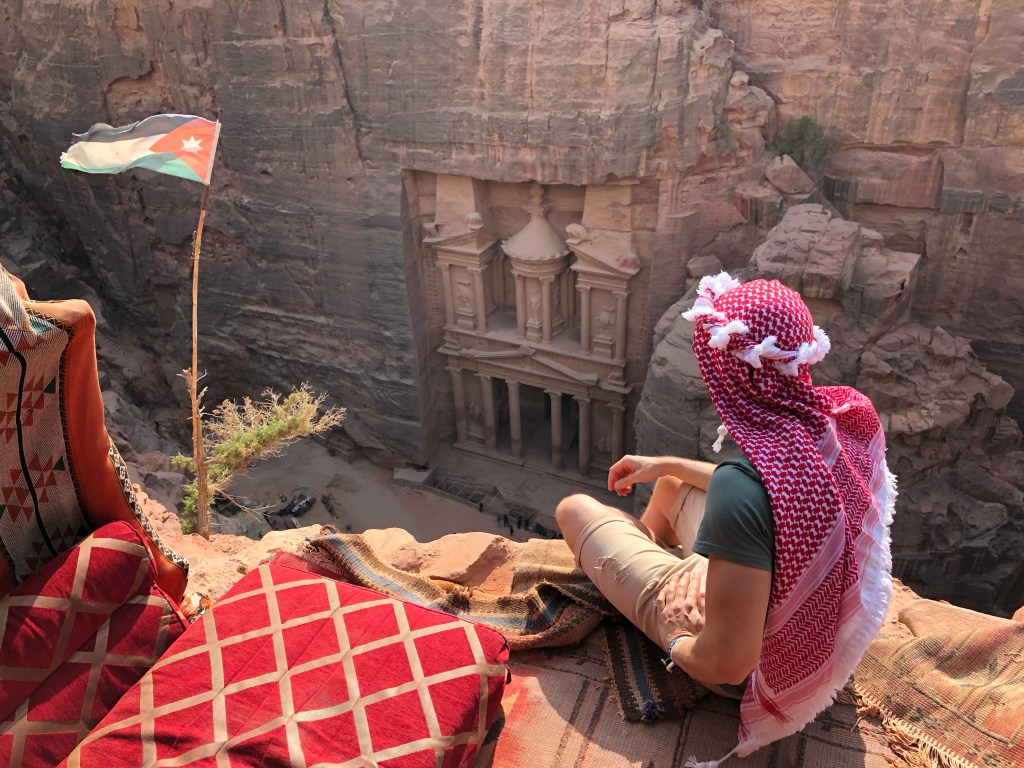
On top of the epic Monastery building there is ‘The best view in the world” to check out! There is even a sneaky peak picture of the view to tantalise you even further, so of course we followed the sign.
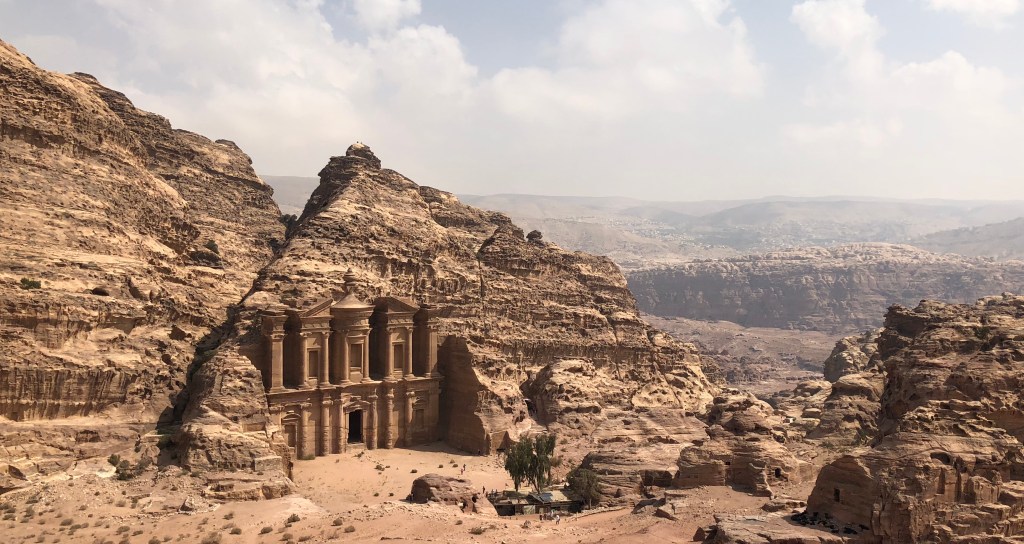
The view did not disappoint at all, with an incredible view of the Monastery and endless rocky gauges and mountains. There is even a cafe up there with some very friendly locals (cat and dog), and was probably my favourite part of the day before we were ravaged by the October sun and heat.
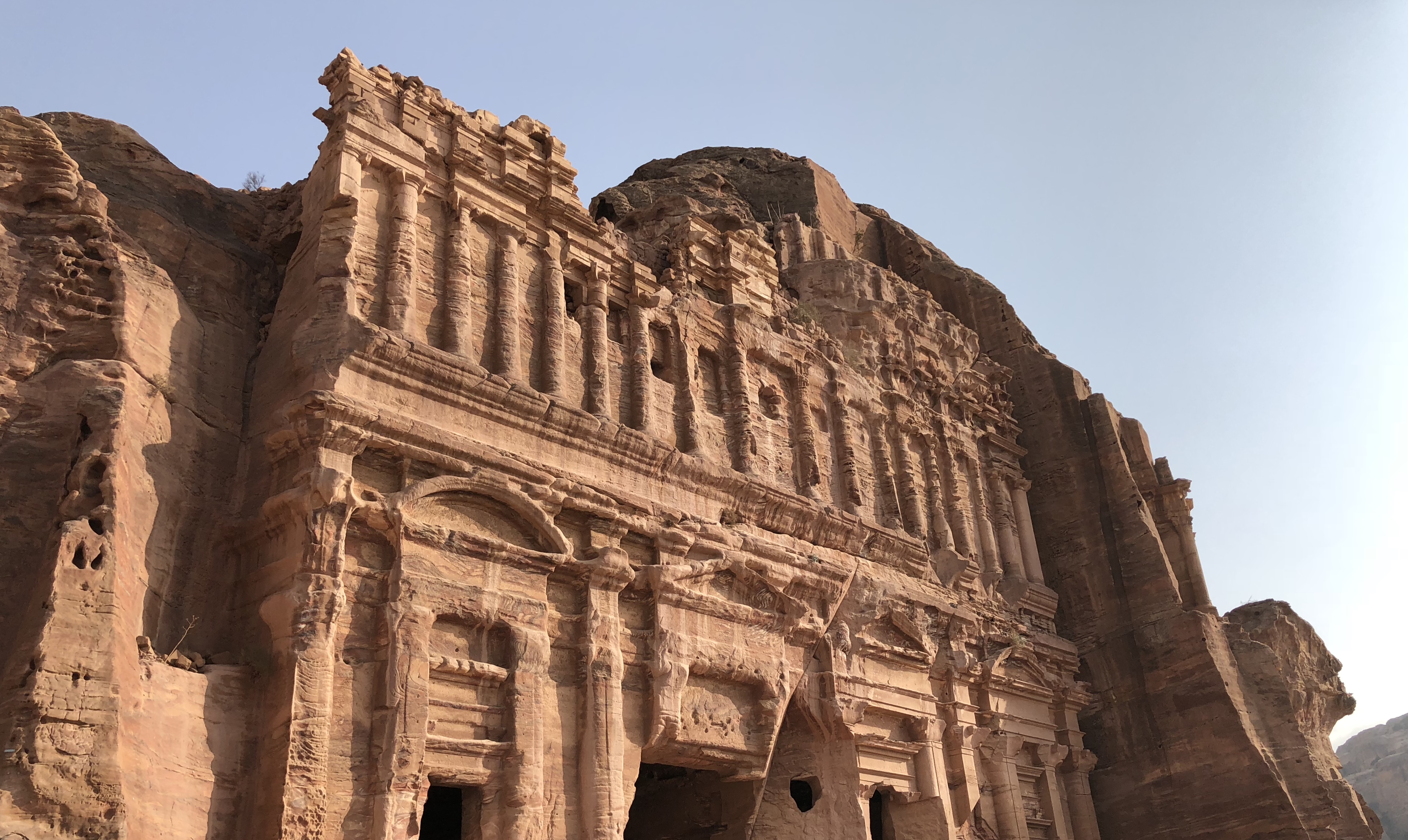
There’s so many other incredible buildings and carvings in this city, you can get a sense for how grand this capital must have looked. You can even see the now dry ancient waterways flowing through the narrow rock formations at the entrance to the city.

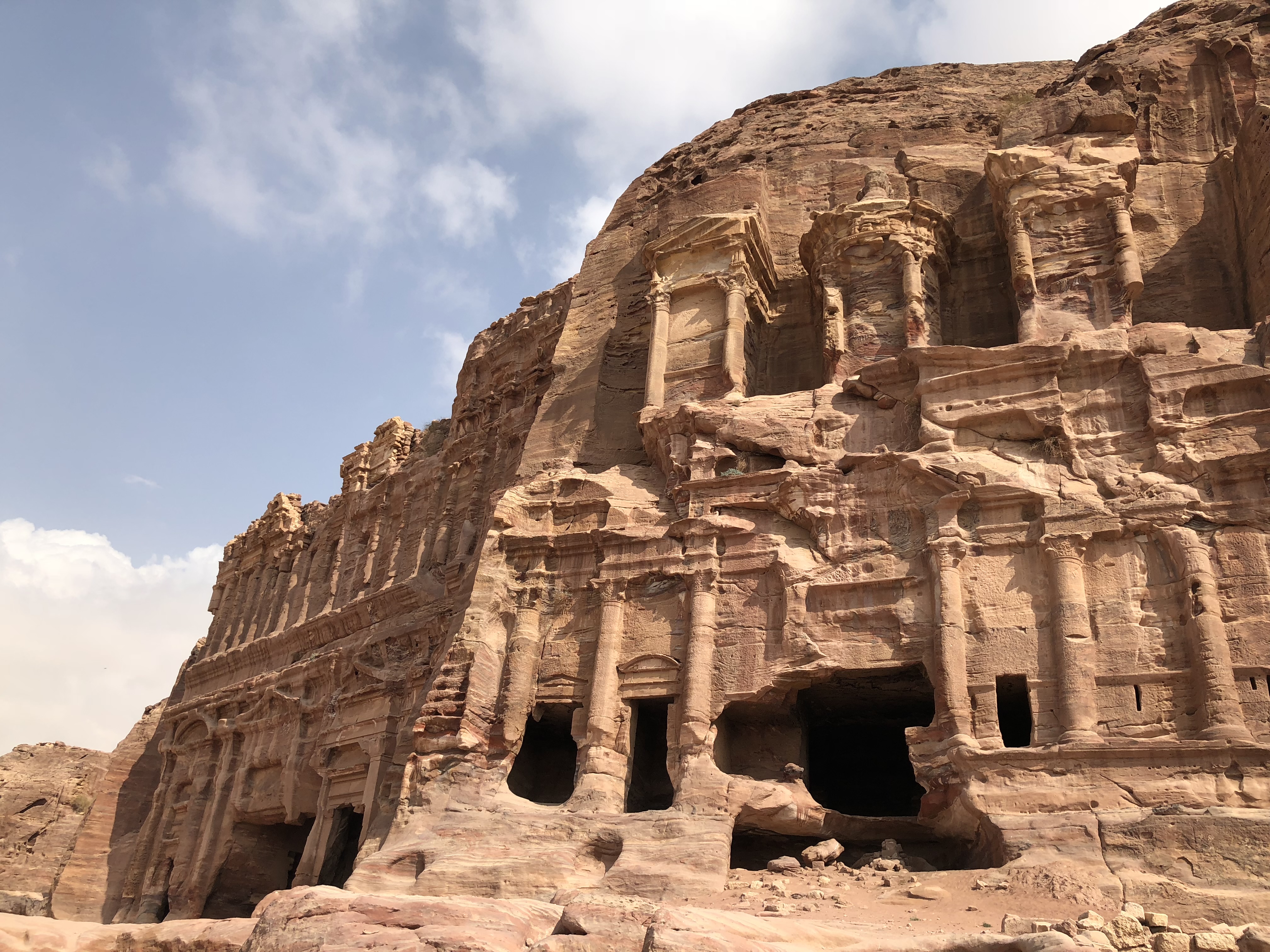

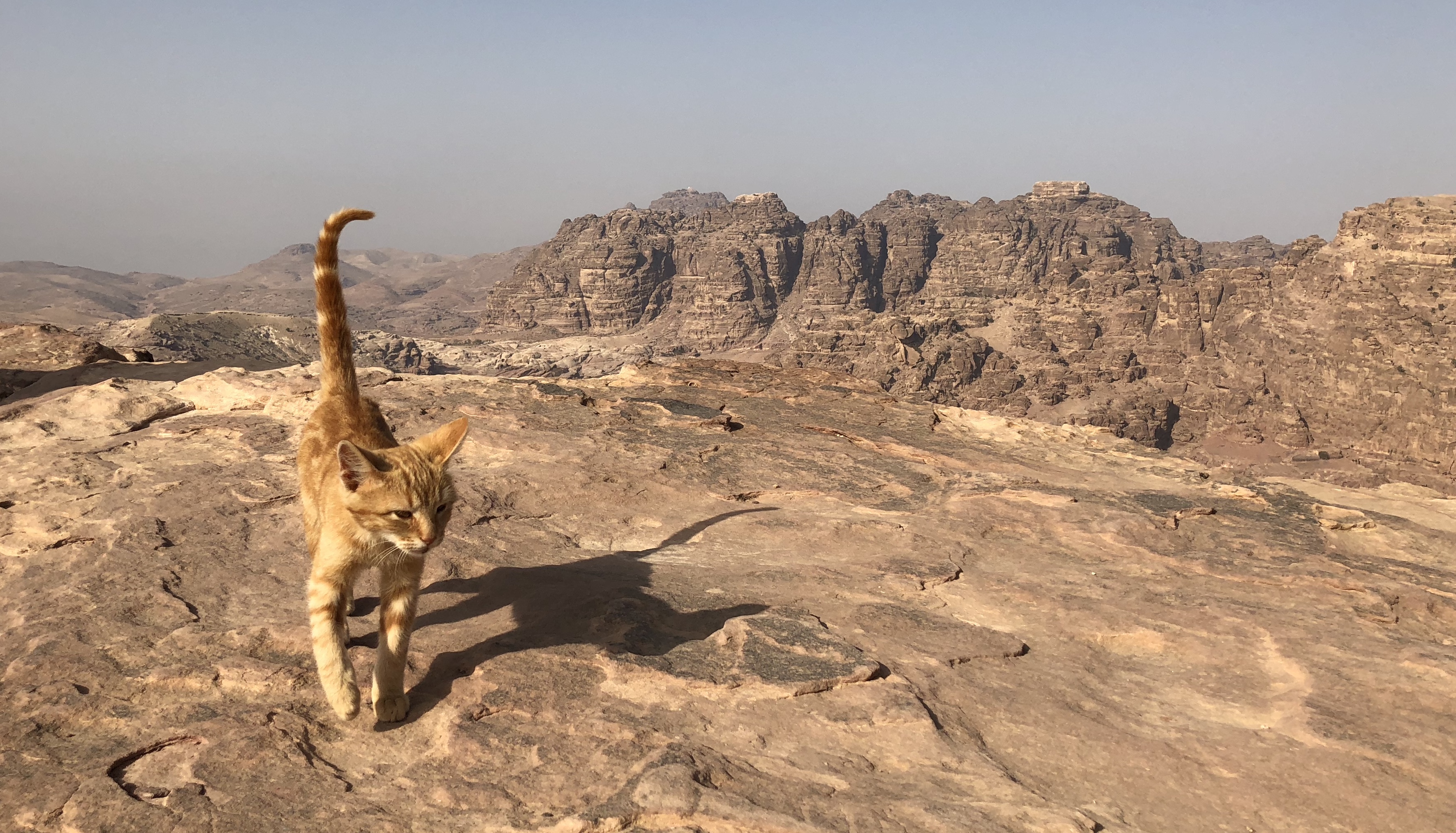

There’s a route to see the Treasury from above which is free, do not listen to all of the hecklers trying to charge you for these shortcuts up the rocks or whatever. Even as we were near the top, people were trying to charge us to even get to the little cafe thing with the view. And that’s Petra!
Colosseum
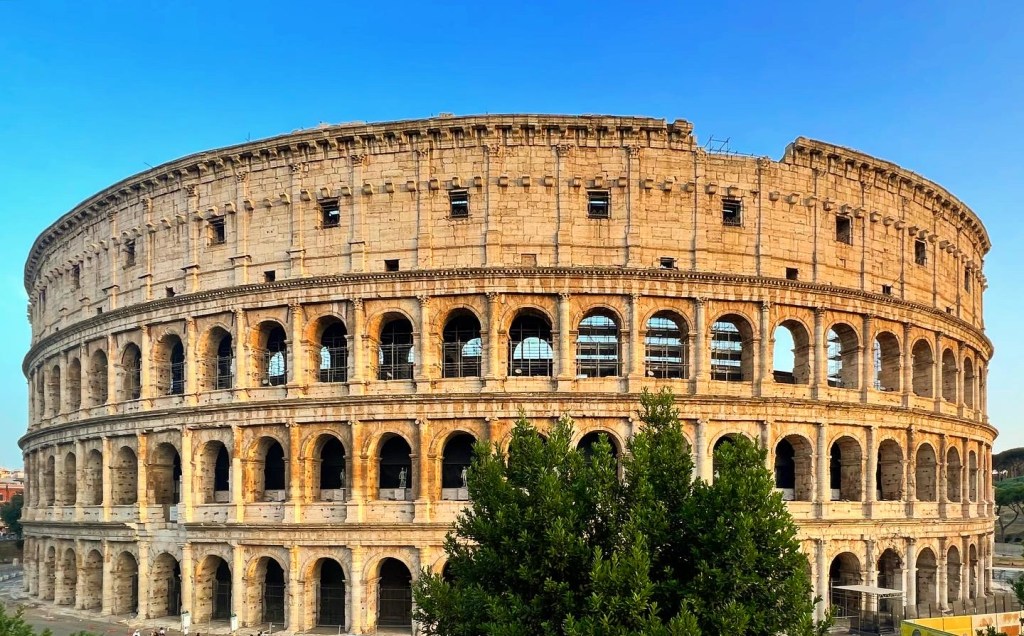
At almost 2000 years old the Colosseum comes in at 3rd oldest of the Wonders and the first from this millennium. Built in the Roman Empire under the Flavian Dynasty spanning three emperors, hence the true name of The Flavian Amphitheatre, the Colosseum was the biggest amphitheatre ever built and is still the biggest standing in the world.
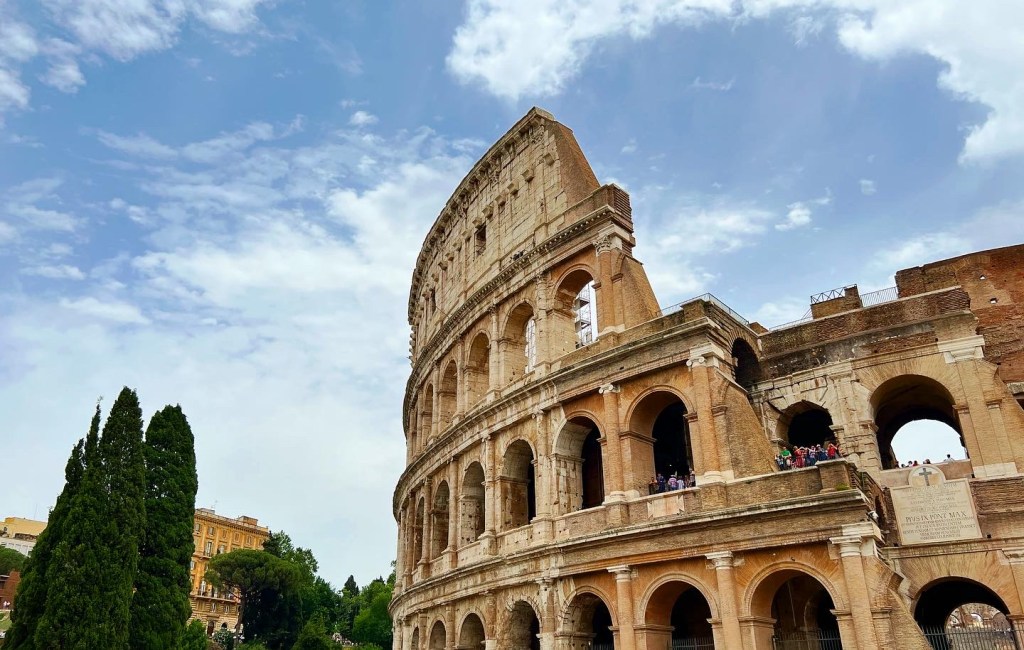
Right in the middle of Rome, the Colosseum is very easy to visit when touring Italy. As one of the most visited of the Wonders, and possibly the simplest to visit, there isn’t much to write about with this one as you will always suffer from the Roman crowds and tours. However, book your tickets in advance online to skip the queues (GetYourGuide / Viator), try not to visit in the summer holidays, but if you do, go as early as possible. We visited early June and it wasn’t as busy as I expected actually.
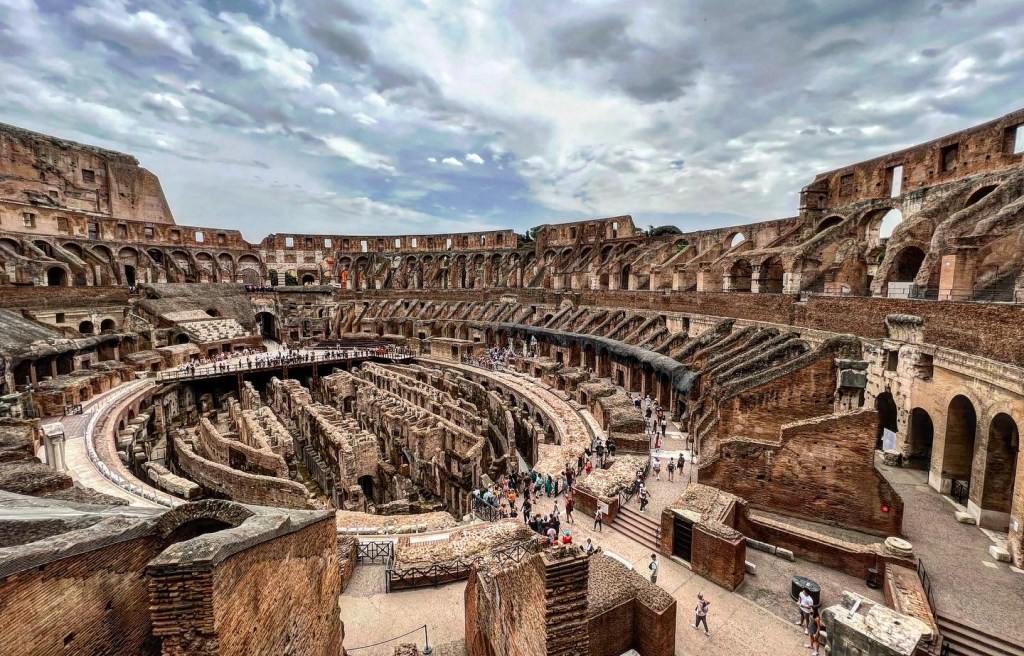
There is a sneaky good picture spot at the back of the Roman Forum, at least I thought so, which was essentially crowd free. Once you’re into the forum just head in the direction of the Colosseum and you’ll find it, with the nice patterned fence to lean on like a cool Roman selfie pleb.

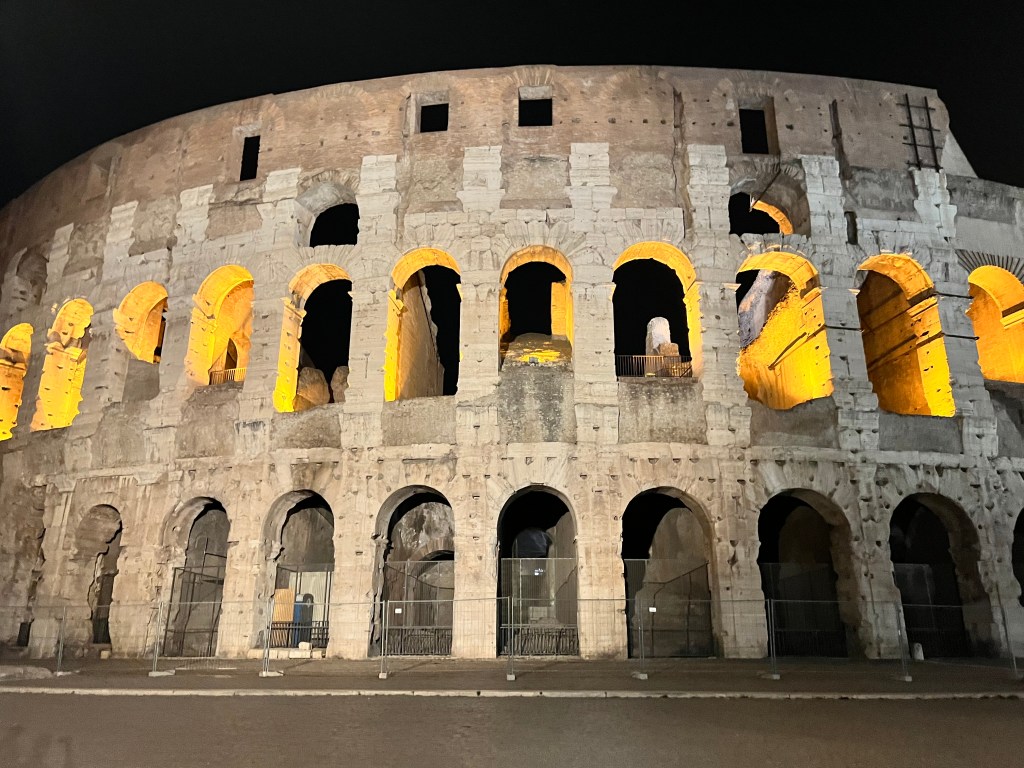
One thing I would suggest is seeing the outside of the Colosseum at night, especially on an e-scooter, as it is literally empty. I couldn’t believe it when we were riding around Rome the first evening and accidentally saw the Colosseum gloriously lit up at the end of a long road, so we just went for it.
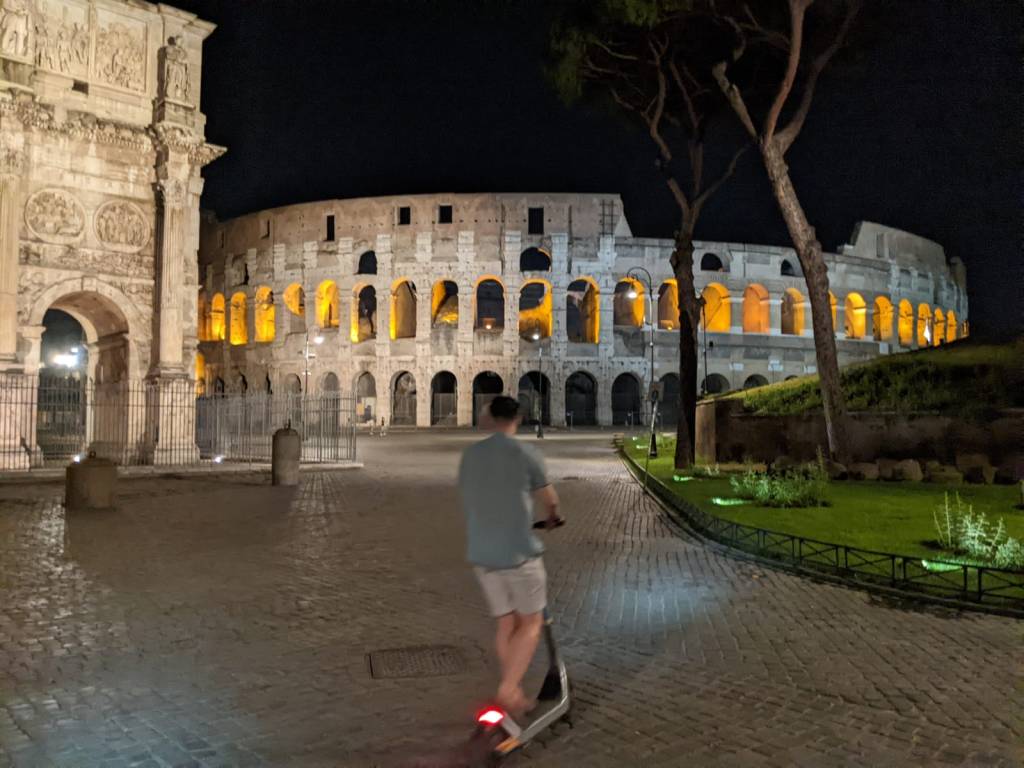
You can get right up to it in some places, which of course we did, and there is a huge surreal satisfaction that comes from zooming around this huge Roman structure on your very own e-chariot.
Chichén Itzá
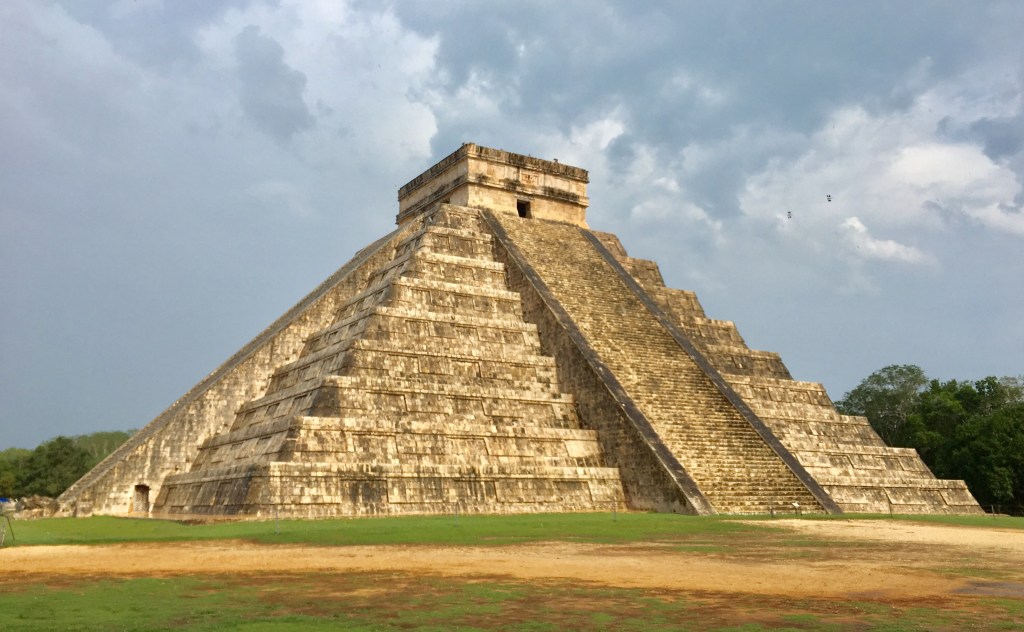
In the jungles of the Yucatan peninsular in Mexico sits the incredible Mesoamerican wonder of Chichén Itzá. Chichén Itzá, as with Petra, is the name of the entire ancient city and not just the iconic temple that is associated with it. The city is almost as old as the Colosseum, and spans many phases of the Maya and Toltec civilisations over about 1000 years. The famous icon lies at the centre of the city – the stepped temple pyramid of Kukulcan, also known as El Castillo by the Spanish conquistadors. Kukulcan is a more recent Maya development of the city, standing at around 1000 years old and in incredible excavated condition.
To get here I took a tour with my hostel from Cancun, which was basically just transport and ticket access to the site with all the free time to roam around. Now the Tren Maya / Mayan Train serves the ancient city which is probably quite an interesting way of getting there.

One thing that amazed me with this city was seeing the legendary hoop ball court of pok-ta-pok, where players must hit a small ball with their hips through this highly placed very small stone hoop – featured in one of my favourite films “The Road to El Dorado”. I always thought as a kid that this game was made up as it looks so impossibly hard, but alas I was naive as it is very real and is known as “ōllamalīztli” to the Aztecs, and “pitz” to the Maya. I couldn’t believe it when I just stumbled across the court!

The city is pretty big so enjoy exploring the jungles and temples and Mayan sculptures and all that wonderful stuff. The main temple of Kukulcan is obviously pretty busy, especially with all the tours standing around clapping at it because there is an echo, but if you’re lucky enough to get a bit of rain then the whole place will clear out and you can get a banger of a picture.
Machu Picchu
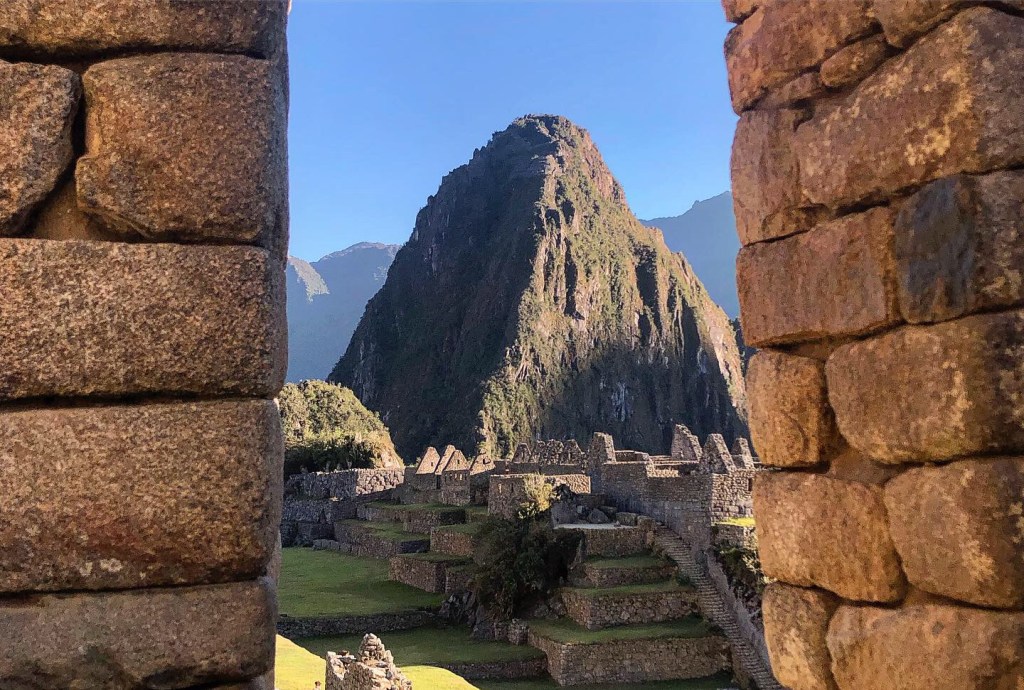
Located at the base of the Machu Picchu mountain is the Machu Picchu citadel, overshadowed by the Huayna Picchu mountain behind. Built by the Incas around 600 years ago as a mountainous retreat and getaway, it is surprisingly one of the “newer” wonders. It is possible to hike up the Machu Picchu mountain to get a unique viewpoint of the site and surroundings, and you can even hike up the more challenging Huayna Picchu and other areas around, but I just got the basic ticket as that was expensive enough and I didn’t have much time to hike around regrettably as the pictures look incredible.
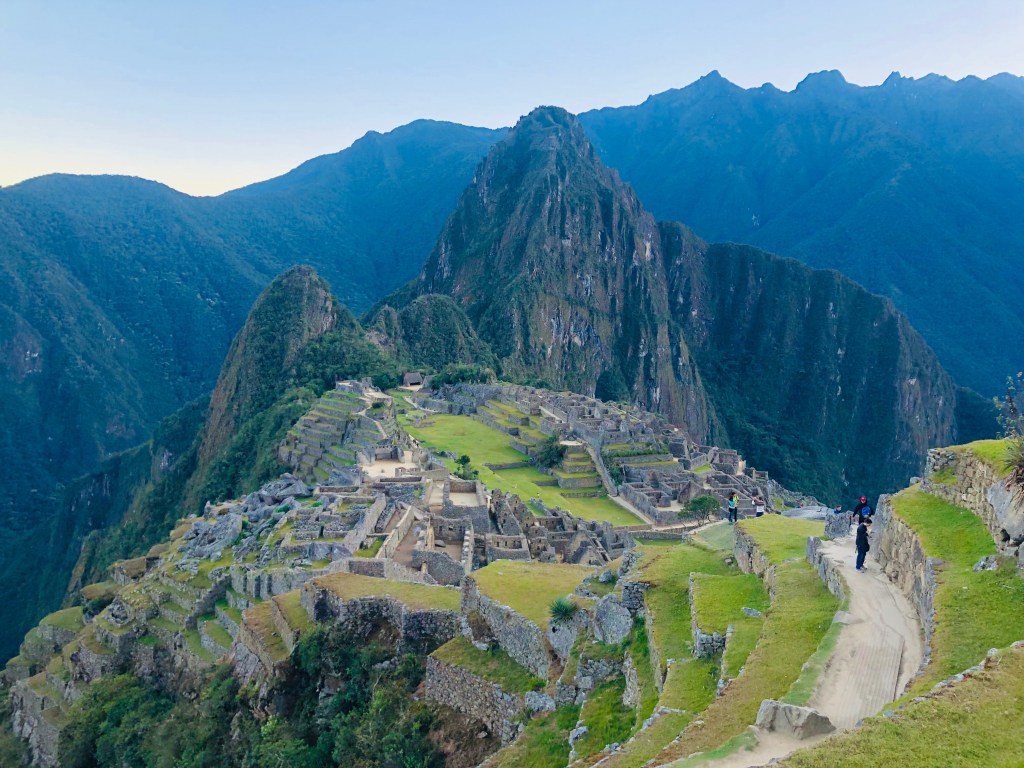
A bucket list item for many, Machu Picchu is probably the most captivating and adventurous of the seven wonders, located high up in the Peruvian Andes Mountains. Even getting to this wonder means facing altitude, jungles and usually some mountainous trekking, often following the multi-day Inca trail. All journeys to Machu Picchu start in Cusco, a city at an altitude of 3400m which is more than enough to give you altitude sickness.
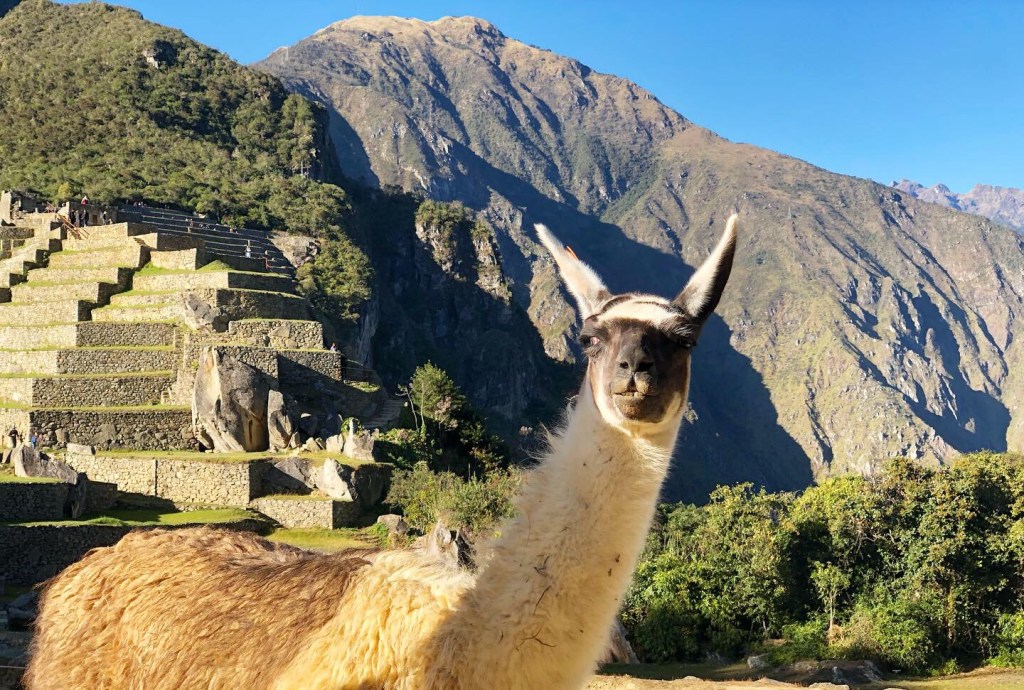
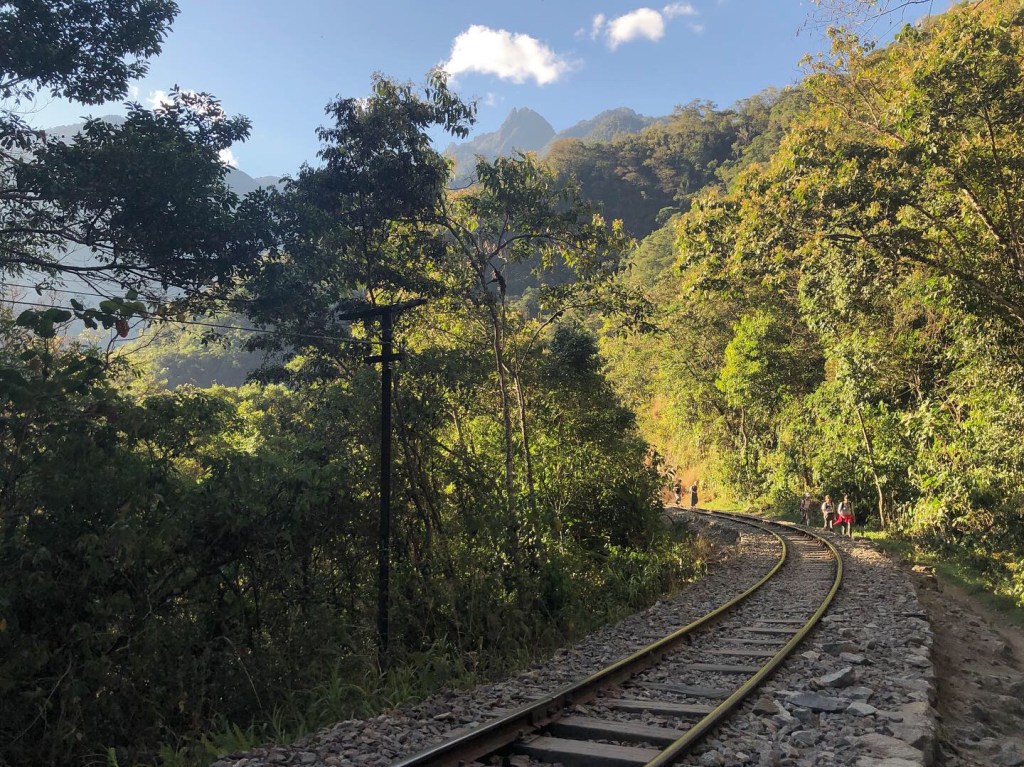
If you decide not to do the rather adventurous Inca trails to the city in the clouds then you have a few options of getting there. From Cusco you need to get to the Machu Picchu base town of Aguas Calientes, also known as Machu Picchu Pueblo – this is where you can either hike up or get the shuttle buses to the site itself and there’s many nice guesthouses here. To get here you can either get to the nearby town of Ollantaytambo, which is a 2 hour bus ride from Cusco, and then get the luxury mountain train. Alternatively you can get a transfer to Hidroelectrica, a closer town which also has a train connection to Aguas Calientes, but most people choose to walk along the tracks instead, as we did. This option is incredible and I highly recommend it – and I wrote a post about that experience here – HOW TO VISIT MACHU PICCHU via The Mystery of Hidroelectrica.
Taj Mahal
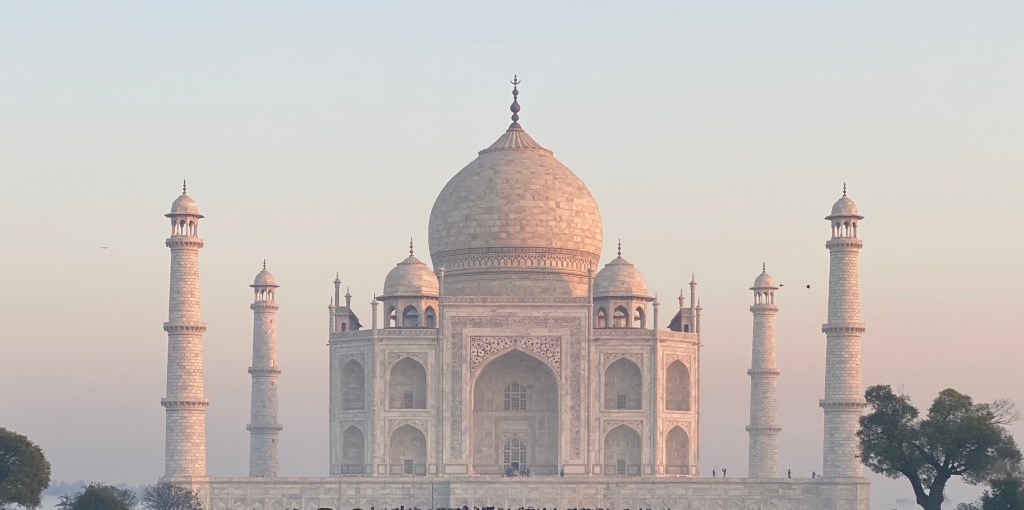
The wonder that I thought would be the last one I’d get to see due to not having any plans to visit India while doing it some justice (I wanted at least 2 weeks of travelling around). However, due to a couple of friends deciding to get married in Delhi, a big group trip was planned!
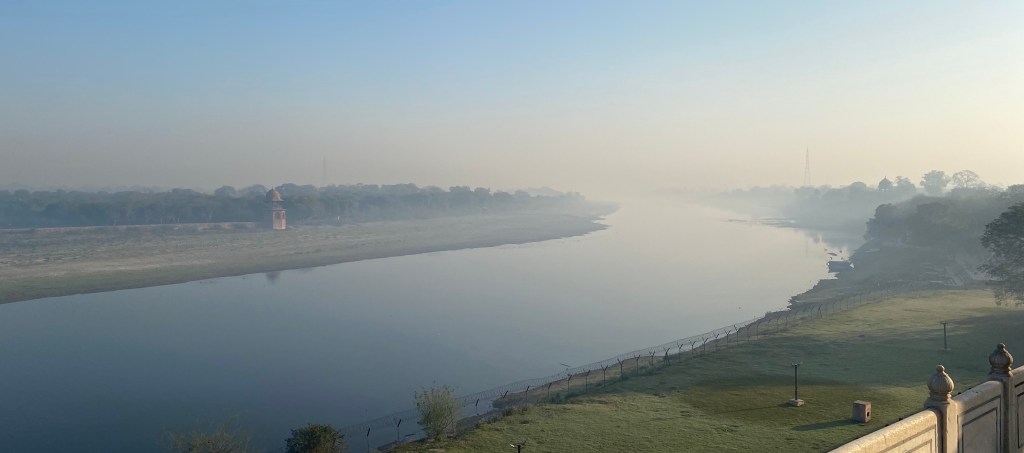
The Taj Mahal is a 17th Century mausoleum located in Agra, India, commissioned by the Mughal emperor at the time, Shah Jahan, after his wife Mumtaz Mahal died giving birth to her 14th child. Shah Jahan himself would later be buried in the tomb with his wife, who are both located in the crypt today. The Taj Mahal also has a mosque inside of it which you can access, as well as taking in some very nice river views from the main marble platform.
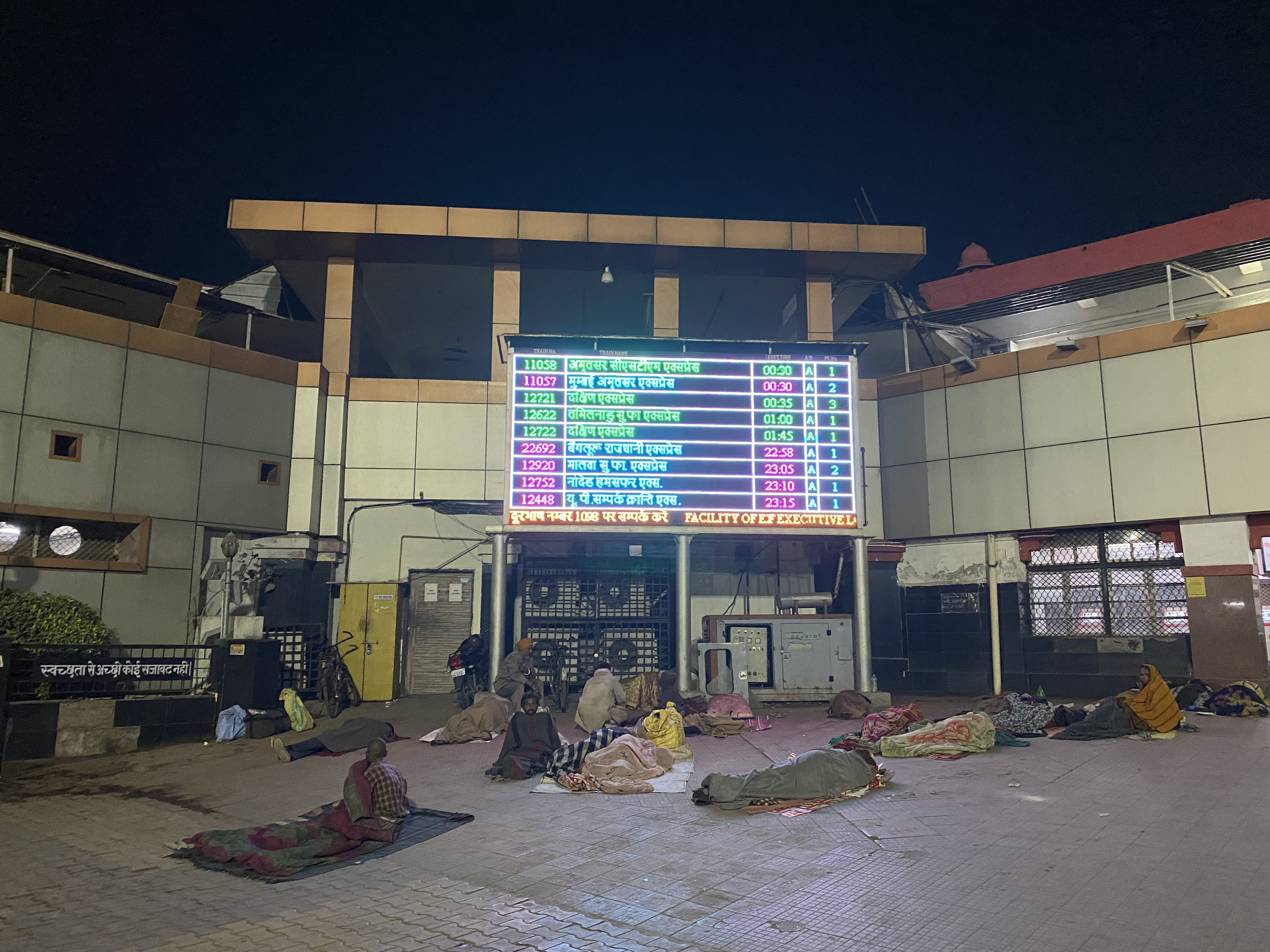
To get to Agra we took a late train from New Delhi to the Agra Cantt station which took about 2 hours or so and got us in about 22:45. There’s quite a few trains per day which all take roughly the same time, and are all as equally cramped as hell.
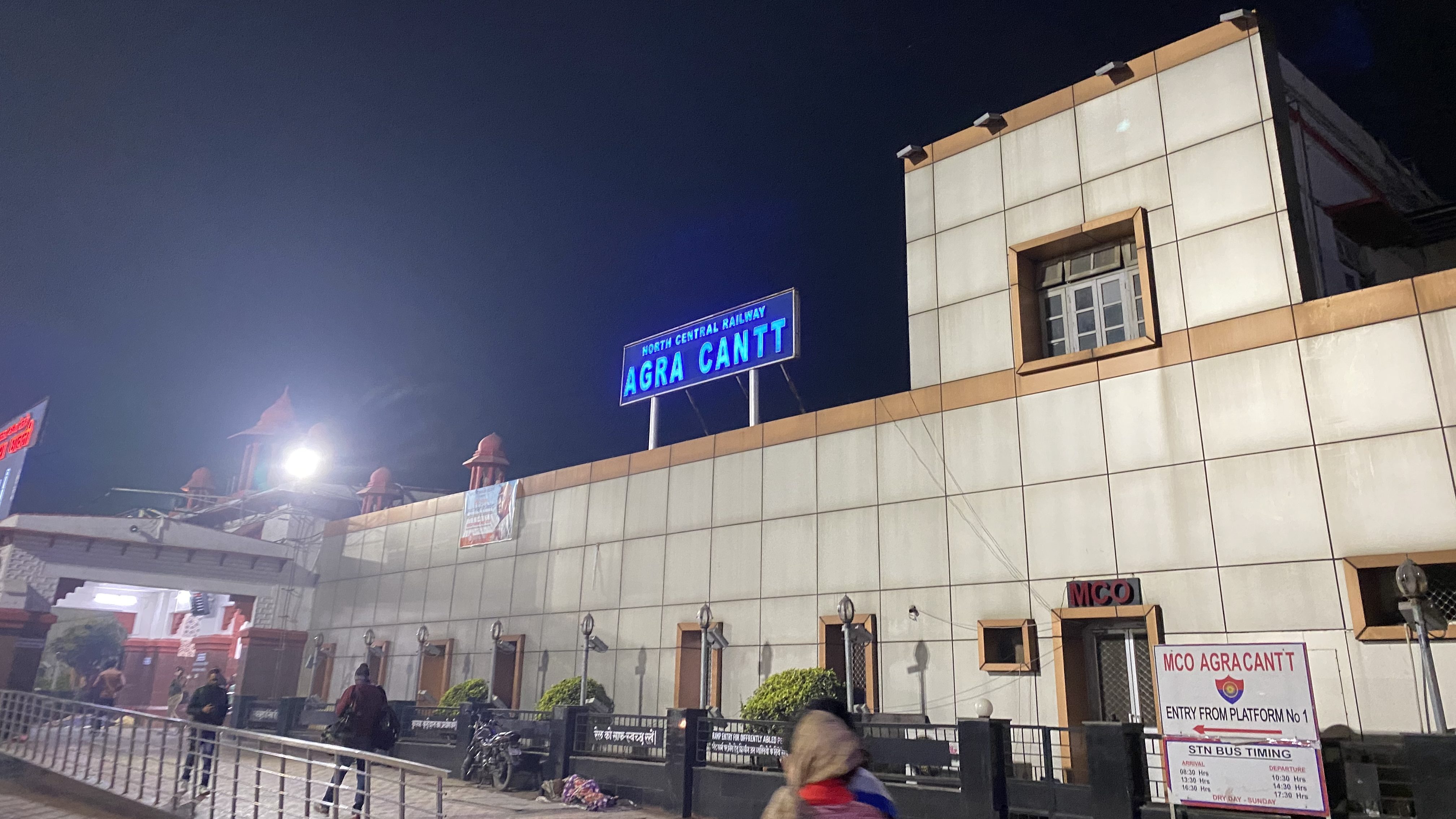
Our group of 12 stayed in a pretty horrific guesthouse here, most of us 3 per bed which were more stain than mattress. I am sure Agra has some fancy options, but prepare yourself if you want to stay here on a budget. As we arrived so late we were at the mercy of the street food stalls, which we would usually be all over but we were all starting to struggle after our Delhi street food encounters. Little did we know at this point, but it would actually be the Agra restaurant after the Taj Mahal that would wipe half of us out with food poisoning, classic.

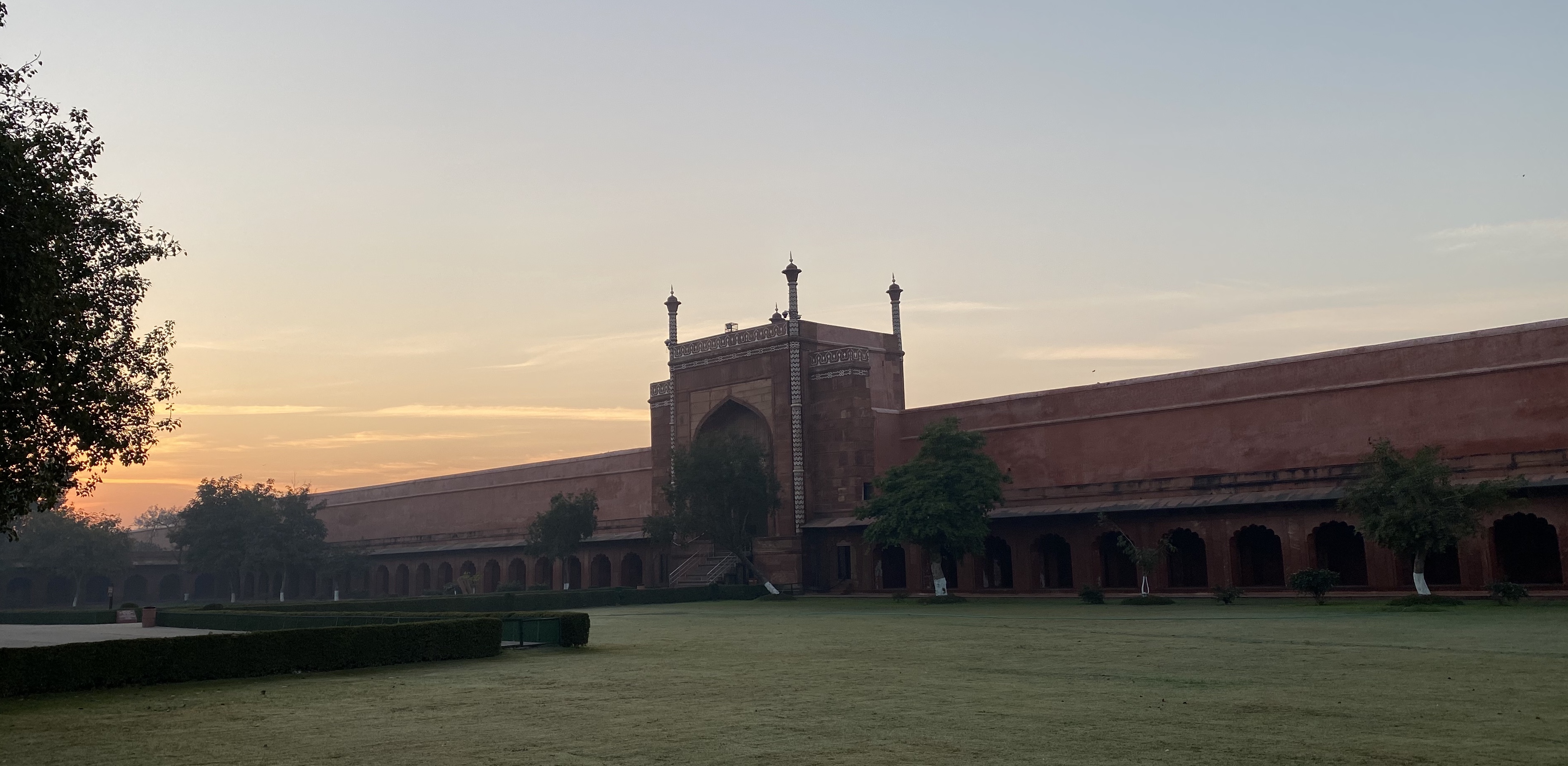
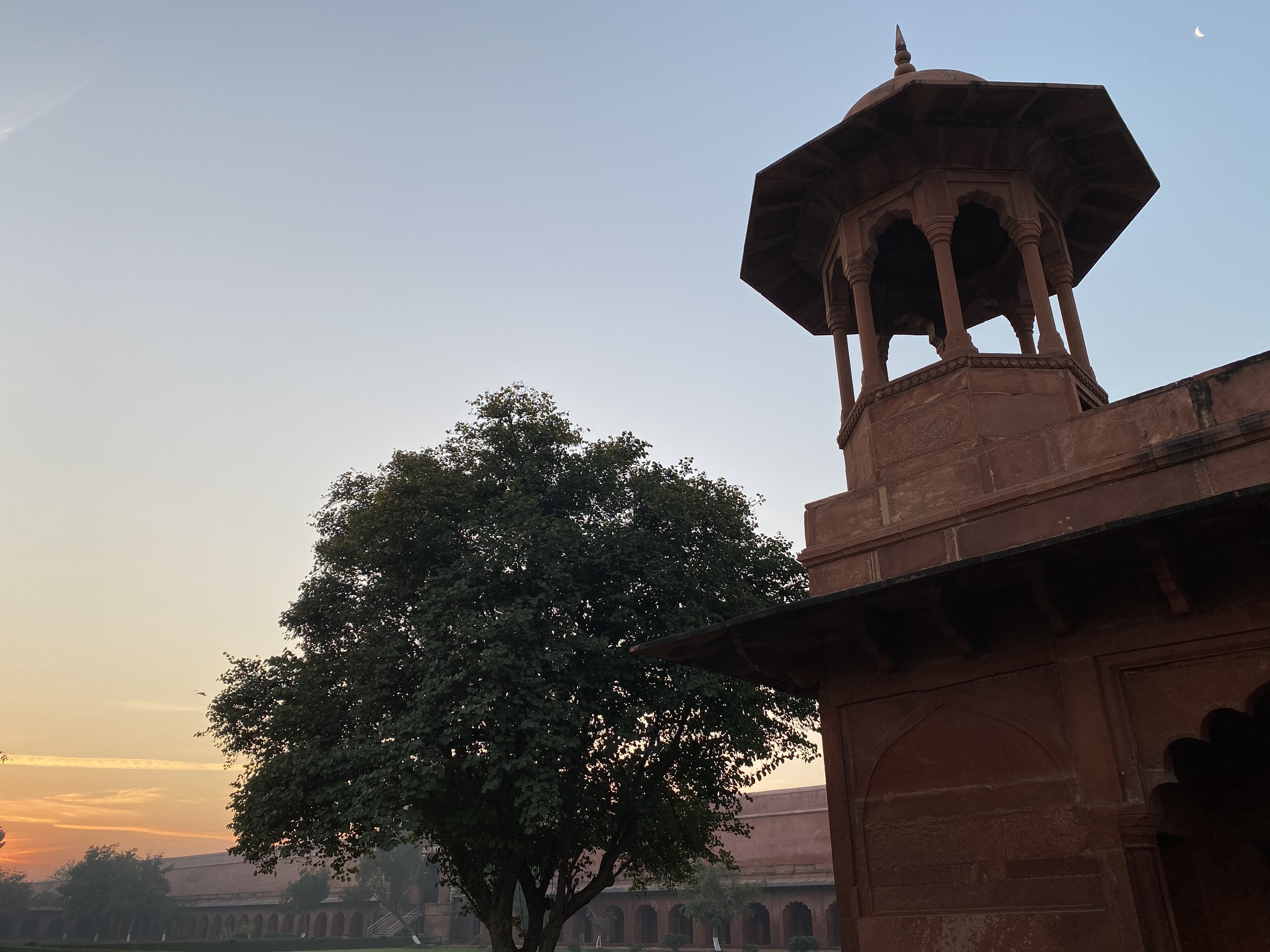
Our friend booked all of our tickets online for the complex and we turned up at the site entrance like an hour before it opened, and there was still a huge queue. Interestingly the site opening time is tied to the sunrise (30 minutes before) which is pretty cool, so you can always get that sunrise light. Once you enter, there is a decent walk through stunning gardens and grand red sandstone buildings, a merge of Mughal and Persian architecture. So if you want the best picture of the mausoleum as possible, keep a brisk pace and soak up the lovely buildings after. I snapped the following shots as we were zooming past them to try and beat some crowds.

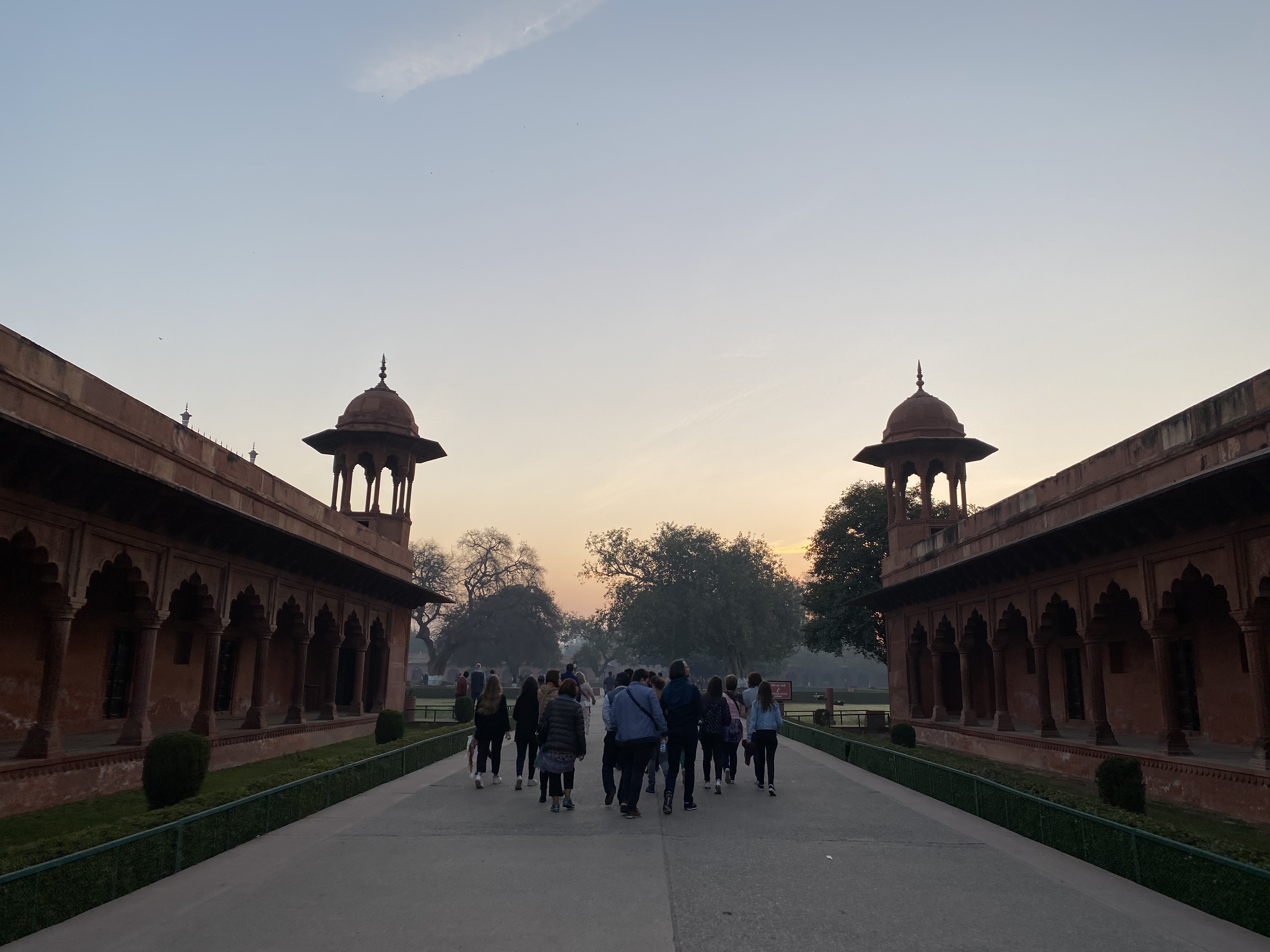
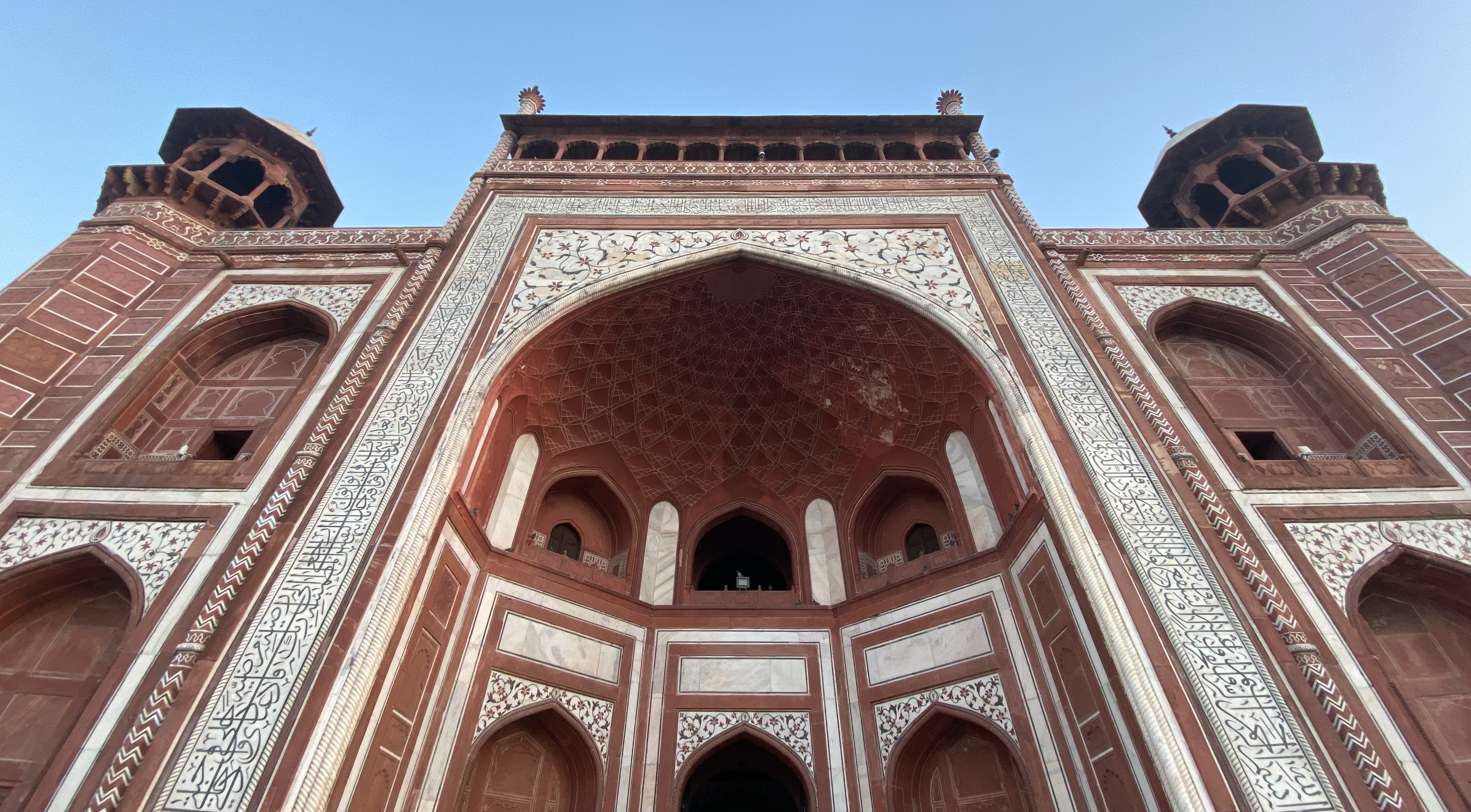
There is a central pond where you can get a lovely reflection of the Taj Mahal, and of course that’s absolutely heaving with tourists even in the morning. It is worth a little patience and perseverance though, not just for the picture, but seeing this wonder from this perspective is quite incredible.
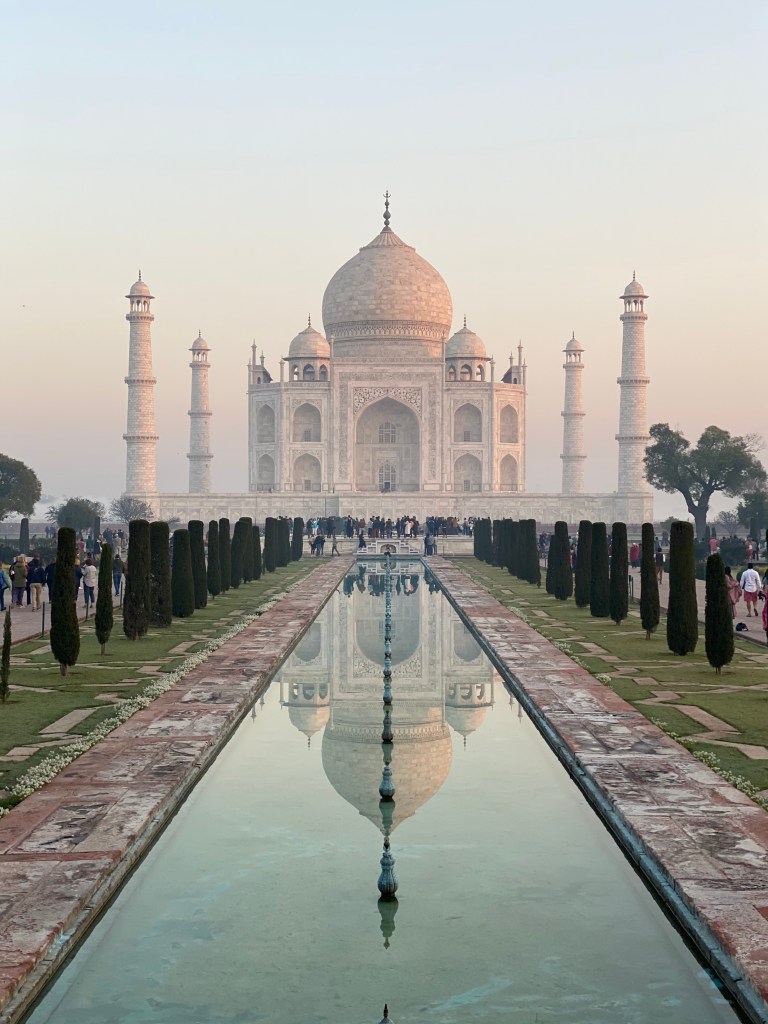
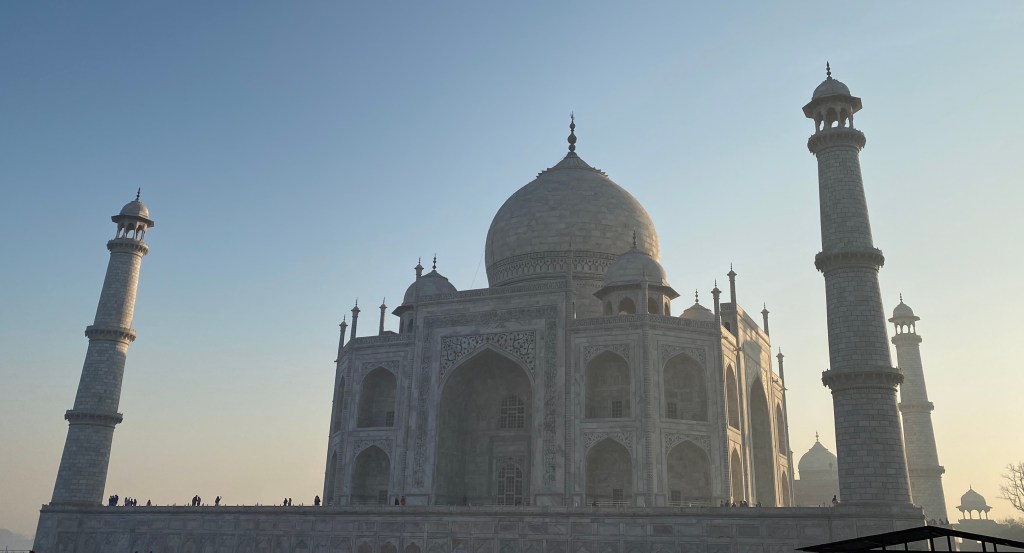
The complex is pretty big with loads of nice gardens and trees and benches to relax in – for such a touristy place there are lots of areas of serenity which is great. Even in February when we visited, we needed to take some shelter from the Indian heat. You can see the Taj Mahal from basically anywhere in the complex so there’s many nice angles to get some pictures and admire it from.
Finally, that wonderful restaurant. So there was a goat with a purple jumper on with an injured leg in a cast guarding the entrance, which is always a good sign. Once it shuffled itself out of the way we were offered to sit on the rooftop and it was quite the experience. Not only were the Agra views not so picturesque, but there was a gridded hole in the floor where we could see the kitchen and the single pan which cooked all of the food for the 6 of us in. Indeed half of our group decided to eat in an adjacent rooftop restaurant after they saw the goat concierge, of whom none got ill afterwards.
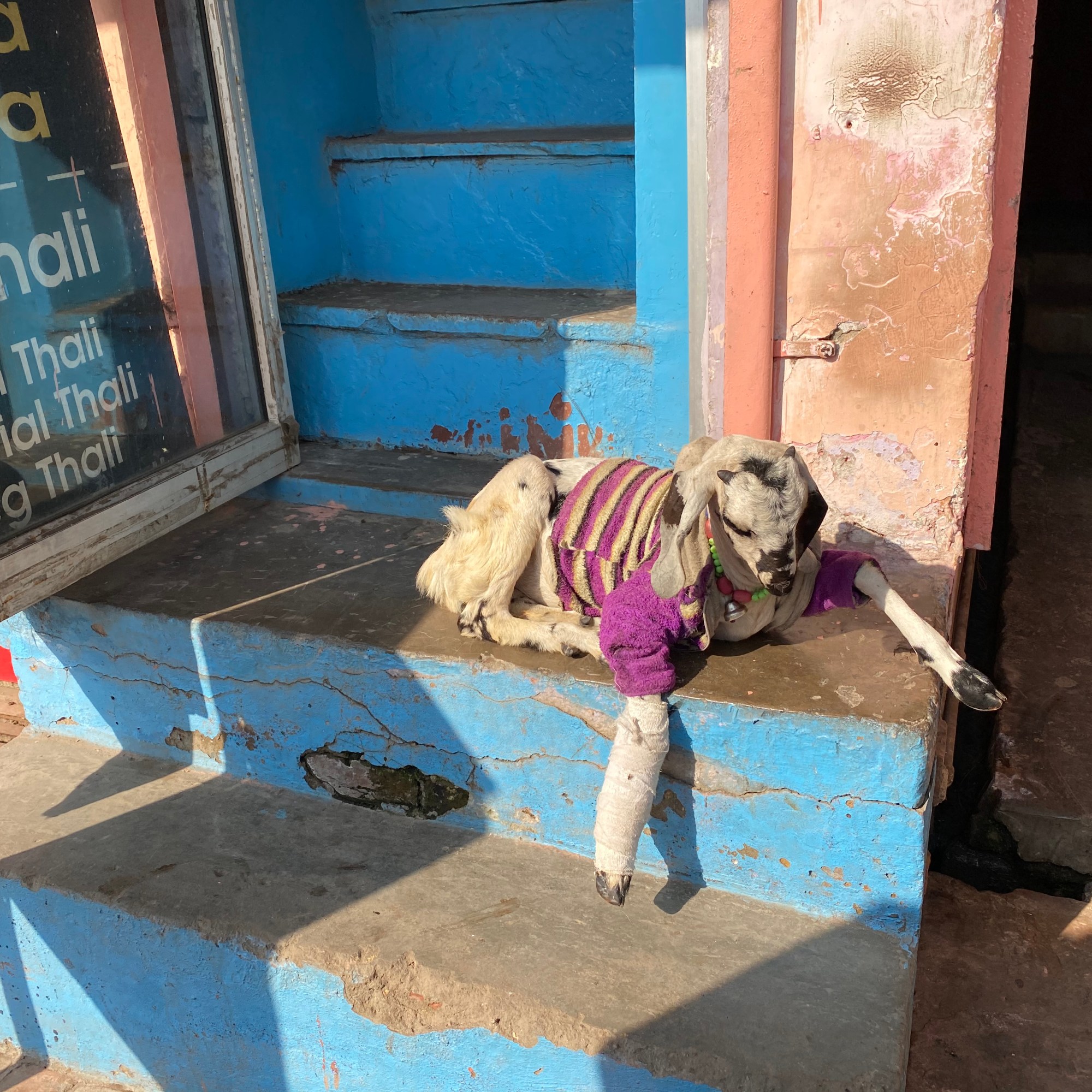
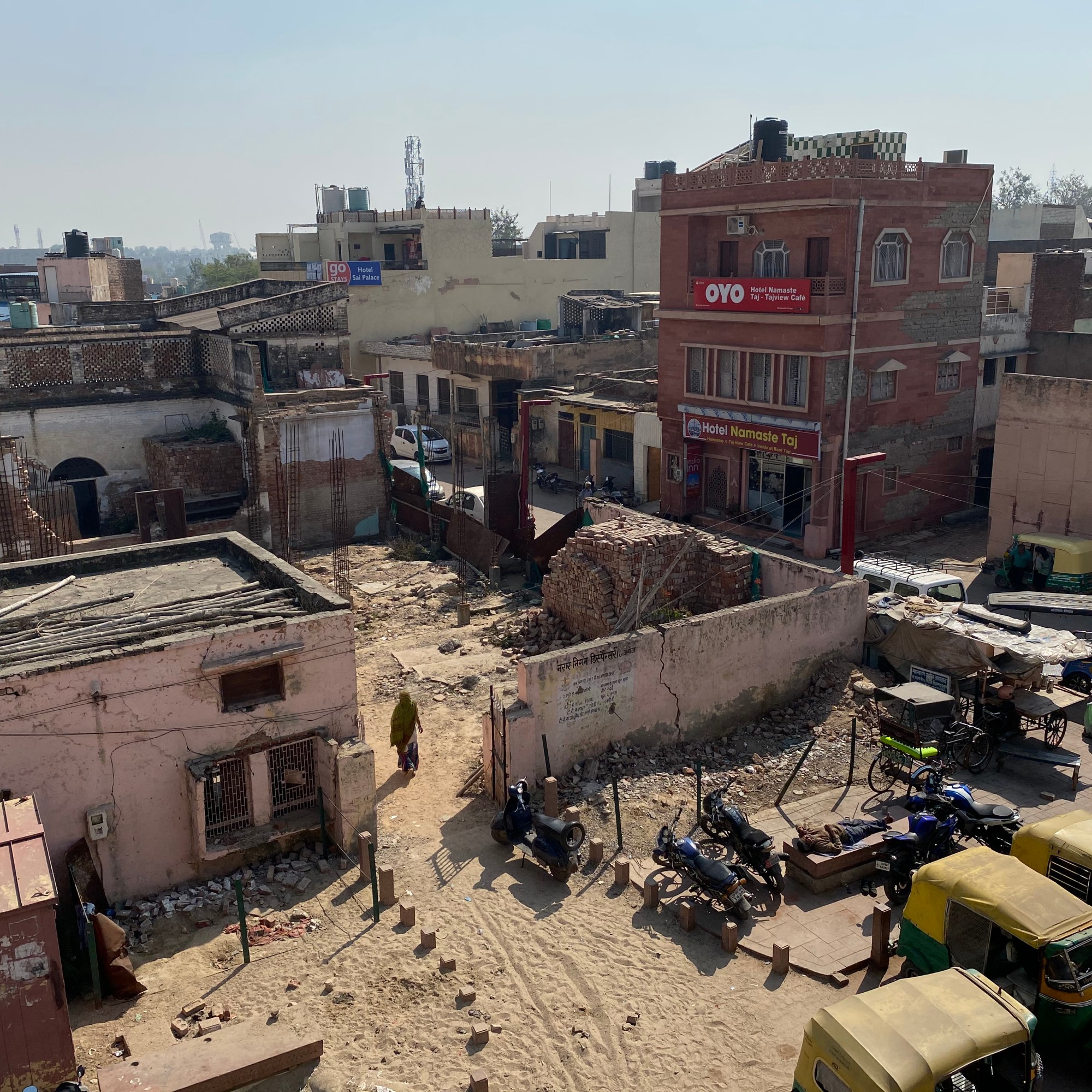
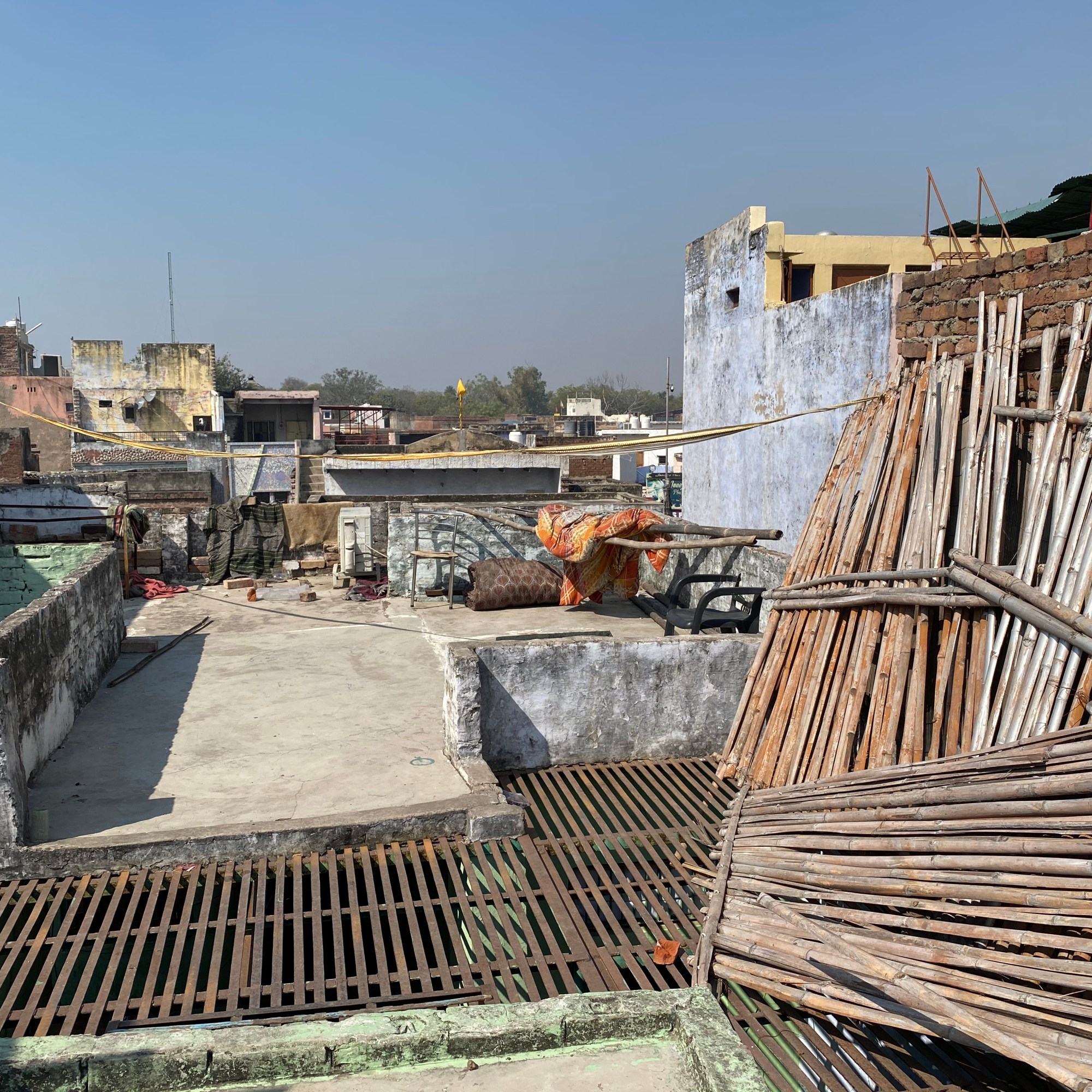
Goat concierge / Agra views / Restaurant rooftop with gridded floor (hole)
Christ the Redeemer
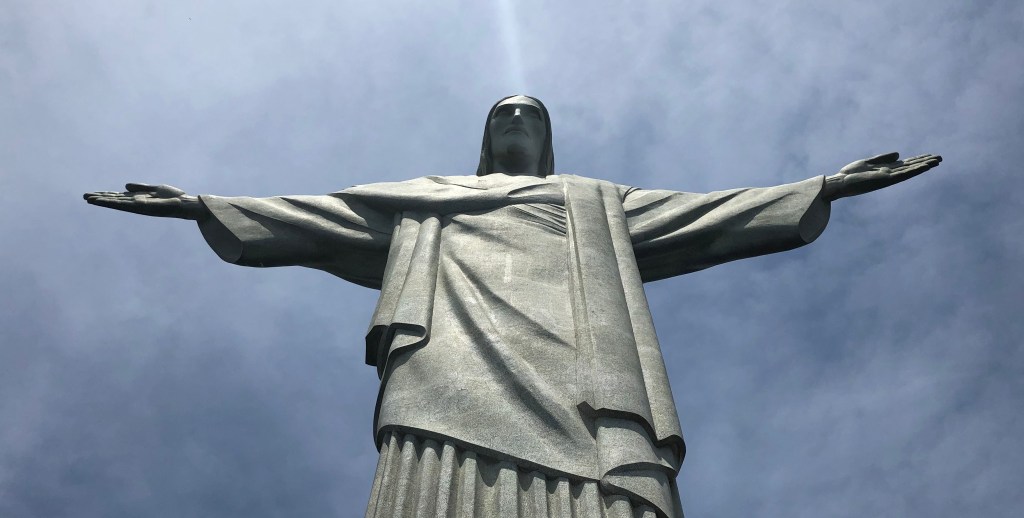
Last but not least is Christ the Redeemer, known as Cristo Redentor in Portuguese. The youngest of the Seven Wonders of the World, opened in 1931, stands at the top of Corcovado Mountain in the Tijuca National Park in Rio de Janeiro, Brazil. The statue is quite something to behold even from a distance, towering over Rio with the city in its embrace.
As with India, I didn’t think I’d get the chance to visit Brazil for a while for the same reasons. However, the stars once again aligned in late December in Moscow, with one of my worst travel stories and most frightening experiences of my life.
Story time: We turned up at our booked hostel, expecting a fun backpacker vibe with a basement bar and a NYE party planned, as is usual with hostels. Unfortunately, the basement bar in the pictures turned out to be fake with only a washing machine under it, the hostel was the gloomiest, smallest, creepiest, least friendly and most unsafe hostel I’ve ever set foot in. No lockers in the bedrooms, the owner was asleep in our room, a Russian girl living at the hostel was the one showing us around as the reception guy was also asleep (it was midday). We paid in cash once he woke up, but after further looking around we just wanted to get the hell out of there, which now seemed to offend the owner who now also awoke from our room, full tracksuit and bluetooth earpiece in. Picture a short Russian Jason Statham. He proceeded to try convince us to stay and that he could get moonshine for us, and refused to give us the cash back that we paid (even though on Booking a refund was still in policy before 2pm). Things went sour very quickly as he started raising his voice in Russian (the girl who gave us the tour was translating), she then told us that we need to leave or there would be trouble. The guy was between us and the exit the whole time, so we had to run around him, grab bags and shoes and escape onto the streets of Moscow and get the hell out of there. Anyway, we found a far far better hostel which was friendly and were hosting a champagne New Years Eve celebration, met a couple of Brazilian girls there who suggested we spend the following NYE in Brazil, and that was that. Needless to say I reported the first hostel to Booking and it’s been removed from the site.
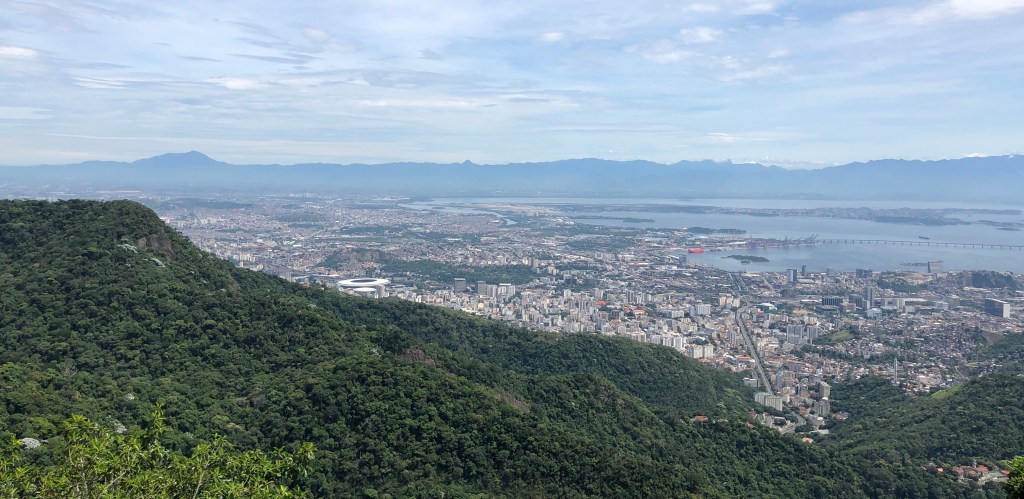
To get to the 30m tall Arc Deco Jesus, you can either hike or take the Trem do Corcovado (the Corcovado cog train), which began construction in the 1800s! The main station for this train is Cosme Velho where the line begins and is about a half an hour ride from the main beaches of Rio. The round trip train is highly recommended and offers some amazing views as you head up the mountain.

Once you’re off the train there’s a few staircases and you’re there, in amongst the hoards of tourists literally laying on the floor getting trampled on to try and get a good shot of the enormous structure. As you can imagine, there isn’t too much room up there and so the viewing points get pretty cramped, as you can see from my picture below with Cristo behind me.
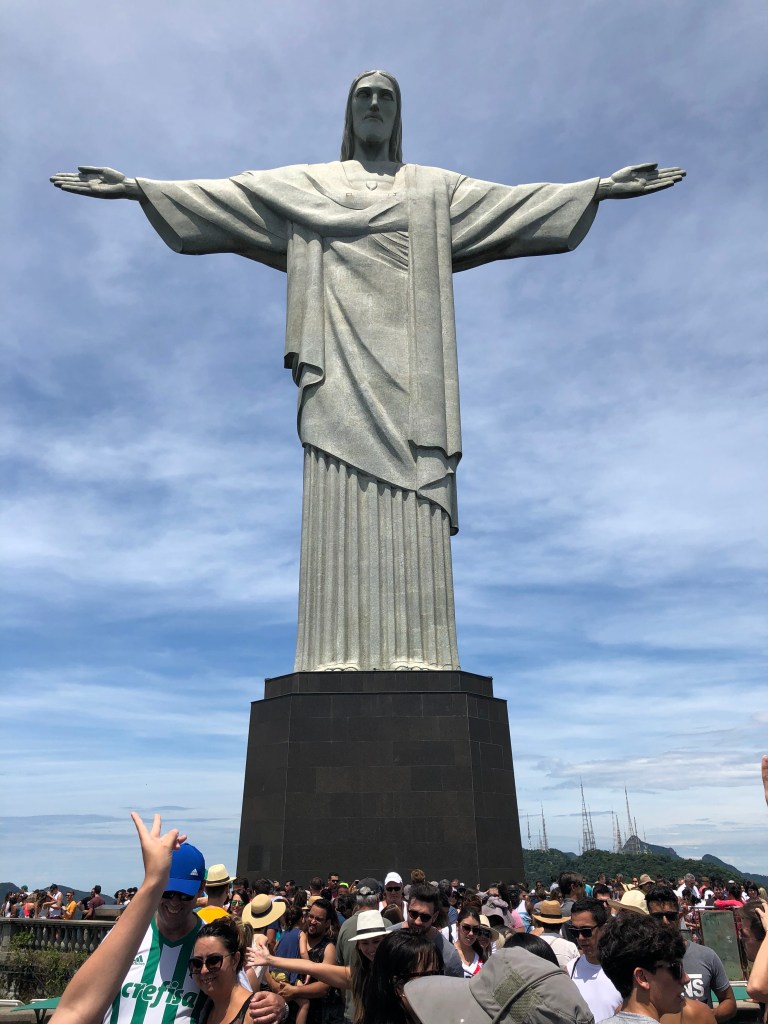
We really didn’t spend much time up here to be honest, maximum 30 minutes, as you can see it isn’t the most pleasant place to be, especially in the Brazilian January heat. Once we soaked up the awe of Cristo, took in some of the views and tried to get some pictures we headed down back to town.
Completed it Mate
And there you have it – my experiences with the Seven Wonders of the World. I really hope you found this at least somewhat useful and maybe even inspiring to go and visit one or all of these incredible sights of the world – all intertwined in history with their own unique architectures, all evoking different emotions.


 Matt Vincelli
Leave a comment